JUST WALKING

untitledimages

JUST WALKING

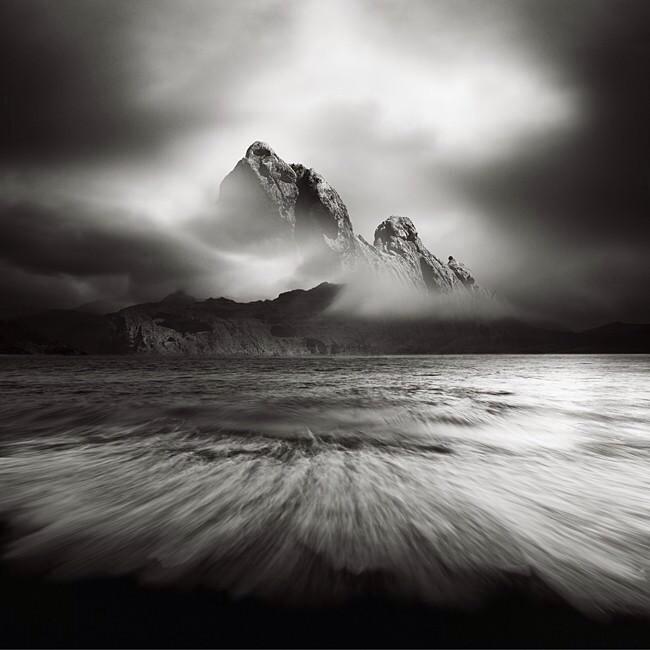
Walking…just walking
Away from the hum and drum
Away from the hub and bub
Away from the whine and grind of this rusty city
Couldn’t take it, they will say
Well, let them
This place isn’t all it’s cracked up to be

I saw a man today selling boxes to homeless people
Business was brisk
Did you know that the stone from the Pyramids
Would build a wall round England ten feet tall?
They say John the Baptist was gay
Funny the thoughts that come into your head when you’re walking

There was an old woman who lived in a hovel
She didn’t have any shoes but no one cared
She fell down one day
The hospital put her in a trolley for a few weeks
Then sent her away
Back to her hovel, her piss-stained bed, her broken radio
Her clock that didn’t tick, her bare cupboards, her solitary chair
Carried her up three flights, stood her in front of a walking frame
Said ‘take care of yourself, dear’

The whole fucking world anaesthetised by indifference

see all my books @ http://www.amazon.co.uk/Tom-OBrien/e/B0034OIGOQ/ref=sr_tc_2_0?qid=1388083522&sr=1-2-ent

DEPARTURES

imagesCAL6RC5XBvKjweLIAAAkZ23

DEPARTURES

You look straight through me
As if I wasn’t there
I walk straight past you
As if I didn’t care

Two bodies easing past each other
Both waiting for a train
One heading for oblivion
The other bound for Spain

BEING HERE

Bu2HY1LIUAA23Fr2048
BEING HERE

I may never be a poet
I may never rhyme;
(having no time for all that crap)
But one thing I do know;
People don’t stay, they go;
And they never come back

Oh, they are there – empty;
Looking like they once were
But deep down you know it’s not really them;
Just effigies
Waiting for you to go too

She loved you once you know;
She would admit it
Now fire has seared her mind
Cleansing the important bits;
It’s not love that sparkles now,
Just tolerance
And not a lot of that

So where do you go
When the fire has burnt itself
But into it;
Ashes to ashes
Dust to December
And no better for it;
Complacency –
And no end to the pain of it

my latest 2 collection of poems- 67 & 67 PLUS @ http://www.amazon.co.uk/Tom-OBrien/e/B0034OIGOQ/ref=sr_tc_2_0?qid=1388083522&sr=1-2-ent

A CONFEDERACY OF DUNCES

Confederacy of Duncesignatius-p-reilly1
A CONFEDERACY OF DUNCES
Re-reading this book after many years I had forgotten that its author, John Kennedy Toole, had committed suicide at the age of 31 in 1969. He had been trying unsuccessfuly to get it published for about six years, and became so depressed after many rejections that he took his own life. It was only through the tenacity of his own mother that the book was eventually published in 1980 and found the audience it deserved. It has since been recognised as one of the great American novels and deservedly won the Pullitzer Prize in 1981
It’s hero – or should that be anti-hero – Ignatius Reilly, is one of the great characters of English literature, a slob extroardinaire, a mad Oliver Hardy, a fat Don Quixote, a perverse Thomas Aquinas rolled into one, who is in violent revolt against the entire modern world, lying in his flannel nightshirt, in a back bedroom on Constantinople Street in New Orleans, who in between gigantic seizures of flatulence is filling dozens of notebooks with invective.
His mother thinks he needs a job; he does a succession of jobs, each rapidly escalating into a lunatic adventure, a full-blown disaster, yet each one has its own eerie logic. Ignatius is an intellectual,idealogue,deadbeat, goof-off, glutton, with thunderous contempt for for almost everybody; homosexuals, heterosexuals, Freud, Protestants, workers, bosses and the assorted excesses of modern times. A great rumbling Falstaffian farce of a book is the only way I can describe it and the shame is that Toole never lived to see the fruits of his labours. Read it and weep – with laughter!

BELONGINGS

Marstons_Bandolier2weeping-willowflowers-hoffman-hills-recreation-area-12-3-_1104a

BELONGINGS
I do not have a mill with shady willow trees
I have a horse and a whip
I will kill you and go

I do not have a red Ferrari or a pink rose
I have a rifle and a bandolier
I will shoot you and go

I do not to have a wife or a tiny yellow bikini
I have a mother and two goats
I will kiss you and stay

JACK REACHER IS NUMBER ONE!


I love serial character in books; you know, Inspector Wexford, Rebus, George Smiley, Kay Scarpetta etc

My favourite though has to be JACK REACHER, the eponymous hero – or is it anti-hero – of the books written by LEE CHILD,

Jack is a drifter, a loner, travelling across the USA, finding trouble without looking for it wherever he goes. I don’t know how many books there are to date – probably around 20 –  but I have read most of them; ECHO BURNING, PERSUADER, THE ENEMY, ONE SHOT, GONE TOMORROW, 61 HOURS to name a few, and I am always amazed at how gripping  and addictive they are.

A former Major in the United States Army Military Police Corps, JACK quit at age 36, and roams the United States taking odd jobs and investigating suspicious and frequently dangerous situations. The paradox of JACK is that he is both a big bear of a fighter , and a thinker, whose mission appears to be to right wrongs and defend the weak.

JACK always uses an alias when checking into a hotel. In earlier stories, this was usually the name of a lesser known ex-president. In later stories, he more often used baseball players’ names.

Since leaving the Army, JACK has been a drifter. He wanders throughout the US because he was accustomed to being told where to go, when to go and what to do for every day of his life from military childhood to military adulthood. He also felt he never got to know his own country, having spent much of his youth living overseas on military bases and at West Point. He usually travels by hitchiking or bus. As a drifter, the only possessions he carries are money, a foldable toothbrush and, after 9/11, an expired passport and an ATM debit card

JACK has the uncanny ability to know what time it is, at any time of the day, without referring to a clock. He often uses his internal clock as an alarm, enabling him to wake up at any time he chooses. He is a skilled marksman, and is highly skilled at fighting, enhanced by in-depth technical and military knowledge.

All in all JACK REACHER is the perfect all-round hero

WRITERS AND THE CHELSEA HOTEL

dylan thomas poet Dylan Thomas

Bob Dylan, Sid and Nancy, Leonard Cohen, Andy Warhol, Janis Joplin were among a long list of artists and musician who stayed at the Chelsea Hotel NY at one time, adding to its reputation as a decidedly bohemian enclave. Musicians and artists dominated the headlines through the 13 decades since the Chelsea’s construction in 1884. But the grand hotel-for-the-arts on New York’s West 23rd Street has inspired literary works as well, and often it was the writers who shaped the narratives on which artists working in other disciplines based their work. 

Below are a few of the writers who stayed there:

DYLAN THOMAS  “Excuse me,” Dylan Thomas apologized, following a terrible fit of coughing and retching into his rusty Chelsea hotel sink. He suffered from a medical condition, he explained. “I think it’s called cirrhosis of the liver.” The popular Welsh poet drank too heavily to produce much of literary merit during his numerous stays at the Chelsea Hotel.

BRENDAN BEHAN  Alcoholism had not only gotten the Irish playwright and novelist Brendan Behan kicked out of Algonquin and Bristol Hotels by 1963, it had also destroyed his ability to hold a pen. At the Chelsea, though, the choreographer Katherine Dunham and her dancers were able to nurse him back to health. At the Chelsea, the writer dictated Brendan Behan’s New York, a lyrical tribute to his favorite city, into a tape recorder when not singing Israeli songs with the poet Allen Ginsberg, dancing in the halls with Communist leader Elizabeth Gurley Flynn, befriending Eugene O’Neill’s ex-wife Agnes Boulton, or carrying on affairs with male and female lovers while managing visits from his long-suffering wife as well.
Learning from Roger Ebert through Brendan Behan Brendan Behan


JACK KEROUAC  It was one of those nights of “metropolitan excitements,” Kerouac wrote of the night in 1953 when he and William Burroughs encountered Gore Vidal at the San Remo bar. Already drunk with joy over the publication of Burroughs’s Junkie, the two writers eagerly incorporated Vidal into the night’s revelries. But as the drinking progressed, Burroughs peeled off–leaving Kerouac and his handsome fellow writer to muddle-headedly resolve to pay tribute to their predecessors Thomas Wolfe and Dylan Thomas by consummating their friendship at the Chelsea Hotel.

jack kerouac Jack Kerouac

THOMAS WOLFE  “The desire for it All comes from an evil gluttony in me,” confessed Thomas Wolfe, who had moved into the Chelsea on Edgar Lee Masters’s recommendation and whose rumbling, Southern-accented voice permeated the corridors as he paced the floor each night dictating scenes for a novel. To Masters, who invited Wolfe down for a nightcap occasionally, the writer seemed a force of nature, loudly decrying the changes he saw in his countrymen in the wake of the Depression. America had lost its way, Wolfe insisted.

ARTHUR MILLAR  Arthur Miller came to the Chelsea in 1962 to escape his disastrous marriage to Marilyn Monroe, but once he started writing, he found he couldn’t duck his history quite so easily. His new play, After the Fall, was meant to explore, in this post-Nazi era, the individual’s responsibility for the fate of a fellow human, but it soon became clear that Miller was also exploring his role in Monroe’s self-destruction. Even after the announcement of Monroe’s suicide, Miller denied the true identity of his play’s female protagonist.

arthur miller playwrightArthur Millar

ARTHUR C CLARKE In 1965, long-time Chelsea veteran Arthur C. Clarke checked in for a stint at the hotel, pounding out 2,000 words a day on a novel-length accompaniment to 2001: A Space Odyssey, his collaboration with filmmaker Stanley Kubrick. Kubrick had tried to work with Clarke at his own office in Manhattan, but after one day’s work the writer returned to the Chelsea to draw on conversations with William Burroughs, Allen Ginsberg, Arthur Miller and others for inspiration for his work. 

WILLIAM BOROUGHS  William Burroughs and his close friend, the Canadian artist Brion Gysin, arrived at the Chelsea Hotel in 1965 to market a new invention, the Dream Machine, a contraption consisting of a spinning paper cylinder with slitted sides and a light bulb inside whose purpose was to create a psychedelic experience for the viewer without the use of drugs. When it failed to make them rich, the pair turned to a new collaboration equally in tune with the Chelsea Hotel zeitgeist: The Third Mind, a exploration of the synergetic power of creative collaboration. 

LOOK, NO HANDS!


LOOK, NO HANDS!

 Even if I had no hands

I would be ambidextrous

Ac-dc in a strange sort of way

Though women would still be kings

Or should that be queens?


Even if I had no legs

I would still walk tall

Play legless football

If the fancy took me,

Roller-skate differently, that’s all


Even if I had no mouth

I would still speak out

Words would continue to pour forth

I would not be silenced

I would speak from the heart


Even if I had no eyes

I would still see plenty

Believing would be seeing

And if only in my mind’s eye

My vision would still be twenty-twenty


BUNKER ON PORTLAND BILL


BUNKER ON PORTLAND BILL

 This windowed concrete slab

Touching the hedgerows

Bunkered in leaf-strewn soil

Chivvies me


Muskets were reddened here

By shorter men than I

Defenders of a long-gone realm

Stooped between fissured ceiling and creviced floor


What mayhem bedlamed this rocky causeway?

Its cannons foddering the deep

The stun of steel slamming granite

The stench of gunfire turning stomachs

Loose limbs cluttering pathways

Death hovering


All quiet now on this promontory;

Sheep nibbling, tea and scones in the old armoury

Picture postcards of battles fought and won

Day-trippers picnicking

In the shadows cast by the big guns


THE POWER OF ONE

Image

It is very difficult to motivate yourself to write something clever and witty when you look at your dashboard and see that you have had one visitor all day. ONE VISITOR! My grandfather has had more than that today – and he has been dead for 60 years!

Do we writers ever ask ourselves who or what are we writing for? I think I can safely say there are more writers around today than at any time in history. Recently somebody came up with a figure of 150 million blogs alone on the internet. I think I will do a Hemingway – get out my shotgun and blow my brains out!

Seriously, why do we do it? It’s not as if most of us are making any money out of it.

George Orwell says one motivation to write is sheer egoism, that we write out of the “desire to seem clever, to be talked about, to be remembered after death, to get your own back on the grown-ups who snubbed you in childhood, etc., etc.”

It could be a reason I suppose, but it could just as easily be more Orwellian clap-trap.

Maybe we write to change the world? People consume now more than ever in the history of the world. We eat more, we listen to more music, and we consume more information. However, most people have the attention span of a gnat these days, so I don’t think that will wash.

To discover the meaning of life? Victor Frankl, the psychiatrist said “Life is never made unbearable by circumstances, but only by lack of meaning and purpose.  Writers are uniquely gifted to find meaning for themselves and to help others find meaning. In fact, this has always been the main task of storytellers. Every story matters to the person living it, and our job is to tell the universal stories, the stories that reveal the story of every person on the earth”. Sound like a right load of psychiatric bollix to me!

I like Dylan Thomas’ words on the subject;

In my craft or sullen art

Exercised in the still night

When only the moon rages

And the lovers lie abed

With all their griefs in their arms,

I labour by singing light

Not for ambition or bread

Or the strut and trade of charms

On the ivory stages

But for the common wages

Of their most secret heart.

Not for the proud man apart

From the raging moon I write

On these spindrift pages                             

Nor for the towering dead

With their nightingales and psalms   

But for the lovers, their arms

Round the griefs of the ages,

Who pay no praise or wages

Nor heed my craft or art.