IT’S A BEAUTIFUL DAY

Just watched a short video. It showed a blind man seated on steps, begging, at a busy junction. His brown cardboard notice said ‘Please help me, I’m blind’. A few people threw some coins in his tin collection can, but most passed by uncaring. Then a young woman stops and reads the notice, before picking it up and writing on the back of it, then replacing it.

Before long the coins were rolling in. What did she write? simply this: IT’S A BEAUTIFUL DAY AND I CAN’T SEE IT.

SOMETIMES IT’S NOT WHAT YOU SAY, IT’S HOW YOU SAY IT.

NO THANKS

Image


NO THANKS

 If I left you now, what would you miss?

Grumpy mornings, silent evenings

And taken-for-granted pause between the emptiness;

And hidden behind the tall tales, adultery;

Mental maybe, but real nevertheless


You dazed me in the park one Sunday’s summer afternoon.

 Your smile was electric.

Later, you hid your patience well

When freedom was dragged from under my feet.

You ticked of the (waiting) time

And I repaid you with monologues of deceit


There are those more deserving of your kindness;

Less selfish, less angry,

And less possessed of my bloody-mindedness.

You bore your cross to the edge and beyond.

Always hauling me back to the fold.

Snatches of love were your only compensation,

Were I a better man I would cloak you in gold

Image

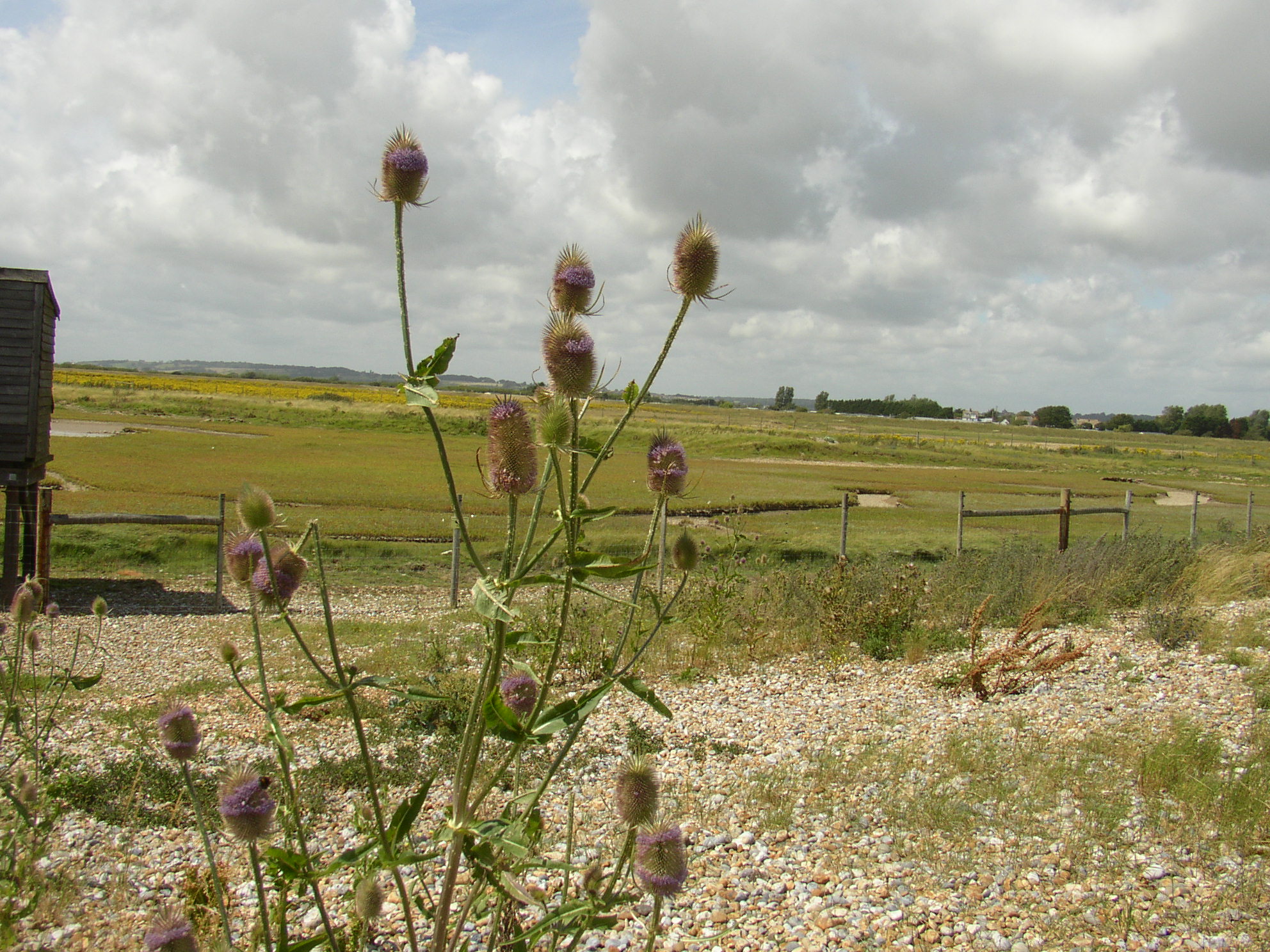
                              The two scenes were photographed  at Rye Harbour, East Sussex

poem taken for my new book of poetry, available @  http://www.tinhuttalespublishers.co.uk/67/


THE MISSING POSTMAN AND OTHER STORIES

Image

The following is an extract from my book of short stories THE MISSING POSTMAN AND OTHER STORIES.


Chapter One

Seagulls screech at the sound of the approaching car, and its headlights pick them out wheeling away into the darkness. Martin Og shakes a fist at them as he drives to a stop near the front door of the weather-beaten cottage.

‘You might be the souls of dead fishermen but that won’t stop me blowing your bloody heads off the next time I get a clear shot at one of you’.

The only response is the inevitable splat on his front bonnet, before they vanish into the twilight. He gets out and slams the door, slinging his knapsack on his shoulder, and, ignoring the mess on the car front, limps to the front door.

He inserts a key and opens it, listening for a few moments before reaching in and switching on the room light

‘Blackie! Blackie! Where the feck are you gone to now?

The lights reveal a room that is in a terrible state; rubbish and stale food litter the table and chairs, bags of waste and empty whiskey bottles are stacked high against one wall. The paper on the walls is peeling, the photos and pictures faded. In fact the whole room looks as if it hasn’t been tidied for many years.

Against the back wall is a dresser, adorned with some faded willow-pattern crockery. An old fashioned radio sits on the dresser. Some hunting gear – a mixture of nets and traps – hang on one wall .A large square net, of the kind that sea fishermen use, hangs suspended from one half of the ceiling There is also a battered acoustic guitar and a ten-gallon hat hanging on pegs either side of the passageway. Two armchairs are situated in the shadows, one at either end of the room, their backs facing Martin Og.

He looks at them in puzzlement, first one then the other, but his puzzlement is almost immediately superseded by a look of grief when he spots the body of a dog lying between them. The dirty black beret he wears is whipped from his head, revealing a shock of white hair beneath. He lets the knapsack fall from his grasp as he hobbles towards the body.

‘Ah Blackie. Ah Jesus, Blackie…’

He picks the dog up in his arms and cradles it for a moment, then sits on a bentwood chair rocking the dog in his lap. He uses the beret to wipe the dog’s face.

He doesn’t notice for a moment as the two armchairs swivel round to face him. When he looks up he sees two figures seated in them

Both are in their early/mid twenties, and both are dressed in the trendy, designer-conscious manner of their peers. The man is cradling a shotgun in his arms; the girl has a metal strongbox resting on her lap, a handgun in her hand. She taps the box with the gun.

‘We need the key, Martin’.

‘Martin?’ He pauses. ‘Did you kill my dog?’

He was old’

Martin rises. ‘You killed my fucking dog…..’ The man raises the shotgun. ‘Be careful with that, it’s …not insured’.

‘Not insured, he says!’ The man laughs. ‘Look at it! What’s to insure?

I’ve got insurance. Lots of insurance’

Fire insurance?’

Yeah, fire insurance’. The girls looks around the room. ‘You got any fire insurance, Martin?’

‘Martin?’ You keep calling me Martin. Who are you people?’

The girl smiles at him this time, a big mouthful of pearl-white teeth. ‘Sorry. We should have introduced ourselves earlier. I’m Zoe. And that specimen over there is Zeb. Zeb and Zoe’. She smiles again. ‘Now, you got any fire insurance?’

Martin is beginning to think he must be in the throes of a nightmare. Surely he will wake up soon? ‘No. No fire insurance’.

‘Pity. Then you could burn the place down with impunity’

‘Why would I want to do that?’

Another laugh from Zoe. ‘Well, I mean…look at it!’

‘Impunity. That’s a good word.’ Zeb laughs softly

You like it, Zeb’.

Yeah, it’s cool. Burn the place down with impunity…I like that.’

Bet it all goes up like a bonfire’.

You reckon?Maybe we should…’

Continue reading

PLAY ON

PLAY ON

 Ensconced here in contemplation

Your presence overwhelms me

Arms outstretched, yet never chiding

Even knowing my ways were wrong


Burning both ends speeds up damnation

I can see that now;

Lust living in the wings

While the songs sang themselves

And courage dredged from the bottle

While the melody lingered on


 Music was my life

But you changed it all;

Your song will still be nectar, Lord

When all this is gone…

from my new collection; http://www.tinhuttalespublishers.co.uk/67/


MORRIS DANCING IN HASTINGS

ImageImage

The Morris Dancers were out inn force today, in preparation for the traditional May Day celebration  of Jack-In-The-Green, which takes place tomorrow.  JITG is a tradition going back hundreds of years; In the 16th and 17th centuries in England people would make garlands of flowers and leaves for the May Day celebration. They became increasingly elaborate, and many groups would try to outdo each other. In the late 18th century this became a matter for competition, milkmaids in London carried garlands on their heads with silver objects on them, but the crown had to go to the chimney sweeps. Their garland was so big it covered the entire man, and it became known as Jack in the Green.

However,  by the turn of the century the custom was seen no more. The reasons were twofold: the Act which stopped boys climbing chimneys had been passed and these had been the main performers; secondly the Victorians had a different attitude to such customs, the prettification of customs took place; no more the giant maypoles with drunken and promiscuous behaviour. They were replaced by small poles imported from Germany with happy skipping children around them. 

Image

The custom was revived in Hastings by Mad Jacks Morris Dancers in 1983.

CIRCUS

CIRCUS

 For fourteen days now

The tiger has prowled

His container home;

Two paces forward, stop

Two paces back, stop

In between times he bares his teeth

To applause behind tungsten bars


Around him, candy-stripe tents

And shabby eight-wheelers

Cluster the green,

Whilst pint-sized piebalds

Lacklustrely sniff flattened grass

And stray dogs move silently

Between guy-ropes and giraffes


The carnival is over;

Clowns without their faces

Mingle with the roustabouts

Just an extra pair of hand now

And the Three Amazons are exposed

As jaded blondes without their trapeze trappings


The nondescript retinue pull the final peg,

Collapse the big top

And lock away the magic…

And still the tiger prowls.

taken from my new book of poetry, ’67’,  now available @  http://www.tinhuttalespublishers.co.uk/67/


OLD ACQUAINTANCE


OLD ACQUAINTANCE

 I see they have sent him down – again

A two stretch this time

I sold a typewriter for him once

And got six months for my trouble

(he got three, but swore it was my idea)


Then there was the time he

Asked me to burn his house down

‘Two hundred quid’ he said ‘easy money’

‘The insurance won’t twig it’

(when I declined, he did the job himself)


After that we lost contact for several years

He removed his wife and daughters to another town,

Where he was just as big a bastard – to them –

And to the world in general


Drinking, gambling, big-mouthing and beating,

Mostly his wife,

Till she put a slit near his throat

With a carving knife


Left to his own devices

He hung misery about him like a shroud;

He went to Knock for a week

And returned a changed man

Flowers from Interflora, presents for the girls,

Flannel for everyone else.

She relented of course.


They don’t speak much about him in the town now

A nudge and a wink

When his wife appears;

‘She must have known what was going on…

Doing that with his girls….

And she had him back!’

taken from  ’67’, my new book of poetry, now available @ http://www.tinhuttalespublishers.co.uk/67/


THE REPTILIAN JOHN JUNOR – OR ‘PASS THE SICK -BAG, ALICE’

JOHN JUNIOR WAS ***T.

jUNOR WAS VARIOUSLY DESCRIBED AS  REPTILIAN, ONE OF THE MOST DISAGREEABLE MEN IN BRITAIN, A BIGOT, A RACIST, A DEEPLY UNPLEASANT, PHILISTINE AND HYPOCRITICAL MAN.

HE WAS A MONSTER, WHO INSTRUCTED HIS STAFF NEVER TO TRUST A MAN WHO WORE A BEARD, HAT OT SUEDE SHOES, WHO BELIEVED THAT AIDS WAS A FAIR PUNSIHMENT FOR HOMOSEXUALITY, THAT ONLY ‘POOFS DRANK ROSE’, AND WHO HATED THE IRISH WITH A VICIOUSNESS THAT HAD TO BE SEEN TO BE BELIEVED

HE WAS EDITOR OF THE SUNDAY EXPRESS FOR OVER 30 YEARS, WHERE HE MANAGED TO LOSE OVER 2.5 MILLION COPIES IN LOST SALES DURING THAT TIME. AT LEAST HIS READERS WEREN’T QUITE AS BIGOTED AS HE IMAGINED THEM TO BE! I FIRST BECAME AWARE OF HIM WHEN HE WAS LATER WRITING A COLUMN FOR THE MAIL ON SUNDAY, WHERE HIS ANTI-IRISH TIRADES WERE LEGENDARY. HE ENDED ONE ARTICLE WITH THE WORDS ‘WOULDN’T YOU RATHER ADMIT TO BEING A PIG THAN TO BE IRISH?’

HE WAS KNIGHTED IN 1980 FOR HIS SERVICES TO BIGOTRY AND RACISM – A CASE OF THE ESTABLISHMENT YET AGAIN LOOKING AFTER ITS OWN. PASS THE SICK-BAG, ALICE.

http://www.pressgazette.co.uk/john-junor-%E2%80%98-bigot-and-blatant-hypocrite-who-lost-25m-sales-over-32-years%E2%80%99

 read/buy my books @  http://www.amazon.co.uk/Tom-OBrien/e/B0034OIGOQ/ref=sr_tc_2_0?qid=1388083522&sr=1-2-ent


PIGS AND J JUNOR


 PIGS AND J JUNOR

 This island, this septic island

Adrift in a sea of indifference

Towed along by other entities

Once fearful of its wash

Hear the battle-cry from every tower block,

Every street corner every public bar,

Every private club

It is the cry of the wastrel, the cry of the vagabond

The thief in the night, the rapist, the pick-pocket

The whore,

The low cur, the high roller, the insider,

The asset-stripper, the banker and the bounty-hunter


Ask not what I can do for my country

But what my country can do for me


You have fouled this planet with your culture

Profaned us all with your arrogance

You value dogs more highly than children

And leave old soldiers to freeze in empty rooms;

Single mothers flaunt their skin-tight jeans

And ‘gentlemen’ still peer down their long noses

Where the only good Irishman is a stupid one

Or a dead one

And the only good Black man an unemployed one

Or a pimp


Wouldn’t you rather be a pig?

 
This poem is taken from, 67- a collection of 71 poems, now available @  http://www.tinhuttalespublishers.co.uk/67/


BRUCE CHATWIN WAS HERE


Bruce Chatwin was a bisexual who died of Aids in 1989, aged only 48. Bruce was one of the finest travel writers of the 20th C, and books like In Patagonia and The Songlines influenced me just as much as the works of Hemingway, Behan, Greene and O’Casey did as a fledgling writer.

He loved exotic destinations and always wanted to go to Patagonia; in 1974 he flew Lima, Peru, for the Sunday Times Magazine, and decided to go further. ‘Have gone to Patagonia’ he said in a telegram to the Times, and for the next 6 months travelled around the region, listening and writing, which resulted in the book ‘In Patagonia’ a couple of years later. Part travelogue, part story-telling, it dramatises in graphic detail the regions of Patgonia, and Tierra Del Fuego – which is sometimes called Land of Fire.

In The Songlines, he follows the trail of the Australian aboriginal people – the native Koori –  and learns about the Aboriginal idea of Songlines, the tracks of music the Aboriginal Ancestors left as they walked from place to place singing creation into existence, naming things and attaching stories to their sacred places. Each Aboriginal is associated with an animal, or totemic family, who sang his Songline, and considers that association as even more sacred than the one he has with his blood family.

 Both books are a blend of fact and fiction, and revolutioned the art of travel writing. 

details of my own books are on;  http://www.amazon.co.uk/Tom-OBrien/e/B0034OIGOQ/ref=sr_tc_2_0?qid=1388083522&sr=1-2-ent