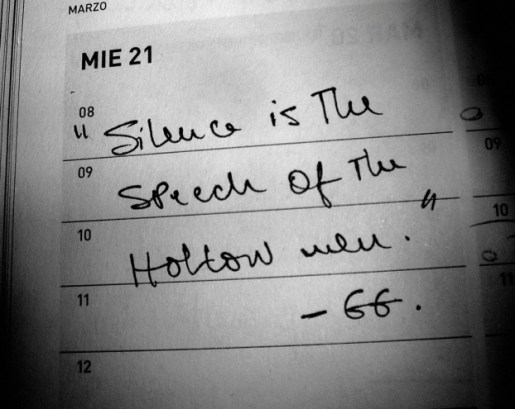
LOOK, NO HANDS!


LOOK, NO HANDS!

 Even if I had no hands

I would be ambidextrous

Ac-dc in a strange sort of way

Though women would still be kings

Or should that be queens?


Even if I had no legs

I would still walk tall

Play legless football

If the fancy took me,

Roller-skate differently, that’s all


Even if I had no mouth

I would still speak out

Words would continue to pour forth

I would not be silenced

I would speak from the heart


Even if I had no eyes

I would still see plenty

Believing would be seeing

And if only in my mind’s eye

My vision would still be twenty-twenty


ACCOSTED BY JESUS


ACCOSTED BY JESUS

They form a fluid line

Near the entrance to Specsavers

Suited, polished, hair slicked to neatness

Smiling gravely as I approach.

One is proselytising,

Before alternating with another

Who steps smartly to the fore.

Yet another, partially hidden,

Goose-steps almost jauntily

Into my space

And proffers me an offering of words,

Printed of course,

Trying to catch my eye.

Avoiding him is momentarily difficult,

His hand hovering hopefully.

Then I swerve deftly by him

Leaving Jesus still firmly in his grasp.

my latest poetry collection ’67 is now available @  http://www.tinhuttalespublishers.co.uk/67/


WORMWOOD

WORMWOOD

Wormwood isn’t here

The sign said, rather waspishly.

It wasn’t the Wormwood I remembered;

Scrubs Lane on a wet Sunday

The outback in West London

No buses, no cars, no people

Just limp grass, acres of the stuff

And, oh yes, the finest redbrick edifice

Victoria’s henchmen could construct.

No rotting bodies in here, my friend.

Not Newgate, not by a long shot

Though debts must still be paid

And some may still get laid


Lord Alfred Douglas lay here,

As did Charles Bronson,

Keith Richards, Leslie Grantham

And  George Blake

Scurrying along in his traitor’s gait

Till the day he pole-vaulted to freedom

More or less

Before waving goodbye

To his English life,

 His liberty and his wife

And all those Wormwood scrubbers.

http://www.amazon.co.uk/Tom-OBrien/e/B0034OIGOQ/ref=sr_tc_2_0?qid=1388083522&sr=1-2-ent


BUNKER ON PORTLAND BILL


BUNKER ON PORTLAND BILL

 This windowed concrete slab

Touching the hedgerows

Bunkered in leaf-strewn soil

Chivvies me


Muskets were reddened here

By shorter men than I

Defenders of a long-gone realm

Stooped between fissured ceiling and creviced floor


What mayhem bedlamed this rocky causeway?

Its cannons foddering the deep

The stun of steel slamming granite

The stench of gunfire turning stomachs

Loose limbs cluttering pathways

Death hovering


All quiet now on this promontory;

Sheep nibbling, tea and scones in the old armoury

Picture postcards of battles fought and won

Day-trippers picnicking

In the shadows cast by the big guns


JOINT ACCOUNT


JOINT ACCOUNT

Of all the joints in all the world

I had to wind up with this one.

Creaking and croaking

It pains when I am smoking

It pains when I am walking

It pains when I am talking.

I wonder if I should use some WD-40.


I bet Bogey never had this problem.


THE DEAFENING SILENCE


THE DEAFENING SILENCE

The silence is deafening

But then it always has been;

Deafening all my life, I mean.

It’s as if I’m not really there,

Although I am sure that’s not true.

Perhaps I am invisible to all

But a few true believers.

Are they possibly seeing what isn’t there,

And  also hearing the deafening silence?

read more of my poems in my new collection ’67’ – http://www.tinhuttalespublishers.co.uk/67/


Émigré

Émigré

 To the other side of the universe

I emigrated

I wanted to see how the other half lived.

Well…I needn’t have bothered;

The services are no better

The trains are never on time

The postman never rings twice

( I know – he should always ring twice,

But I think he was a bit confused)

And there’s a bloody bus on top of a roof,

Just like that one in Bexhill


FAMILY PLANNING


           FAMILY PLANNING

           You English have it:

            A plan for life I mean

            Sex, marriage even,

            A mortgage at nineteen.

            Holidays in Benidorm

            Or that Costa by-the sea.

            And two point five children

            That grandma minds

            Most weekends for free.


THE NIGHT THE MUSIC DIED


THE NIGHT THE MUSIC DIED

           He lay in the box quite comfortably

            His waxen face staring into infinity

            Looking much better in death

            Than he ever had in life.

            It was all that I could do to peer

            At him through slatted fingers

            From the back of the room;

            The ever-present smell of tanning

            And leather aprons absent now;

            More than forty seeping years of it

            Scrubbed away one last time


            His moped – a natural progression from pedal power

            When his legs gave out –

            Lay discarded in the coal shed

            At the back of the house.

            (No driver you see, and mother still had the shopping to do)

            He dug turf, cut down young Sally trees,

            And turned over his bit of stony ground endlessly.

            In summer he clipped sheep slowly

            With a machine bought by post from Clerys,

            Carefully stowing it away in its box

            When the shearing was done.


            The clay pipes he sucked on – their broken stems

Held together with blood pricked from his thumb –

            Were redundant now

            And his three bottles of Sunday-night Guinness

            Would stand corked under the counter evermore.

            Who would dance half-sets with her now?

            My mother enquired of no one in particular,

            The smoky saloon bar stunned that the music had felled him

            Knocked him to the floor in the middle of the tune.

            He lay there with a smile on his face

            Knowing it was over

            And I never got to know what was on his mind.


            We put him in the ground

            And sadness trickled through me

            Like a handful of sand through my fingers.

            Later, everyone stood around

            Eating sparse ham sandwiches

            While I stood there, dry-eyed;

            He was a great man they all said

            Slapping the back of my overcoat;

            Sure he gave forty years to that tannery


            And what did it give him?

            I wanted to shout to the throng;        

            A gold watch and a tin tray

            And both had his name spelled wrong


I KNOW WHY THE CAGED BIRD SINGS

I know why the caged bird sings, ah me,
When his wing is bruised and his bosom sore,
When he beats his bars and would be free;
It is not a carol of joy or glee,
But a prayer that he sends from his heart’s deep core,
But a plea, that upward to Heaven he flings –
I know why the caged bird sings


Maya Angelou has died. Poet, activist, actor, writer,dancer, cook and much more besides. She joined the Harlem Writers Guild in the late 1950’s, where she met her friend and mentor James Baldwin. After hearing Dr. Martin Luther King speak for the first time in 1960 she joined the Civil Rights Movement, and later worked for Malcolm X.

Maya wrote seven volumes of autobiography, starting with I KNOW WHY THE CAGED BIRD SINGS, and described her writing process as ‘regimented’. She would get up at five in the morning and check into a hotel room, where the staff had been instructed to remove any pictures from the walls. She wrote on legal pads while lying on the bed, with a bottle of sherry, a deck of cards to play solitaire, Roget’s Thesaurus and the Bible, and would leave by the early afternoon. She averaged 10–12 pages of material a day in this manner, which she then edited down to three or four pages in the evening. Tough going!

Maya is put here

 Who will sing the praises of the poets now?

who the deeds of men?

with Maya dead the muses are silent

The caged bird sings

with a fearful trill

of things unknown

but longed for still

and his tune is heard

on the distant hill

for the caged bird sings of freedom