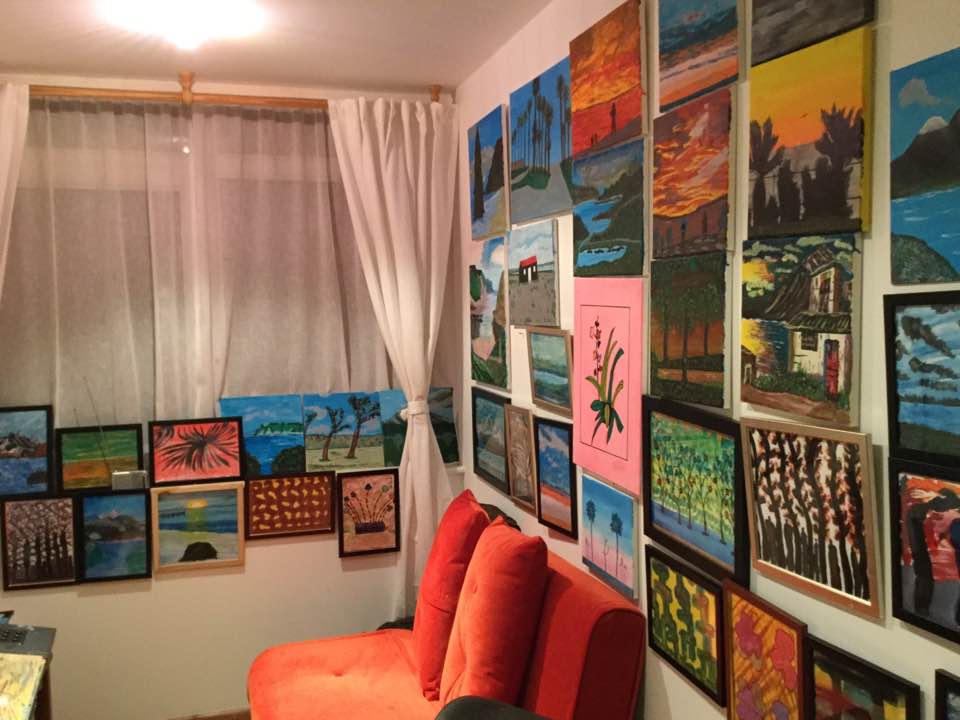
DOODLING FOR FUN

Been doodling a bit recently. Here are some results.

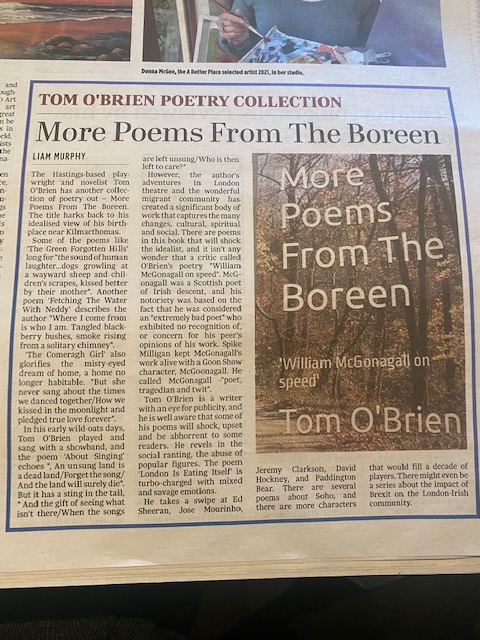
MORE POEMS FROM THE BOREEN

my latest book of poetry MORE POEMS FROM THE BOREEN is now available in paperback on Amazon.co.uk. It has been described by one critic as ‘William McGonagall on speed’! For those who don’t know who William M was he is widely regarded as the worst poet ever published! Now, there’s high recommendation! So, is this bad poetry? Well, there’s only one way to find out! https://www.amazon.co.uk/dp/B09FS9L927

some extracts:

MY CAR NOW TALKS TO ME
Hello
Goodbye
Raising the lights like a stage curtain
Playing little movies
Serenading me with melodies
The welcome – farewell experience
They call it
“An emotionally resonant experience”
And that digital note of appreciation
“Thank you for driving a hybrid”
As if it was something…well
Unconnected with this thing on four wheels.
And those door handles
Illuminating when they sense my presence
The needles on the instruments
Snapping to attention as I open the door
There’s a welcoming theme
Part Hollywood soundtrack
Part plane swoosh
And that puddle lamp!
A welcome mat of light.
My car is a robot I think
With a personality not just in its body
But also in its behaviour.
“How can I help you?”
It asks now
As I prepare for take-off.
I really feel like telling it
To shut the fuck up
But I don’t want to hurt its feelings

CITY OF LIGHT
A disused rail track in south Paris;
A dark tunnel;
Crawling, wading, through water
To a dank chamber with vaulted ceilings.
This is where the cataphiles meet;
Lovers of catacombs
And all things underneath.
The walls are covered with art
Awash with glow-in-the-dark paint,
Egyptian black-and-orange devil faces,
A multi-coloured parrot image.
One wall is encrusted with mirror shards
The centrepiece a glittering disco ball
The ghostly faces leering
Down the long subterranean hall
This is the City of Light
Where nobody sleeps at night
And where the remains of six million Parisians,
Transferred from Paris’ overflowing cemeteries
More than one hundred years ago,
Dwell.
Now artists prowl these same catacombs
Sometimes unseen
Ghostly in their movements
The spectre of real ghosts always in their slipstream

HOCKNEY
High in the Hollywood hills
In the shadows of Sunset Boulevard
Hockney is dabbling again.
A copy of Mulholland Drive rests against the studio wall;
Outside, the land drops away;
A jungle of exotic palms and ferns
With a swimming pool at the bottom
Not much used anymore.
He doesn’t go out much these days, he says;
‘I go to the dentist , the doctor, the bookstore
And the marijuana store
And that’s about it.
I’m much too deaf to go out
I don’t really have a social life
Because socialising is talking and listening
And I can’t really listen any more’.
Okay David,
But really, the marijuana store!
I wonder if it’s the one on Venice beach
Where the aged musculatorians of Muscle beach
Tramp with regularity to the nearby marijuana clinic
To see the marijuana doctors,
In their neat green cross uniforms,
Who will prescribe some medical marijuana
For forty bucks
Or thereabouts
To anybody who needs it.
When I’m working again I feel thirty,
And when I smoke I feel like Picasso, he says
Yeah, David, okay
But that’s not the work
That’s the fucking weed.

GILMARTIN – play reading video

When Bertie Ahern resigned on May 6th 2008 after 11 years as Irish Taoiseach and more than thirty years all told in the corridors of power, it was as a direct result of the fall-out that occurred from the treatment meted out to Irish businessman, Tom Gilmartin, which only emerged in its entirety at the conclusion of the Mahon Tribunal, which had sat for almost 15 years before reaching its conclusions in 2012. Tom Gilmartin had emigrated to Luton in the 1950’s from Sligo, and over the years had built up a successful business in construction and engineering, in Luton and South East England. Now a multi-millionaire he decided in the late 1980’s to invest his experience – and money – in some projects in Dublin, where unemployment was high, and where poverty had once again seen many young Irish people cross the water in the hope of a better life. Tom had ambitious plans for several major retail developments in the city, which he hoped would provide work for hundreds, if not thousands, in the city, but little did he know that in order to do business in Dublin, senior politicians and public officials would want a slice of the action – in large amounts of cash. Embittered and impoverished by his experiences, Tom finally blew the whistle on the corruption at the heart of government and the city’s planning system. His complaints resulted in the setting up in 1997, by order of the Oireachtas, of the Mahon Tribunal to look into ‘certain planning matters and payments’. Ironically, it was championed by none other than one Bertie Ahern.

SITTING AT YOUR DESK,BLEEDING…

Writing is easy, you just sit at your desk and bleed. Hemingway said that. He also said ‘write drunk, edit sober’. And he also said, “I love sleep. My life has the tendency to fall apart when I’m awake, you know?” Not that he did much of it as far as I can see; he was up in the early morning, standing at his desk, slaving away for 5 or 6 hours, then spending his evenings drinking and partying till late.

This is an extract from FOR WHOM THEY TOLL, a play about Ernest that I have been struggling with for years; it certainly reminds me of his remarks about bleeding…

FOR WHOM THEY TOLL

by

Tom O’Brien

                                                               ACT ONE

scene one

A burial ground. Bells can be heard tolling in the background. Off-stage a burial is taking place. VALERIE DANBY-SMITH , a vivacious 21yr old, dark-haired and somberly dressed, watches the proceedings in the distance, a tearful expression on her face. After a few moments, GREG HEMINGWAY, not so somberly attired, arrives and looks on.

GREG:           (extending his hand)  Hello. I’m Greg

VAL:              (shaking hands)  I know.  I saw your picture.  I’m Valerie.  

GREG:           I know. I saw your picture too.

They watch the scene again for a moment.

GREG:           It’s a great day for a funeral.

VAL:              It is – if you’re not the main attraction.

GREG:           How well did you know my father?

VAL:              I worked for him and Mary for about eighteen months.  (pause)

                        He was a wonderful person.

GREG:           Yes – I expect he was. (pause) I am glad he is dead.

VAL:              You don’t mean that.  (Greg doesn’t reply) Why Greg?

GREG:           Because it means that I can’t disappoint him anymore. (he shrugs)

                        How come you’re not…?

                        (he indicates the funeral party)

VAL:              It’s a bit…delicate. I was officially invited then when Mary

 found out I was working for Newsweek…(shrugs)

You know how it is with reporters.

GREG:           No, how is it?  (laughs) Family secrets have

                        a way of escaping at funerals don’t they?

                        I can imagine Mary being mortified when she

                        realised her mistake.

VAL:              Not that I would have said anything of course.

                        But I can understand why she doesn’t want me too

                        close. (pause)  What’s your excuse?

GREG:           Oh, nothing dramatic. I simply wasn’t welcome

                        when he was alive, and I don’t suppose he’s had any reason

                        to change his mind just because he’s dead.

                        (pause) He never spoke to you?  About me?

VAL:              No.

GREG:           Not even disparagingly?

VAL:              Not even that way. I saw a photo of you once, but

                        Mary warned me never to speak of you in his presence.

                        (pause) It must have been something terrible between you.

GREG:           In his eyes it was unforgivable (he doesn’t elaborate then shakes his head.) He finally took the coward’s way out.

VAL:              Why would you say a thing like that?

GREG:           I was thinking of something he himself said about his own father. ‘My father was a coward. He shot himself without necessity’.

VAL:              He committed suicide too?

GREG:           Yeah. Almost identical. Only thing different was the gun. He used a revolver.

VAL;              Your grandfather?

GREG:           (nodding) He was a weak man. He made bad investments and was bullied by my grandmother, so he shot himself. When Papa found out the true facts he came to hate her. ‘My mother is an all time all American bitch’ he once said, ‘she would make a pack mule shoot himself. He eventually forgave his father but felt ashamed for him’. (a long pause)

                        Why did he kill himself?

VAL:              I don’t know, Greg

GREG:           He never confided in you?

VAL:              I haven’t worked for him or seen him in…oh, six months

                        You really should speak to Mary.

GREG :           My wicked stepmother?  She is in complete denial about

                        the whole affair. I read that she keeps insisting it was an accident.

VAL:              Perhaps it was.

GREG:           Do you believe that?

VAL:              No.

GREG:           Papa knew about guns. He was a crack shot.

                        How could he accidentally blow his head off

                        with a shotgun for chrissakes?

                        (looks into the distance again)

                        Look at them. Like vultures circling

VAL:              You’re wrong. They’re his friends. All his friends.

GREG:           Huh! Isn’t that Uncle Leicester I see?

                        What’s he doing there?

                        They haven’t spoken for years.

VAL:              It will hardly make any difference now, will it?

                        They are just paying their respects that’s all.

                        He was a great man you know. A great writer.

GREG:           I know that. It’s just that I wish I’d…

                        Oh Christ, I need a drink.  Where’s the nearest bar?

Lights change to signify change of scene.

The scene is now a bar, where the mourners are ‘celebrating’ after the funeral. Valerie and Greg are seated at a table drinking shorts.  LEICESTER HEMINGWAY  sees them and heads towards them. Leicester is in his mid forties, a younger version of his brother Ernest.

LEIC:             Greg!  How the hell are you?  I haven’t see you since

you were, well  knee-high to a grasshopper.

GREG:           Uncle Leicester. (they shake) It’s not that long. We spoke a

                        couple of years ago. Some convention, I believe.

LEIC:             Did we?   Nope, I don’t recall.

                        (he looks at Valerie)

GREG:           This is…

LEIC:             I know who it is. (Val and he shake)

                        Your ladyship. I seen your picture in the paper.

VAL:              All the papers seem to have used the same ones

LEIC:             They say my brother’s eyesight was fading,

                        but seeing you I am not so sure.

                        (pause) Can you tell me where my manuscript is?

VAL:              Your manuscript?

LEIC:             The one I sent to Ernest. In Cuba. You were there.

                        I know.  I read about it. Personal assistant they

                        called you. You must have opened it…in that

                        capacity?

VAL:              Yes, I did.

LEIC:             And?

VAL:              I don’t know what happened to it. Perhaps  P…

                        Ernest read it, perhaps he didn’t. He was very

                        busy at that time.

LEIC:             You passed it on to him?

VAL:              Yes I did

LEIC:             He never commented on it?

GREG:           Uncle, this really isn’t the time…

GREG:           It was my life’s’ work goddamit. I don’t

                        want it rotting in some stinking cellar in Havana…

VAL:              It’s all right. No, he never spoke to me about it.

LEIC:             I really must have it back.

                        I wouldn’t want it to fall into the wrong hands

                        now that Ernest’s gone.

VAL:              I don’t see how I can help. I no longer have

                        any connection…

LEIC:             I think my sister-in-law may have plans for you.

                        in that respect. (he waves at somebody)

                        I do believe she has spotted us.

                        (he pauses ,then whispers conspiratorially)

                        Ernest had this thing about young women.

                        And about every ten years or so he fell in love with a new one

                        You were the next in line, you know that?

VAL:              Next in line for what?

LEIC:             The next Mrs. Hemingway. Come on, surely you knew?

                        All the signs were there

                        (Val doesn’t reply)

                        He never asked you?  Well, all I can say is that you must’ a

                        been putting out  the right signals – otherwise you wouldn’t’ a

                        been keeping him company for so long.

                        (finishes his drink)

                        Time for this old horse to find another watering hole.

                        I never could stand weeping widows.

And remember, if you do lay your hands on my

literary masterpiece, guard it with your life. 

Leicester exits as MARY HEMINGWAY enters. Mary is in her fifties, still strikingly beautiful, in a well-worn sort of way

MARY:          Well, the manners of some people!

                        What did Leicester want?

VAL:              The whereabouts of his manuscript.

MARY:          And did you tell him?

VAL:              No-oo.

Both women laugh at this

GREG:           Well, come on, where is it?

MARY:          Papa took one look at it and threw on the fire.

                        He took great pleasure in describing the colour

                        of the flame as he watched it burn. ‘Look at that – Purpley-blue.

The colour of Leicester’s cheeks I expect,

could he but see it. One genius is enough in a family’.

                        (pause)

                        One genius less now.

                        I am glad you came, Greg. Papa would have liked it.

GREG:           I think he would be indifferent. Just as he was in life

                        I don’t like this glorifying the dead. I think we should all be

                        chucked over a cliff or down a ravine when our time comes,

                        with as little fuss as possible.

                        Let the buzzards or the coyote have us

                        Don’t you think Papa would have liked it that-a-way?

                        (he rises)

                        I’m going back to New York. Anybody coming?

                        (no reply)

                         It’s been nice meeting you Valerie.

                        I hope we can do it again sometimes.

VAL:              I ‘d like that.

(she writes something on a piece of paper and hands it to him)

Call me sometime.

Greg exits

MARY:          Greg is more trouble than he’s worth.

VAL:              What kind of trouble?

MARY:          You’ll find out soon enough.

VAL:              It’s only for a drink.

MARY:          Oh yeah?   I’ve seen that look before. (shrugs)

                        Go ahead, it’s your funeral

                        Oh Christ, did I really say that!

                        (pause)

                        Papa’s gone. What am I going to do now, Valerie?

VAL:              My mother had a saying back in Ireland  ‘We never

                        died a winter yet’

MARY:          Meaning?

VAL:              Meaning we’ll get by somehow.

                        You’ll get by somehow.

MARY:          I intend to go back to Cuba sometime soon.

I want to try and get as much

of Papa’s personal stuff out as I can.

VAL:              Don’t you think that’s dangerous.

MARY:          Fidel Castro’s war is with America, not Ernest Hemingway.

                        Papa was good for Castro, good for Cuba.

                        The world’s greatest writer living there!

                        Besides, they were personal friends.

                        (pause)

                        I want you to come with me.

VAL:              Why?  You don’t even like me.

MARY:          Don’t be ridiculous!  Why wouldn’t I like you?

                        As a matter of fact you remind me a lot of

                        myself when I was your age.

                        You think it’s because of Papa? How he felt.

                        Nothing happened, did it?

VAL:              Of course not.

MARY:          Well then, what are you worrying about?

VAL:              I have a job

MARY:          Newsweek? I can offer more than them.

                        Think of the excitement. The sense of adventure.

                        Remember Pamplona? The matadors, the bullfights,

                        the camaraderie. Weren’t you excited then?  Even

                        a little frightened?

VAL:              Yes.

MARY:          This will be better. Much better.

                        Can Newsweek offer you access to Papa Hemingway’s

                        private and personal papers? And a promise that you can work

on them when we get them back from Cuba?

VAL:              No

MARY:          See? No contest is it?

                        What were you going to write about today?

VAL:              Nothing. I was going to write nothing

MARY:          More fool you then.  Because I would have.

                        You forget that I was a journalist before I gave

                        it all up to look after Papa.

                        Here’s some advice;

                        Don’t let sentiment get in the way of a good story.

                        I did – and look what happened to me.

                        Well, what do you say? Cuba or bust? Valerie miles at her, but doesn’t reply

GILMARTIN – the greed and corruption at the heart of Irish politics

GILMARTIN

The greed and corruption at the heart of Irish politics

A rehearsed play reading

written by Tom O’Brien

***********

The Club for Acts and Actors
20 Bedford Street
London WC2E 9HP

************

Tuesday 3rd August @ 3pm

GILMARTIN

Running time: 95 mins. approx.

Characters & cast

Maire Ann Howard/Woman – Judith Paris

Tom Gilmartin – Anthony Cable

Liam Lawlor – Paul Lavers

Bertie Ahern – Kenneth Michaels

Owen O’Callaghan – Andrew Fettes

Padraig Flynn – Tim Skelton

George Redmond –  to be confirmed

Maguire/narrator – Tim Heath

(cast appears subject to availability)

Theatres, producers, and other interested parties please contact Tom O’Brien or Tim Heath for further details.

tomobrien2004@yahoo.co.uk  timheath781@hotmail.com

Admission free but, owing to limited space, places need to be booked in advance. This can be done by emailing tomobrien2004@yahoo.co.uk up until 10 am on August 3rd, then timheath781@hotmail.com up until 12.30 pm. Please put ‘AUG 3’ in the subject line. Requests for places will be dealt with on a first come, first served basis.

FOR WHOM THEY TOLL – a work in progress

FOR WHOM THEY TOLL

by

Tom O’Brien

                                                               ACT ONE

scene one

A burial ground. Bells can be heard tolling in the background. Off-stage a burial is taking place. VALERIE DANBY-SMITH , a vivacious 21yr old, dark-haired and somberly dressed, watches the proceedings in the distance, a tearful expression on her face. After a few moments, GREG HEMINGWAY, not so somberly attired, arrives and looks on.

GREG:           (extending his hand)  Hello. I’m Greg

VAL:              (shaking hands)  I know.  I saw your picture.  I’m Valerie.  

GREG:           I know. I saw your picture too.

They watch the scene again for a moment.

GREG:           It’s a great day for a funeral.

VAL:              It is – if you’re not the main attraction.

GREG:           How well did you know my father?

VAL:              I worked for him and Mary for about eighteen months.  (pause)

                        He was a wonderful person.

GREG:           Yes – I expect he was. (pause) I am glad he is dead.

VAL:              You don’t mean that.  (Greg doesn’t reply) Why Greg?

GREG:           Because it means that I can’t disappoint him anymore. (he shrugs)

                        How come you’re not…?

                        (he indicates the funeral party)

VAL:              It’s a bit…delicate. I was officially invited then when Mary

 found out I was working for Newsweek…(shrugs)

You know how it is with reporters.

GREG:           No, how is it?  (laughs) Family secrets have

                        a way of escaping at funerals don’t they?

                        I can imagine Mary being mortified when she

                        realised her mistake.

VAL:              Not that I would have said anything of course.

                        But I can understand why she doesn’t want me too

                        close. (pause)  What’s your excuse?

GREG:           Oh, nothing dramatic. I simply wasn’t welcome

                        when he was alive, and I don’t suppose he’s had any reason

                        to change his mind just because he’s dead.

                        (pause) He never spoke to you?  About me?

VAL:              No.

GREG:           Not even disparagingly?

VAL:              Not even that way. I saw a photo of you once, but

                        Mary warned me never to speak of you in his presence.

                        (pause) It must have been something terrible between you.

GREG:           In his eyes it was unforgivable (he doesn’t elaborate then shakes his head.) He finally took the coward’s way out.

VAL:              Why would you say a thing like that?

GREG:           I was thinking of something he himself said about his own father. ‘My father was a coward. He shot himself without necessity’.

VAL:              He committed suicide too?

GREG:           Yeah. Almost identical. Only thing different was the gun. He used a revolver.

VAL;              Your grandfather?

GREG:           (nodding) He was a weak man. He made bad investments and was bullied by my grandmother, so he shot himself. When Papa found out the true facts he came to hate her. ‘My mother is an all time all American bitch’ he once said, ‘she would make a pack mule shoot himself. He eventually forgave his father but felt ashamed for him’. (a long pause)

                        Why did he kill himself?

VAL:              I don’t know, Greg

GREG:           He never confided in you?

VAL:              I haven’t worked for him or seen him in…oh, six months

                        You really should speak to Mary.

GREG :           My wicked stepmother?  She is in complete denial about

                        the whole affair. I read that she keeps insisting it was an accident.

VAL:              Perhaps it was.

GREG:           Do you believe that?

VAL:              No.

GREG:           Papa knew about guns. He was a crack shot.

                        How could he accidentally blow his head off

                        with a shotgun for chrissakes?

                        (looks into the distance again)

                        Look at them. Like vultures circling

VAL:              You’re wrong. They’re his friends. All his friends.

GREG:           Huh! Isn’t that Uncle Leicester I see?

                        What’s he doing there?

                        They haven’t spoken for years.

VAL:              It will hardly make any difference now, will it?

                        They are just paying their respects that’s all.

                        He was a great man you know. A great writer.

GREG:           I know that. It’s just that I wish I’d…

                        Oh Christ, I need a drink.  Where’s the nearest bar?

Lights change to signify change of scene.

The scene is now a bar, where the mourners are ‘celebrating’ after the funeral. Valerie and Greg are seated at a table drinking shorts.  LEICESTER HEMINGWAY  sees them and heads towards them. Leicester is in his mid forties, a younger version of his brother Ernest.

LEIC:             Greg!  How the hell are you?  I haven’t see you since

you were, well  knee-high to a grasshopper.

GREG:           Uncle Leicester. (they shake) It’s not that long. We spoke a

                        couple of years ago. Some convention, I believe.

LEIC:             Did we?   Nope, I don’t recall.

                        (he looks at Valerie)

GREG:           This is…

LEIC:             I know who it is. (Val and he shake)

                        Your ladyship. I seen your picture in the paper.

VAL:              All the papers seem to have used the same ones

LEIC:             They say my brother’s eyesight was fading,

                        but seeing you I am not so sure.

                        (pause) Can you tell me where my manuscript is?

VAL:              Your manuscript?

LEIC:             The one I sent to Ernest. In Cuba. You were there.

                        I know.  I read about it. Personal assistant they

                        called you. You must have opened it…in that

                        capacity?

VAL:              Yes, I did.

LEIC:             And?

VAL:              I don’t know what happened to it. Perhaps  P…

                        Ernest read it, perhaps he didn’t. He was very

                        busy at that time.

LEIC:             You passed it on to him?

VAL:              Yes I did

LEIC:             He never commented on it?

GREG:           Uncle, this really isn’t the time…

GREG:           It was my life’s’ work goddamit. I don’t

                        want it rotting in some stinking cellar in Havana…

VAL:              It’s all right. No, he never spoke to me about it.

LEIC:             I really must have it back.

                        I wouldn’t want it to fall into the wrong hands

                        now that Ernest’s gone.

VAL:              I don’t see how I can help. I no longer have

                        any connection…

LEIC:             I think my sister-in-law may have plans for you.

                        in that respect. (he waves at somebody)

                        I do believe she has spotted us.

                        (he pauses ,then whispers conspiratorially)

                        Ernest had this thing about young women.

                        And about every ten years or so he fell in love with a new one

                        You were the next in line, you know that?

VAL:              Next in line for what?

LEIC:             The next Mrs. Hemingway. Come on, surely you knew?

                        All the signs were there

                        (Val doesn’t reply)

                        He never asked you?  Well, all I can say is that you must’ a

                        been putting out  the right signals – otherwise you wouldn’t’ a

                        been keeping him company for so long.

                        (finishes his drink)

                        Time for this old horse to find another watering hole.

                        I never could stand weeping widows.

And remember, if you do lay your hands on my

literary masterpiece, guard it with your life. 

Leicester exits as MARY HEMINGWAY enters. Mary is in her fifties, still strikingly beautiful, in a well-worn sort of way

MARY:          Well, the manners of some people!

                        What did Leicester want?

VAL:              The whereabouts of his manuscript.

MARY:          And did you tell him?

VAL:              No-oo.

Both women laugh at this

GREG:           Well, come on, where is it?

MARY:          Papa took one look at it and threw on the fire.

                        He took great pleasure in describing the colour

                        of the flame as he watched it burn. ‘Look at that – Purpley-blue.

The colour of Leicester’s cheeks I expect,

could he but see it. One genius is enough in a family’.

                        (pause)

                        One genius less now.

                        I am glad you came, Greg. Papa would have liked it.

GREG:           I think he would be indifferent. Just as he was in life

                        I don’t like this glorifying the dead. I think we should all be

                        chucked over a cliff or down a ravine when our time comes,

                        with as little fuss as possible.

                        Let the buzzards or the coyote have us

                        Don’t you think Papa would have liked it that-a-way?

                        (he rises)

                        I’m going back to New York. Anybody coming?

                        (no reply)

                         It’s been nice meeting you Valerie.

                        I hope we can do it again sometimes.

VAL:              I ‘d like that.

(she writes something on a piece of paper and hands it to him)

Call me sometime.

Greg exits

MARY:          Greg is more trouble than he’s worth.

VAL:              What kind of trouble?

MARY:          You’ll find out soon enough.

VAL:              It’s only for a drink.

MARY:          Oh yeah?   I’ve seen that look before. (shrugs)

                        Go ahead, it’s your funeral

                        Oh Christ, did I really say that!

                        (pause)

                        Papa’s gone. What am I going to do now, Valerie?

VAL:              My mother had a saying back in Ireland  ‘We never

                        died a winter yet’

MARY:          Meaning?

VAL:              Meaning we’ll get by somehow.

                        You’ll get by somehow.

MARY:          I intend to go back to Cuba sometime soon.

I want to try and get as much

of Papa’s personal stuff out as I can.

VAL:              Don’t you think that’s dangerous.

MARY:          Fidel Castro’s war is with America, not Ernest Hemingway.

                        Papa was good for Castro, good for Cuba.

                        The world’s greatest writer living there!

                        Besides, they were personal friends.

                        (pause)

                        I want you to come with me.

VAL:              Why?  You don’t even like me.

MARY:          Don’t be ridiculous!  Why wouldn’t I like you?

                        As a matter of fact you remind me a lot of

                        myself when I was your age.

                        You think it’s because of Papa? How he felt.

                        Nothing happened, did it?

VAL:              Of course not.

MARY:          Well then, what are you worrying about?

VAL:              I have a job

MARY:          Newsweek? I can offer more than them.

                        Think of the excitement. The sense of adventure.

                        Remember Pamplona? The matadors, the bullfights,

                        the camaraderie. Weren’t you excited then?  Even

                        a little frightened?

VAL:              Yes.

MARY:          This will be better. Much better.

                        Can Newsweek offer you access to Papa Hemingway’s

                        private and personal papers? And a promise that you can work

on them when we get them back from Cuba?

VAL:              No

MARY:          See? No contest is it?

                        What were you going to write about today?

VAL:              Nothing. I was going to write nothing

MARY:          More fool you then.  Because I would have.

                        You forget that I was a journalist before I gave

                        it all up to look after Papa.

                        Here’s some advice;

                        Don’t let sentiment get in the way of a good story.

                        I did – and look what happened to me.

                        Well, what do you say? Cuba or bust?

Valerie miles at her, but doesn’t reply.

Change of scene. Valerie’s apartment. While Val is writing up her diary. ERNEST HEMINGWAY  ‘appears’

VAL:              (reading what she has written)

                        Around the hearthstone every night/

                        the storyteller lives forever

                        That was on one of the wreaths, Papa

                        The one that Brendan Behan sent.

                        (laughs)

                        He once asked me why I wanted to work for America’s

                        greatest writer, when I could work for Ireland’s finest.

                        And when he discovered I had spent some time in Spain

                        he wanted to know all about it….

Ernest Appears, a drink in his hand It should be slightly dream-like, because Val is clearly imagining this part.

HEM:             Well now, Miss Smith. And what have you to say

                        about Spain?  Did your time with our little group

                        live up to your expectations?

VAL:              Oh yes. Much more. Much, much more. I shall never

                        forget this summer. The Spanish people are so…so

                        liberating. And the bullfights, I never saw such passion,

                        such drama in my life.

HEM:             Not even at your Abbey Theatre?

VAL:              The Abbey is not a patch on it! This is real life.

HEM:             You must come to Cuba with us. After the season

                        is over.

VAL:              But I couldn’t. You have been too kind already.

HEM:             I insist. Besides, I still have need of your services. I think

                        Mary finds it all a bit much these days.

VAL:              I don’t know. I have already made plans for the next couple

of months. Spend some time in Paris…visit Italy with

some friends…go back to Dublin and see my family…

HEM:             In the New Year then, When you have finished your

                        commitments.

VAL:              I shall have to think about it.

HEM:             What is there to think about? Besides, I can only work well

 when you are around. I need you.  You must come.

                        (pause)

                        Look, your coming means everything to me. My life,

                        my work, my future – our future.

                        (pause)

                        If you don’t come, I will have no reason to go on.

VAL:              Ah, I see now. Another little game of yours

HEM:             No game

VAL:              What do you mean then?

HEM:             What I said. I will have no reason to go on.

VAL:              (after a pause)

                        You told me once that your father committed suicide

HEM:             Yes

VAL:              You said you despised him for it.

HEM:             Yes I did.

VAL:              And you called him a coward and

                        said killing oneself was the ultimate act of cowardice.

HEM:             Yes.

VAL:              No. This isn’t…I don’t understand

                        (pause)

How does Mary feel about my coming to Cuba?

                        Have you even mentioned it to her?

HEM:             Ah well, Mary is a bit jealous of you. As you are probably aware.

                        You know how it goes.

 Young woman, older man…older woman gets jealous…

VAL:              I never gave her any reason to be jealous.

HEM:             I suppose not. Those nights you used to sit with me,

                        hold my hand, when I couldn’t sleep… I think they…

                        I think she…

VAL:              Nothing happened. I hope you told her that.

HEM:             Yes, yes. (pause) I love you. I hope you realize that.

VAL:              Papa! You shouldn’t joke.

HEM:             Who’s joking? Do you love me?

VAL:              I have a great affection for you, Papa.  You and Mary.

HEM:             I think my days with Miss Mary are numbered. She

                        no longer cares for me. She has even hinted that she

                        wants a divorce.

                        (pause)

                        Look, once I have sorted the mess out, we could

                        get married.  What do you say?

VAL:              Now I know you are joking!

HEM:             Say yes, Val. We could have the daughter I’ve

                        always wanted. Mary’s too old for that, anyway.

                        Look, I know you’re a good Catholic, but so am I.

I’ve only been married once in the church, to my first

wife Pauline – and she’s now dead, so there shouldn’t

be any problems on that front…

VAL:              Stop it Papa!

Silence for a moment.

HEM:             No, you are right. It won’t work. It couldn’t work.

                        Besides, my health is getting worse. Much worse My

                        eyes. But not just my eyes. My whole system

                        is breaking down

VAL:              Don’t talk like that. You will get better. I know you will.

                        Look, all I want or expect is to be a friend, and I don’t

                        mean a fair-weather friend.  Your health, good or bad, shouldn’t

                        change anything between us. I shall stick around as long as

you need me.

HEM:             That’s good to hear. (chuckles)

                        Thought I had frightened you off there for a moment.

                        But it doesn’t change things. How I feel about you.

                        (pause)

                        As you probably know, all the women I cared about

                        have had new lives breathed into them in my books. As

                        far as I am aware, none of them minded being immortalized

                        in that way. Not by name of course, but they knew

just the same. I wanted you to be part of that… quadrille

Wanted to immortalize you…

(pause)

But maybe I’m too old. Too far down the winding road.

When that happens there’s only one thing to do;

Get off the god dam road…

(he finishes his drink)

Hell with it. Let’s have another of these.

Might help me sleep.

(they refill their glasses)

Look, about what I said just now.  Let’s keep it between us

No one else need know. Especially not Mary.

We’ll just go on as before.

He looks at Val for a long moment, until her eyes assent.

Valerie awakes from her daydream and is clearly troubled. She takes a bottle of vodka, pour a stiff measure into a glass and drinks it quickly.

Lights change to signify change of scene. Valerie’s apartment in NY.

Valerie and Greg are seated at a table, clearly enjoying themselves. Val puts on a flamenco record and demonstrates the art of flamenco dancing to him.

VAL:              But of course I can do the flamenco…

                        (she demonstrates)

                        Antonio taught me.

                        Antonio Ordonez, the bullfighter?

GREG:           Oh…him

VAL:              What do you mean!

He’s the finest bullfighter in Spain.

He said the dancing helped him in his work

(she demonstrates a ‘pass’, using a coloured scarf)

I said it was a shame there were no lady bullfighters

Everybody laughed uproariously, including Papa,

who said Antonio’s sister, Carmen, was a

better matador than  him, but she would have

to grow a moustache and some  cojones if

she wanted to take part.

But I was serious.

GREG:           I bet you were.

VAL:              I think I would have made a good… matador, don’t you?

                        (she finishes with a few more fancy touches, then drinks)

GREG:           I think you might have made a dead one

                        (he looks at some photos)

                        Those beasts look ferocious to me.

                        Mind you, that was Papa’s world.  Always on the

                        edge. He didn’t mind what it was; lions tigers,

                        wild boar, as long as there was an element of danger.

                        I remember once he challenged a wild bear that was

                        terrorizing the folk back in Idaho.

VAL:              No!  what happened?

GREG:           Well, as I recall, the bear was stopping traffic from getting by,

                         wouldn’t let anybody pass. Papa just drove up and

                        began shouting at it.

 Why, you’re just nothing but an ugly son-of-a-bitch Black.

You’re not a Polar Bear, not even a Grizzly;

                        just a plain ordinary Black . Now get off the goddam road you bum!

                        And you know, in the end that bear just slunk away. Every time

                        after that it hid behind the trees when a car came by.

VAL:              Why didn’t you get on…you and Papa?

scene

Another funeral. This time Greg Hemingway’s.  Valerie is present with her son Brendan.

VAL:              I’ve been on God’s earth over sixty years now, and for more

                        than forty of them I have been inextricably linked with the

                        Hemingway name. I don’t expect that will change in the future.

                        (pause)

                        I have four children, and all of them are Hemingway’s –

                        except one.

                        (she nudges Brendan)

                        Come on, Brendan, let’s go home

                                                                                                                        End

THE BAPTISM

My friend Trevor got baptised on Sunday, a proper dunking in the stormy sea on St Leonard- on -Sea beach. Trevor has just turned 64 – and I learned afterwards that he can’t swim! Here are some pics.


file:///C:/Users/Tom%20O’Brien/Desktop/trevsphotos.mp4

LETTERS TO MOTHER…a play-reading

ADAPTED FROM MY BOOK OF THE SAME TITLE. ALL ARE WELCOME.

MARGARET, ARE YOU GRIEVING?

gorgeousgael's avatarMy Writing Life

SPRING AND FALL by Gerald Manley Hopkins

Márgarét, áre you gríeving
Over Goldengrove unleaving?
Leáves like the things of man, you
With your fresh thoughts care for, can you?
Ah! ás the heart grows older
It will come to such sights colder
By and by, nor spare a sigh
Though worlds of wanwood leafmeal lie;
And yet you wíll weep and know why.
Now no matter, child, the name:
Sórrow’s spríngs áre the same.
Nor mouth had, no nor mind, expressed
What heart heard of, ghost guessed:
It ís the blight man was born for,
It is Margaret you mourn for.

View original post

GEORGE – a short story

GEORGE: a short story by [Tom O'Brien]

GEORGE
A short story
By
Tom O’Brien2
(c) Tom O’Brien 2018.
All rights reserved. No part of this book may be reproduced, stored in a retrieval system
or transmitted in any form or means without the prior written permission of the author
or publisher. This book is sold subject to the condition that it shall not be lent, resold,
hired out or otherwise circulated without the publisher’s prior consent in any form or
binding other than that which it is published3
GEORGE
I first made George’s acquaintance in Ladbroke Grove when he veered from a side road and
rode straight in front of me, begging to be knocked down. I managed to disoblige him and
nearly demolished a plate-glass butcher’s window in the process. The blood-stained vendor
froze in the act of removing a leg of mutton from the window display when he saw my half
ton of mechanised metal glaring down at him from a distance of six inches. George merely
raised his hat in acknowledgement and continued on his leisurely way.
Once seen, George was unlikely to be forgotten. His shiny, moon-shaped face was
partitioned by a handlebar moustache that just failed to reach his ears, and was adorned by a
tiny pork-pie hat that perched precariously on his non-stick dome. He sat emperor-straight on
the high-framed bicycle, arms outstretched to reach the handlebars, rigid from the legs
upward.
‘You damned lunatic!’ I yelled at his retreating back, and, leaving the butcher still
frozen in wide-eyed awe, gave chase.
He might not have been much of a cyclist but as a gentleman he had few peers. He
doffed his hat at every female we passed, and the less-than-friendly response didn’t seem to
bother him unduly. We turned into the Harrow Road and he eventually noticed my shaking
fist.
‘I could have killed you back there’, I raged when we had come to a halt. ‘Why don’t
you look where you are going?’
He smiled serenely back at me. ‘A navigational misjudgement, sir. I do apologise’.
‘Navigational misjudgement…!’
He peered closely at me. ‘It’s Mr Adams, isn’t it?’
I racked my brain for some long-forgotten acquaintance with this madman.
‘You own a gallery in the Portobello Road and you specialise in old prints, am I
correct?’4
I nodded my head.
‘I, too, am a lover of old prints. In fact I have a collection of them. I am apt to wander
around shops and galleries in pursuit of my pleasure and have passed your premises on many
occasions’.
The discovery that we both shared the same passion awakened my interest in him. A
love of the arts excused many conditions; perhaps it wasn’t madness that afflicted him but
merely eccentricity.
‘You have never been in my gallery. I would surely have remembered you…’
George fiddled with his garish dicky bow. ‘Embarrassment Mr Adams. You see I
mainly visit these, ah…emporiums with a view to selling one or two of my treasures. The
needs of the body you see…man cannot live on fresh air alone’.
‘But I am just as likely to buy your wares as the next gallery’.
‘My paltry offerings would hardly interest you. It is obvious from your window
display that you cater for the top end of the market’.
I laughed. ‘My dear fellow it’s all a question of putting the ‘best wine’ in the window.
Behind the facade is as much junk as the next chap. I would be perfectly willing to look at
your offerings. I may not buy them of course…’
He indicated the cardboard box lashed to his rear carrier. ‘I was on my way to do
some negotiating now. Would you care to look through these?’
I agreed and we adjourned to a nearby cafe for refreshments. I grimaced when I saw
the interior; tables and chairs courtesy of the Salvation Army, walls the colour of old
parchment.
The assistant behind the counter could have been twenty or thirty; hard to say without
resort to a scraper.
‘What’s it today Van Gogh?’ she asked George
‘Two coffees, my dear’.
‘ ‘Ark at him. My dear! Who’s payin’?’5
I proffered the correct money for the coffees.
‘Just as well. ‘e never ‘as two pennies to rub together’.
George took a sip of his coffee. ‘We artists have to suffer for our art, my dear. Poverty
figures large in that suffering’.
‘Artist!’ She turned to me. ‘ Van Gogh of Kensal Green’. She shook her head, ‘Mad
as an ‘atter’.
Over the coffees I rummaged through the contents of the box. I never expect too much
in my game so I am rarely disappointed. This occasion was no exception. The majority had
clearly been taken from old books. There were plate numbers on many of them, sequential,
which meant they had come from the same book.
Quite a number of them were black and white – or at least they had been until
somebody had tried to colour them in. This was a practice that was becoming more
widespread; tart up an old print, stick it in a poncey frame and knock it out for thirty quid
down the Bayswater road on a Sunday morning.
George had been watching me as I worked my way down through the pile. ‘Well’, he
spoke as I put the last one down, ‘can you use any of them?’
I couldn’t. Not personally. But I knew somebody who could.
‘I’ll give you a quid each for them’, I said, prepared to double my offer if need be.
Much to my surprise George accepted the offer. .A couple of minutes later the box
was firmly on my side of the table and he was shoving four tenners in his waistcoat pocket.
The waitress had been hovering in the background all this time and within minutes of
our transaction she was standing by George’s side.
‘You can pay your bill now’, she shrilled. ‘We’re not a bleedin’ charity you know’.
George doffed his hat. ‘Certainly m’dear. Very kind of you to let me run up so much.
How much does it come to?’
‘Eight pounds, fifty pee’.6
He presented her with one of the tenners from his waistcoat pocket. ‘There you are
my dear. Keep the change’.
That flustered her momentarily and gave me a chance to study her more closely. Pity
about the muck on her face, I thought. She had nice eyes, sparkling like spring water on a
sunny day.
‘Sold you some of his rubbish then ‘as he?’ She returned my gaze. ‘Well, there’s
plenty more where that came from’. She began clearing the table. ‘He’s barmy you know.
Painting, painting…all night long’.
George seemed embarrassed by her outburst. ‘Yes…well I do tend to work late at
night. Can’t sleep you see…’ His voice trailed off for a moment then revived again. ‘Perhaps
you could call round some evening and appraise more of my collection?’
I told him I would be delighted to and we arranged a time a few days hence. He then
doffed his hat to both of us and was gone
…….
How describe George’s house? Once inside, the only way was upwards. Downstairs
was barricaded with boxes and bins, bits of old bicycles, stacks of mouldy books, picture
frames, broken vases and sundry other items too numerous to mention. There was an
enormous bellows lying across the doorway leading to the downstairs rooms. Of the door
itself there was no sign. The room in the background was the scene of even greater
devastation; it was if a dustcart had emptied its contents in the middle of it. I could hear a cat
mewing among the debris.
George waved a hand vaguely in the direction of the accumulated junk. ‘I don’t live
downstairs any longer. When one lives alone a couple of rooms are ample – and cheaper to
heat of course’.
I followed him up the stairs and couldn’t see much improvement in the conditions up
there. It consisted to two rooms and a bathroom and toilet. The toilet housed one of those
enormous cast-iron baths with splayed legs that always reminded me of a Sphinx.7
The bedroom contained two mattresses stacked together with a mound of blankets
heaped on top. The rest of the space was taken up with more of the same junk from
downstairs.
But it was the living room that impressed me most. Everything that George needed to
survive was crammed in here. A tiny gas ring stood on a rickety cabinet, bubbling away,
taking the chill off the air. Beneath it, cooking utensils and foodstuffs fought for breathing
space on the bulging shelves. I could see a plastic container of something or other with a
furry green substance growing on top of it. In the centre of the room stood a wobbly table. It
was laden down with paints, brushes, palettes and knives. There were a couple of paintspattered bentwood chairs nearby and a paraffin heater that smelled like a diesel engine. The
only other item of furniture was a small mahogany sideboard that held a collection of
figurines- all flawed in some way – and a silver-framed photograph of a young woman from a
bygone era.
There was also an easel, with a painting resting on it. It appeared unfinished; a
landscape or seascape of some sort. Its background was a blend of crimson and gold that
might have been an inferno. It had the hazy, misty look about it that is often associated with
Turner. None of his genius however.
‘Admiring my Turner, eh? Well, my attempt at it’, George said somewhat sheepishly.
‘A very difficult man to copy our Mr Turner. Still, you seem to have captured
the…mirage effect’, I replied noncommittally.
His face lit up like a child’s. ‘D’you think so?’ He stood back a little, his hands on his
hips. ‘Yes, I see what you mean’.
We were silent for a moment then he remarked casually.’ It’s the voices, you know’.
‘’Voices?’ I heard myself saying.
‘Oh yes. Sometimes I am lying there at night and they come to me. I have to get up
and paint then. Often through the night…’
‘They tell you to paint…Turner, these voices?’
‘Of course. Always Turner. Never anybody else’.8
By this time I should have concluded that he was a raving lunatic, but it never
occurred to me. Afterwards it puzzled me, yet somehow it didn’t seem out of place. He told
me how the voices had first come to him years ago, and how he had been painting to their
specification ever since. He was convinced it was Turner speaking to him. He had tried to sell
them or place them in auctions but without success. There must have been a couple of dozen
paintings in all, and when he had removed the dirty dust-sheet and let me view the pile I
could understand why the dealers had laughed at his claim that they were the work of Turner.
I told him that I wasn’t interested in his paintings, didn’t fancy Turner that much, and
he seemed to accept that. What intrigued me were the piles of prints scattered about the room.
There must have been hundreds of them. He was very reticent about where they came from. I
collected them over the years. Where from? Books, just books. Where are the books now?
Who knows? Lost. Thrown away. In the end I was no wiser.
I tried a different approach. ‘Have you always lived on your own?’
‘I was married once’, he eventually replied. ‘’But it all seems like a dream now. A
bad dream…’ He indicated the sideboard and the silver-framed photograph. ‘My dear wife.
My lovely wife…’ and a fog settled over his face.
‘What happened to her?’
‘She died’, he replied simply. His hand forestalled any condolences on my part. ‘It
was all a long time ago. All forgotten now’. His hand waved vaguely around the room. ‘She
wouldn’t have liked any of this. Not my Marjorie’.
I tried to draw him out some more but he had said all he was going to say on the
subject for the present. I ended up parting with fifty pounds, and acquired another box of
prints and a raging curiosity.
……
George’s voices got louder as time passed. Over the months I made regular visits to
his house, and not always to buy. This old man, faintly ridiculous-looking, who painted badly
and held conversations with Turner, had got me going. It wasn’t madness that possessed him,
I decided, but fanaticism. You could see it in his eyes when he spoke about Turner – there
was fire raging in there. Despite his obsession he was very articulate and could converse
knowledgably on a wide range of subjects. When I mentioned Universities however he shook 9
his head and remarked in his sometimes pompous manner that his education was gained in
‘the public libraries of London’.
He was now spending most of his time at his painting, and once finished the canvas
would be hawked around from shop to shop, gallery to gallery, in the hope that somebody,
somewhere, would accept it for the masterpiece he believed it to be.
Despite my constant probing I never learned much about his background or what
made him tick. Why I should be interested I had no idea, but I knew that my curiosity would
not be denied. Conversations with other gallery and junk-shop owners soon established that
he was well-known all over London. I learned that he had been touting his prints around the
Capital for more than thirty years, selling them everywhere from the Embankment to outside
Madame Tussaud’s.
‘How come I haven’t come across him before?’ I asked one acquaintance.
‘Probably because you haven’t been in the Smoke too long’, was his reply. He’s been
out of circulation for a while. To be honest I thought he was dead’.
He was delighted to learn that George was still very much alive, and when I related
the tale of the Turners he laughed.
‘Of course. It makes sense now. I’d heard stories of a few piss-poor copies floating
about’.
Another friend thought his wife might have been an artist herself. He seemed to think
that she had died mysteriously but couldn’t elaborate any further. Another still came up with
the name of Tanner Daly, a totter who had spent all his life knocking on doors in the Notting
Hill and Queens Park area, and who had been friendly with George.
A few days later I was in the cafe again, this time on my own. Rita, the counter
assistant had shown definite signs of wanting to further our acquaintance so I asked her out
for a drink. Later that evening, her hair fluffed up and her plump knees shining above sixinch stilettos, I wondered what I was letting myself in for. When we had exhausted the usual
small talk – I told her how my wife had run off with my accountant and how happy they were
somewhere in Spain and she told me how her boyfriend had dumped her for her best friend –
the talk turned back to George. I asked her if she had ever heard of Tanner Daly.10
‘Course I have. Everybody knows Tanner. Anyway, he’s family – he’s my dad’s
uncle.
When I mentioned the possibility of him and George being friends she wasn’t so sure.
‘I suppose they might have. I never remember him talking about him though. Maybe
when he was totting. But he packed that up more than twenty years ago – when he bought the
caff’.
‘The cafe you work in? He owns that?’ She nodded her head. ‘Do you think I could
talk to him?’
‘Not at the caff you can’t. He hasn’t been there for ten years. But if you fancy a drive
tomorrow you can come with me when I visit him’.
Later on, after we had generated some heat in the back seat of my Mercedes, she told
me he rented out the cafe to her family. That way he got an income in his old age and they
got a living out of it. She laughed when I asked how he had got his nickname.
‘Tanner? Whenever he bought anything he’d say ‘I’ll give you a tanner for it missus’.
That’s all he ever paid for anything, he reckoned’.
The following day found us somewhere round the back of Wembley High Street, at
the Eagles Old Peoples’ home. God preserve me from old age I thought as we waited at
reception. The signs of decay were everywhere. All about me shapeless bundles were lolling
about in armchairs; one old man’s mouth was half-open and his dribble was falling unheeded
on his sleeve. There were conversations going on, but with themselves and not each other. By
the time Tanner had been found I was wishing I hadn’t come. Small and wiry-looking, the
veins bulging on his hands and neck, he was almost invisible in the large tub-chair that
housed him in a corner of the TV room.
‘Oh, it’s you’, he said when he saw Rita. ‘Is it Christmas then?’
‘Give over, Tanner’, she laughed. ‘It’s only a few weeks since I saw you. And dad
comes to see you nearly every week, don’t he’.
‘Yeah. Worse luck the miserable bleeder’. He turned to me, ‘did you bring anything
to drink? Don’t give it to me. Slip it into that green vase on the table over there by the
window. Worse than the bloody Gestapo they are around here…’11
‘I’m sorry…’ I began, wondering what he was on about.
‘Take no notice of ‘im’, Rita interrupted. ‘He plays that game every time I come
here’. I could see Tanner chuckling away. ‘Adam’s here to talk to you about George. He
paints and sells pictures. Adam thought you might’a known him once’.
‘Old George. Yeah, I knew him. Still do. Comes around now and then. Always brings
me a drop and a few smokes…’ He paused, ‘you sure you ain’t got anything?’
I shook my head then remembered the couple of cigars in my inside pocket. They
disappeared from my hand before I had time to offer them to him.
‘When did you first meet George?, I asked him.
‘A long time ago. Now, was it before the war or after? Must’a been after I suppose.
He was supposed to help me with the knocking but in the end I couldn’t afford him’.
‘Oh?’
‘Yeah. He couldn’t keep his trap shut when I was haggling over a deal. Always
encouraging me to pay more’.
‘You fell out?’
‘Nah. We never did. Just went our separate ways. Any old books or prints I got I put
his way. He was like a bleedin’ magpie as I recall’.
‘So you supplied his books over the years?’
Her shook his head. ‘Only some of them. Very few in the end I would say’.
‘So where did he get them from?’
‘I couldn’t say’.
Or wouldn’t say. There was little else to be learned; it appeared his periods of lucidity
were fairly short-lived. When we left he was searching for the bottle I had supposedly hidden
from him and muttering about rats.
It was George himself who provided the answers by getting himself killed a few
weeks later. Failing to get any response to my repeated knocking, and seeing lights on all 12
over the house, I gained entry by means of the key I had remembered hanging on a length of
string behind the door-flap. There was no sign of him upstairs and it was only when I began
searching the ground-floor rooms that I discovered the open trapdoor behind the stairs.
George was lying at the bottom of some makeshift steps.
He had been dead for several days, his head surrounded by a pool of dark, caked
blood. There were several dead rats nearby and his cat was sitting close to the body – as if on
guard.
The cavern where he lay was illuminated as a bleak, windowless tomb, but not damp
or mildewed. The room was large, oblong in shape, and seemed to be an original feature of
the house that had not been completed. Its contents stunned me or a moment; books, stacks
upon stacks of them heaped high. There were more than thirty columns of them, each the
height of myself, and each pile having a year number attached near the top. All were
chronologically arranged, starting with the previous year and working their way backwards.
I picked a few of the books at random. They were all library books, each bearing the
stamps of a local authority in the London area. I eased a few more from the centre of several
piles. The same. A quick calculation told me there were more than six thousand books in the
cellar.
One wall was taken up with a rough-hewn timber shelving system. Ten carefullywrapped canvasses filled the shelves. Their quality was unmistakable; not Turner, but
definitely not George’s inept dabbling. I found a couple of portraits amongst them; one was
certainly George as a plump young man; the other was of a young woman with a mane of
flame-red hair. On the back of this was scrawled ‘ self-portrait 1952’. All were signed.
Marjorie’.
In a small roll-top desk I found a couple of leather-bound journals. All the books were
catalogued inside; the libraries they had been taken from, the dates, the number of prints
removed from each book. There were also several cuttings, preserved in plastic wrapping, but
yellowed. I read one
‘Promising artist Marjorie Andover was found dead yesterday in the cellars of
Willesden Green Library, having been accidently locked down there over the bank holiday
weekend. The doctor said she probably died of fright. Her husband George, who had been
frantically searching for her all weekend, said she was pathologically afraid of the dark and 13
even slept with a light on. A library spokesman said she had been allowed down in the cellars
to view some old art books that had been stored down there because of lack of space upstairs.
Later, the caretaker had seen the cellar lights on, called down and got no reply, and had
locked the cellar door and switched the lights off from above. The lights couldn’t be turned
back on again from below’.
The story went on to describe how she had shredded her fingernails trying to claw her
way out, and that some of her flesh had been gnawed at by rats.
They buried George today in Kensal Green cemetery. I was the only mourner. Rita
couldn’t come as she was busy at the cafe. What will happen to the house and its contents I
haven’t the foggiest; it seems that Marjorie was an orphan and no trace of any relative of
George can be found. It was quite amusing to hear the interested parties argue about whose
jurisdiction the books came under; the police reckoned they were the libraries problem, while
the libraries maintained they were the proceeds of crime and should be held by the police.
Nobody wants the problem of George’s books.
Me, I have a problem too. Before I called the police I removed Marjorie’s pictures
from the basement. All ten of them. They are now adorning the walls of my flat above the
gallery, looking like a million dollars. Well, ten million to be exact.
The name bothered me you see so I wired a gallery owner I knew in New York for
information. ‘Yes’, the information came back, ‘Marjorie Andover’s work is very well
known over here. The last known example of her work sold about twenty years ago for one
hundred thousand dollars. A new find at this time might easily make one million’’
The easy thing to do would be to claim that George had sold them to me. But I can’t.
You see there was also another item in the roll-top desk that I overlooked. George’s will. And
an inventory of Marjorie’s paintings, together with instructions that they be donated to the
National Gallery. The representative from the gallery had a good laugh when he inspected the
paintings I had put in their place – ten of George’s Turners – and said he was now convinced
that there was not a single painting of Marjorie’s unaccounted for.
Ten million dollars…George couldn’t have known. Or could he?
End