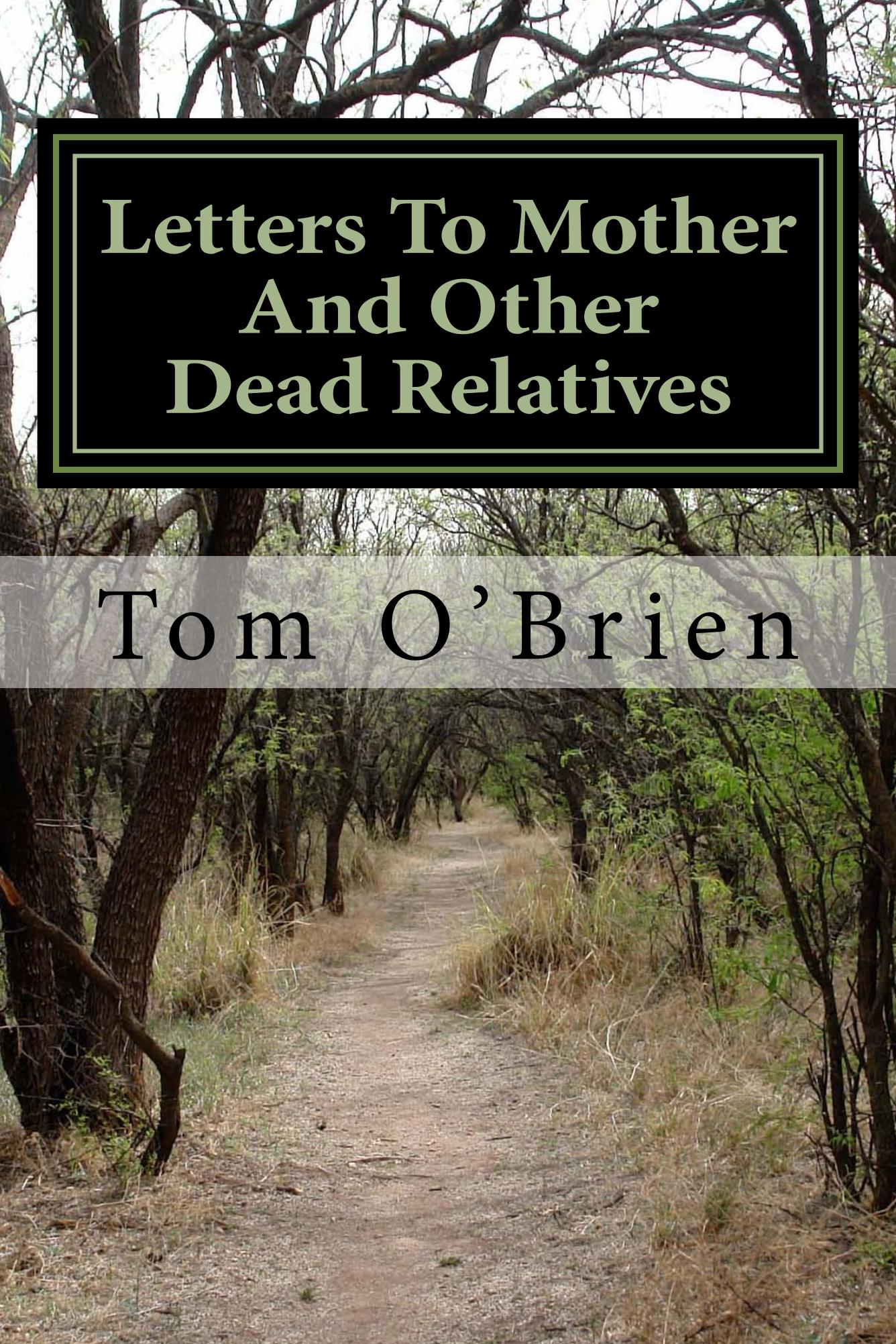
LETTERS TO MOTHER AND OTHER DEAD RELATIVES (extract)

Letters_To_Mother_An_Cover_for_Kindle

available in paperback or ebook on Amazon

Dear Mother,

We never had much to say to each other when you were alive. I suppose that had a lot to do with you being grounded in the tranquility of rural County Waterford, while I misspent my youth on the mean streets of that area of London often referred to as County Kilburn. Even when we did speak it was only in platitudes; nothing of importance was ever touched upon. Mainly, I assumed, because nothing of importance had ever happened in our family’s history. So the chances of you surprising me from beyond the grave were very remote indeed.

It began with enquiries about your favourite son, John. Telephone calls to friends and

neighbours, even to the Parish Priest in Newtown. Nosing around, you would call it. Eventually the caller phoned John himself, which is how I became involved.

Apparently we were the beneficiaries of a legacy. A substantial sum of money was laying in British Government coffers, the trail of which led back to our paternal grandfather, Tom, and we were the next in line. Nobody ever spoke about grandpa Tom; Why was that?  And now that I think of it, why is grandpa buried in one parish – Newtown – and grandma in another – Ballyduff? And why did father scrupulously care for grandma’s grave, and not grandpa’s?

But back to the legacy. There was a catch – there always is – the caller required us to sign a contract giving him 33% of the estate before revealing details to us. As I happened to consider that excessive for a ‘finders fee’ I began my own investigations on the internet.

As far as I could see, the only family member who it could possibly be was Aunt Margaret.

When I had last seen her ten years ago, she was already an old woman, living in poverty in Lewisham. (I know you always said she had loads of money, but if you had seen how she lived then you would have changed your mind)

Anyway, after several hours of queries to Ask Jeeves and co, I came across a British government website called www.bonavacantia.co.uk  I typed in a name and there it was in black and white! Margaret O’Brien…. Lewisham, died intestate 2005. Estate £XX,000 How well you knew her!

But of course you didn’t really. Nobody did. Not even my father – her own brother. He never spoke about her.  Why was that? She left Waterford in 1947 and was never seen by any member of the family again, apart from myself. Oh, I know you wrote her the occasional letter and she sent parcels of used clothes to you. ‘Her cast-offs’, you called them, before burning the lot.

What was it that caused her to go away and never come back?

She came to visit me in Kilburn shortly after Karen was born – was that your doing, giving her my address? – And we kept in contact until I moved away from the area. She liked the idea of having a niece, but I found her a strange, secretive woman.

When I last saw her she was housebound, living in a dingy council estate in Deptford. And given to calling me ‘Captain’ – because I don’t think she remembered who I was any more. After that I forgot about her.

To establish claim to the estate I have had to furnish various documents; birth, marriage, death etc. Which is how I learned that my father and Aunt Margaret weren’t the only children born to my paternal grandparents. There were three other children, John, James and Catherine. What

happened to those uncles and aunt? Father never spoke of them. They are not still alive as far as I can establish, but neither have I yet ascertained where and how they died and where they are buried.

But you, mother dear, served up the biggest surprise of all. On your marriage certificate, it says FATHER UNKNOWN. Why, in my childhood, did I never realize that your mother was unmarried? Or query the fact that your father had never been around. Oh, there was a man about the house – your mother’s brother Mikey – and maybe I subconsciously associated him with being  your father. Mikey, with his wooden leg -he had lost the real one fighting with the British Army in Flanders – lives on in my memory, and I can still recall trying to remove my leg as he did his, and wondering why I couldn’t. I almost wish now that he had been your father.

I have since learned that you did know your father. He was a friend of Mikey’s who had also joined the British Army, but had been killed in the same battle that had seen my granduncle lose his leg. Killed before he could make an honest woman of your mother.

Killed before he could respectably be put down on your wedding certificate as your father.

You never spoke about any of this. Not to me, anyhow. Was this what made you melancholy in your later years? The thought of your mother living all her life in her little thatched cottage in Grenan, the man she loved lying in an unmarked grave, lost forever in those green fields of France?

I think it’s sad that I find you more interesting dead than I ever did when you were alive.

Your loving son, Tom

  Continue reading

AUTUMN LEAVES

AUTUMN LEAVEShill14

Autumn mornings are best;

The sun smiling low over the gasworks

Flighty leaves browning the common

Kites lark-high over the tree-tops

Coffee and a roll in the old rectory

And you by my side

STUDIO 54

STUDIO 54

God made the bucolic country

But the devil made the town

And was influential in creating Studio 54

Where some heavy shit was always going down.

Even Sodom and Gomorrah

Synonymous with all kinds of vice,

And infernos of wicked delight,

Was guaranteed a run for its money

In Manhattan’s sleazy parlour of the night

Inside this depraved cathedral

of mashed, entangled bodies,

Female cowboys consorted with defrocked nuns,

And male ballerinas dressed as randy swans

Or lady Godiva frolicked on a white horse

And the altar-piece was a glittering neon sign

Depicting the Man in the Moon snorting cocaine or worse.

Ten percent were were lesbian or transvestite

Twenty percent gay men, pumped up and popper-ed

The rest celebrities, celebrated for their bad behaviour

More than any talent they had to offer.

All came to worship at this altar of sleaze

Where they could drink, dance, drug themselves

And public sex was a jolly good wheeze

The right to seek happiness

Was pursued with a frenzy that was benighted

And Andy Warhol took pictures that he later recycled

IN PRAISE OF MONARCHS

image34

IN PRAISE OF MONARCHS

He dug ditches in obscurity

Raised ten children to maturity

When pushed he said;

‘I do the best I can. Life’s hard

On the working man, but I mustn’t complain

I’ve got my health, while there’s others

Who can’t stop dying for all their wealth.

All that stuff in China…I wouldn’t give it

If they changed my lot for Royalty I wouldn’t live it.

There’s more to life than being famous you know’.

ECLIPSE – WHAT ECLIPSE?

ECLIPSE – WHAT ECLIPSE?

Here’s a picture

Of the one I didn’t see

This morning

On the West Hill

Clouded out, the sun hid itself well

From old New Age-rs

And others whose persuasion

I couldn’t tell

(Though the clothes were more hippy than hip)

And we gathered in some dog viewers as well

What any of us expected I don’t quite know

But an eclipse was a definite no-show

Perhaps  a second coming

Or a burning fire in the sky

With a voice booming out over the hill

Repent or die! Repent or die!

005

PECKER DUNNE -LAST OF THE TRAVELLERS

Picture of Pecker Dunne

PECKER DUNNE- LAST OF THE TRAVELLERS

A play with music about the travelling musicians of Ireland, mostly concentrating on Pecker Dunne and Margaret Barry. They were both from travelling families, Tinkers, and were marginalised by Irish society. Looked down on, indeed persecuted for their way of life. Both were great singers and musicians, and along with the great Johnny Doran, did more to promote Irish traditional music than almost any other person of our times.  Both are dead now and the play is set in a kind of imaginary ‘halting site’, where departed souls are temporarily resident while awaiting transport to somewhere permanent.

 ‘I never met Bob Dylan but I sang with Pecker Dunne’  Christy Moore

extract from the play:

Scene one

A darkened stage, then a spotlight. PECKER DUNNE appears, carrying a banjo case. The case has Pecker Dunne stencilled across the body. Bearded, he wears a wide black leather belt with silver buckle on his trousers, and could be anywhere between 40/60 years of age. He sings I’M THE LAST OF THE TRAVELLIN PEOPLE (c) Pecker Dunne)             

PD:     Me name it is Paddy, I’m called Pecker Dunne

I walk the road but I never run,

I’m the last of the travellin’ people

With me banjo and fiddle I yarn and song,

and sing to people who do me no wrong

But if others despise me I just move along,

and know I’ll find friends in the morning

Arah money is money and friends they are friends,

And drinking with them is where all money ends

But it isn’t on money it’s on them I depend

When friends and the guards are against me.

From Belfast to Wexford from Clare to Tralee,

a town with a pub is a living for me

I haven’t a home but thank God I am free,

I’m the last of the travellin’ people

The road isn’t aisy but it’s what I choose,

I’m not always a winner but I’ll never lose

I’m the pride of me race, I’m the last of the few,

and I live like my father taught me

Now I’m on the road again travellin’ still,

Summer and winter keep travelling I will

But the road it is long and I know it will kill

The last of the travelling people.

As Pecker finishes the stage lights come up. There is a blank screen as backdrop.  Towards the front we see what looks to be a travellers halting site; campfire, cooking utensils etc – the impression being given is that the wagons etc are just out of sight. It should be a hazy, sort of unreal-looking place, with a few people seated at various points. Some of these can be musicians.

            PD:     Where the bloody hell is this place?

  On screen we can now read HAPPY 80TH BIRTHDAY PECKER.


            PD:     Birthday? Eighty?  What’s goin’ on here?

 MARGARET BARRY appears from the mist with her banjo. She sings THE GALWAY SHAWL (traditional)

MB:                At Oranmore in the County Galway,
One pleasant evening in the month of May,
I spied a damsel, she was young and handsome
Her beauty fairly took my breath away.

Chorus:
She wore no jewels, nor costly diamonds,
No paint or powder, no, none at all.
But she wore a bonnet with a ribbon on it
And round her shoulder was a Galway Shawl.

We kept on walking, she kept on talking,
‘Till her father’s cottage came into view.
Says she, “Come in, sir, and meet my father,
And play to please him The Foggy Dew.”

She sat me down beside the fire
I could see her father, he was six feet tall.
And soon her mother had the kettle singing
All I could think of was the Galway shawl.

I played The Blackbird and The Stack of Barley
Rodney’s Glory and The Foggy Dew
She sang each note like an Irish linnet.
Whilst the tears stood in her eyes of blue.

‘Twas early, early, all in the morning,
When I hit the road for old Donegal.
She said goodbye, sir, she cried and kissed me,
And my heart remained with that Galway shawl.

Continue reading

ON BRINDLED MOOR

ON BRINDLED MOOR

On Brindled Moor there is a nothingness

That only a bog can invoke

And this vast Hebridean peat bog

Articulates un-knowingness

Saying, there is nothing here,

Only what the eye can’t see.

This brown earth, stunned out of wonder,

With its wandering watercourses

Running through the peat; a feit,

Which resembles veins or sinews,

A bugha, a green bow-shaped sweep of moor grass,

Formed by the winding of the stream;

A rionnach maoim, casting shadows

On the moorland by clouds moving

Across the sky on a bright, windy day,

Lighting up what is suddenly

Not empty or meaningless at all.

Here we have chucky,clitter and fedster

Pipkrares and shuckle

Muxy rout and slunk,

And migrant birds arriving from distant places.

‘It is time to sing the world back into being

That static things may be caught

In the very act of becoming’

ARTHUR RIMBAUD – THE SLEEPER IN THE VALLEY

Rimbaud in Harar – Arthur Rimbaud – Wikipedia, the free encyclopedia// // //

Arthur Rimbaud was born in the Arnennes in France in 1854.He influenced modern literature and arts, inspired various musicians, and prefigured surrealism/ He started writing poems at a very young age, while still in primary school, and stopped completely before he turned 21. He was mostly creative in his teens (17–20). His “genius, its flowering, explosion and sudden extinction, still astonishes”.Rimbaud was known to have been a Libertine and for being a restless soul. He traveled extensively on three continents before his death from cancer just after his thirty-seventh birthday.

“A poet makes himself a visionary through a long, boundless, and systematized disorganization of all the senses. All forms of love, of suffering, of madness; he searches himself, he exhausts within himself all poisons, and preserves their quintessences. Unspeakable torment, where he will need the greatest faith, a superhuman strength, where he becomes all men the great invalid, the great criminal, the great accursed–and the Supreme Scientist! For he attains the unknown! Because he has cultivated his soul, already rich, more than anyone! He attains the unknown, and if, demented, he finally loses the understanding of his visions, he will at least have seen them! So what if he is destroyed in his ecstatic flight through things unheard of, unnameable: other horrible workers will come; they will begin at the horizons where the first one has fallen!”
Arthur Rimbaud

THE SLEEPER IN THE VALLEY

It is a green hollow where a stream gurgles,
Crazily catching silver rags of itself on the grasses;
Where the sun shines from the proud mountain:
It is a little valley bubbling over with light.A young soldier, open-mouthed, bare-headed,
With the nape of his neck bathed in cool blue cresses,
Sleeps; he is stretched out on the grass, under the sky,
Pale on his green bed where the light falls like rain.

His feet in the yellow flags, he lies sleeping. Smiling as
A sick child might smile, he is having a nap:
Cradle him warmly, Nature: he is cold.

No odour makes his nostrils quiver;
He sleeps in the sun, his hand on his breast
At peace. There are two red holes in his right side.

Arthur Rimbaud

October 1870

LOS ANGELES

722641

582759

LOS ANGELES

From dream factory

To nightmare landscape

Eternally self-renewing

And all but used up,

The hot LA nights

Spiked with a Santa Ana wind,

Capote, Faulkner, Mailer, Fitzgerald, et al

Haunting the many-faceted gin-mills,

Looking for characters

For the books they were soon to write,

Hockney hobbling to

The marijuana  store

To smoke away his many ailments,

Drinking Chai tea with the other lunatics,

Down Venice way

The ancient muscle men on Muscle Beach

Doing press-ups

And pull-ups that demean them,

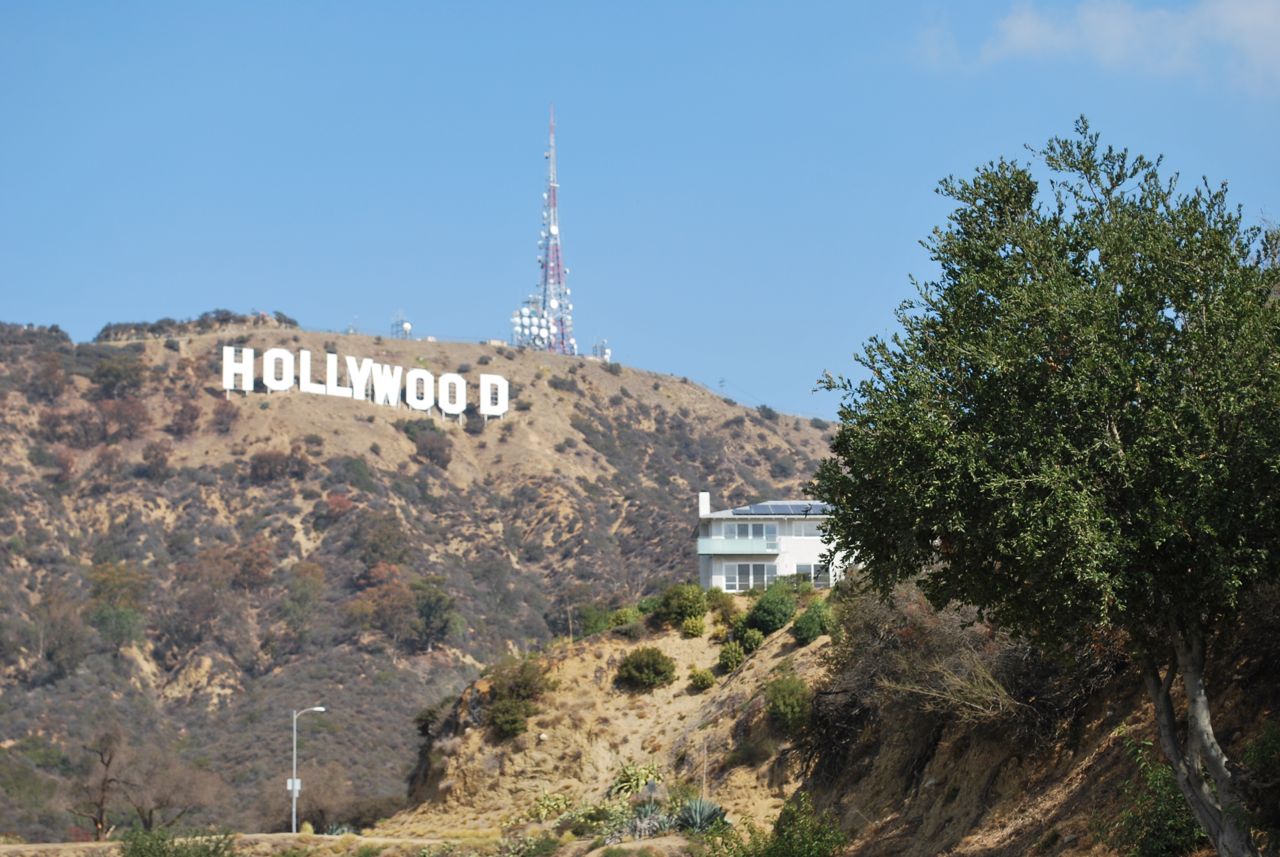
Hollywood writ large on the hills

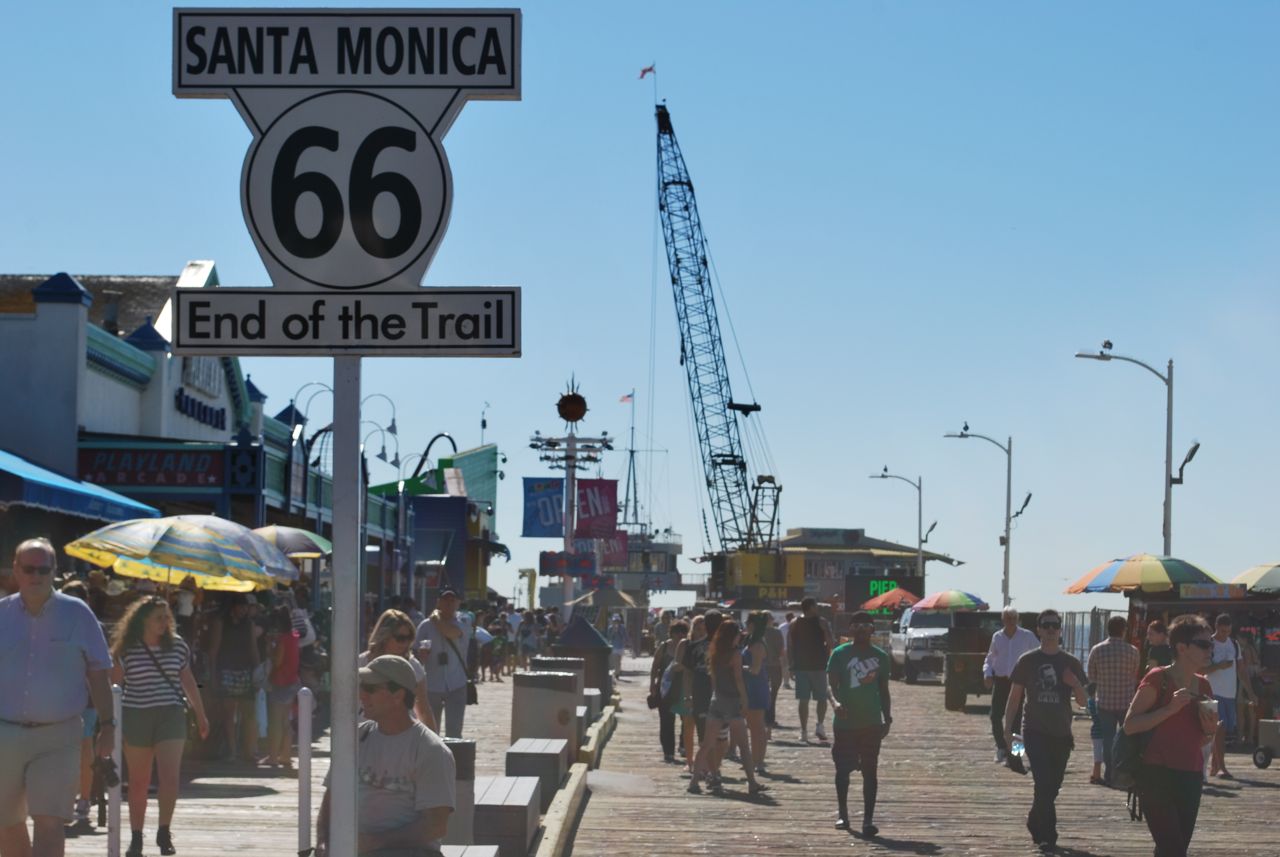
And a jaded sign on Santa Monica pier

Saying ‘Route 66 ends here’.

CONTEMPORARY POETS

MAURA DOOLEY

Poet and freelance writer Maura Dooley was born in Truro, England, and grew up in Bristol.

HISTORY

It’s only a week but already you are slipping

Down cold black chute of history. Postcards.

.Phonecalls. It’s like never having seen the Wall,

Except in pieces on the dusty shelves of friends.

Once I queued for hours to see the moon in a box

Inside a museum, so wild it should have been kept

In a zoo at least but there it was, unremarkable,

A pile of dirt some god had shaken down.

I wait for your letters now: a fleet of strange cargo

With news of changing borders, a heart’s small

Journeys. They’re like the relicts of a saint.

Opening the dry white papers is kissing a bone.