BRIEF ENCOUNTER ON A TRAIN

natalia-vodianova-brief-encounter-by-annie-leibovitz-e1318519754817Written yesterday – Sun 23th July – on a London-bound train

BRIEF ENCOUNTER ON A TRAIN
Blue-green compact
Hazel green eyes
She powdered busily
Then blinked in surprise
When I winked
Not once, but twice

The train rocked on
She powdered her nose
She looked at me slyly
But I feigned repose
She stuck out her tongue
And I winked once more
Then the train came to a stop
And she dived for the door

THE SONGLINES

MY FIRST DRAFT IS IT

1969-Ex-jockey-turned-aut-0321956-Queen-Elizabeth-II-a-023

Books write authors as much as authors write books. So says Dick Francis, top-selling writer of horse-racing thrillers. The process of producing fiction is a mystery which I still do not understand. Indeed,as the years go by I understand it less and less, and I am constantly afraid that one day I will lose the knack and produce discord, like a pianist forgetting where to find middle C.
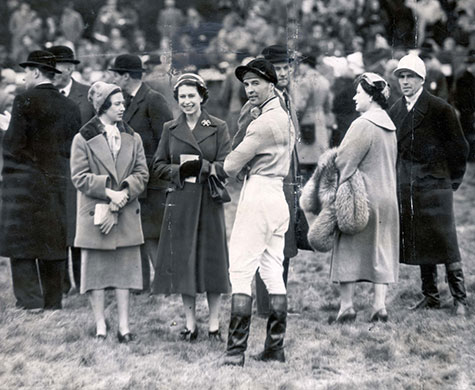
Francis, a top- class jockey before turning to writing is best remembered as the rider of the Queen Mother’s Devon Loch, who collapsed less than one hundred yards from the post in the Grand National, with the race at it’s mercy. People often ask me where I get my ideas from, and the true answer is that I really don’t know. They ask me how or why I write the way I do, and I don’t know that either. It seems to me now that one can’t choose these things and that one has very little control over them.
The author of such books as Whip Hand, For Kicks, Bonecrack,and Dead Cert – which was the first of his books to be filmed – says this about the technique of writing; I listen in a slight daze to people talking knowledgeably of ‘first drafts’ and ‘second drafts’, because when I first began to write I didn’t know such things existed. I also didn’t know that book authors commonly have ‘editors’, publishers assistants who tidy the prose and suggest changes of content. I thought that a book as first written was what got (or didn’t get) published. I still write that way. My first draft is IT. I can’t rewrite to any extent. I haven’t the mental stamina, and I feel all the time that although what I’m attempting may be different, it won’t be any better, and may well be worse because my heart isn’t in it. My publishers have mournfully bowed to this state of affairs.
He describes his method thus; When I write any one sentence, I think first of all of what I want it to say. Then I think of a way of saying it. At this point I usually write it down in pencil in an exercise book, then wait to see if a new shape of words drift into my head. Sometimes I rub bits out and change it, but once the sentence looks all right on paper I go on to the next one and repeat the process. It’s all pretty slow as sometimes one sentence can take half an hour. On the following morning I read what I’ve written and if it still looks alright I go on from there. When I have done a couple of chapters I type them out and it is this typescript that goes to the printers.
In January, he sits down to write, staring down the barrel of a deadline. “My publisher comes over in mid-May to collect the manuscript, and it’s got to be done. Each one, you think to yourself, ‘This is the last one,’ but then, by September, you’re starting again. If you’ve got money, and you’re just having fun, people think you’re a useless character.”
Dick Francis wrote more than 40 novels in this manner and they all became international best-sellers. He was one of my favourite writers and I have read most of his books over the years. He struggled with writing his books for most of his writing life, but he managed at least one a year for over forty years. That says something about his dedication to his craft. No one ever said it would be easy!

Dick Francis died in 2010, aged 89

LOVE LETTERS IN THE SAND

bloggiftssandpiper800px-Least_Sandpiper_Jalama_BeachimagesCAHTM4RT

LOVE LETTERS IN THE SAND
I watched you in the sand
Drawing shapes with your left hand
Shapes that seemed to show
The face of a long-haired man
Then the tide rolled gently in
And his face was quickly gone
But from the fleeting glimpse I got
I swear I was that man.

buy my latest poetry collection ’67’ @ http://www.tinhuttalespublishers.co.uk/product/67-2/

FATHER AND SON

father-and-son-beach2imagesCA2DBZT4

FATHER AND SON

My mum says you’re my dad
The words ripped through me
Like a chainsaw through soft timber
Then scattered like spindrift
Along the sea wall

Lean young people glistened in the sun
While my heart pounded
And the young boy,
With shoulders rounded,
Hurried along to keep up with his mum

It was true; I was his father,
Of a sort.
Ten years ago I was for sure;
Ten lifetimes since I
Had slammed the goodbye door.

TIME ON MY HANDS

time_management_in_your_gmat_preparation_mba_applicationimage

TIME ON MY HANDS

Time, so they tell me,
Is a precious commodity;
Nowadays I own lots of it
(ever since the steelyard gates clanged shut)
I wonder how much a few weeks of it
Would fetch at Christies?

see my books on sale here; http://www.amazon.co.uk/Tom-OBrien/e/B0034OIGOQ/ref=sr_tc_2_0?qid=1388083522&sr=1-2-ent

WINTERTIME

p10406751263219671-Comeragh%20Mountains%20With%20Snow%20%20Panorama1
WINTERTIME
The Kilamanjaros never looked so bright
As the Comeraghs do, swaddled in white
Their new overcoats, bespoke overnight

BRENDAN BEHAN’S WOMEN…4**** REVIEW

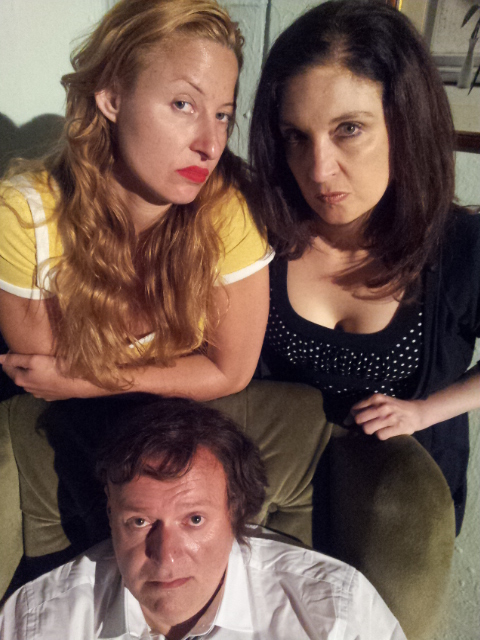
20140702_193350THE IRISH POST GIVES US 4****!!

http://www.irishpost.co.uk/entertainment/theatre-review-brendan-behans-women

KEEP OFF THE GRASS

a86854aa25e427e0602ec34572a06987
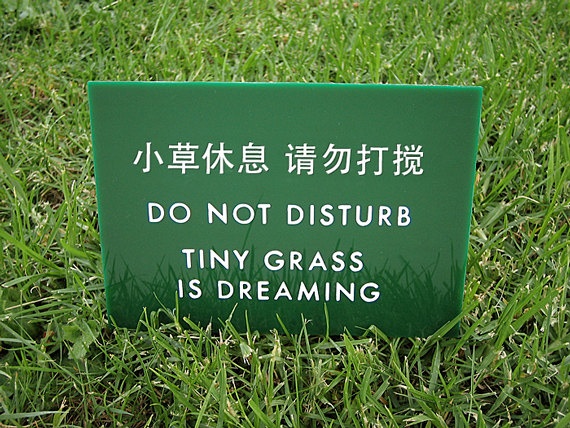
KEEP OFF THE GRASS
Footprints on sand are washed clean
Nature’s way
Likewise, those on grass
Never intend to stay
The fox, the rabbit,
Every creature of the wild
Over hill and dale can pass
Only humans heed the warning signs
KEEP OFF THE GRASS!

my new collection of poetry ’67’ is now available @ http://www.tinhuttalespublishers.co.uk/product/67-2/

THE EYE HAS IT

one-eye-largecover_498132582009

Researchers at the University of St Andrews have found that it is possible to see in 3D with just one eye.

Dr Dhanraj Vishwanath, a psychologist at the University says that it is possible to experience vivid 3D vision simply by looking through a small hole.

The research, published by Psychological Science, has implications for people who have just one eye or difficulties with double-eye vision.

The study also has wide implications for 3D technology, because it suggests that there are other (possibly cheaper) methods by which the 3D experience can be created.

Current thinking is that the two visual images (one from each eye), when combined in the visual cortex of the brain, produce our sense of depth that produces the ‘special’ 3D effect.

The St Andrews study suggests that, in fact, both eyes are not necessary for this ‘3D experience’.

Dr Vishwanath said, “We have demonstrated experimentally, for the first time, that the same ‘special way’ in which depth is experienced in 3D movies can also be experienced by looking at a normal picture with one eye viewing through a small aperture (circular hole).”

“While this effect has been known for a long time, it is usually dismissed. Now we have shown that it is in fact real, and the perceptual results are exactly like stereoscopic 3D, the kind seen in 3D movies. Based on this finding, we have provided a new hypothesis of what the actual cause of the 3D experience might be.”

Since the invention of the stereoscope (the technology behind 3D movies) in 1838, the conventional assumption is that this added feeling of depth can only occur when the real world or a 3D stereoscopic image is viewed with 2 eyes.
Dr Vishwanath explained, “Most people understand what 3D is – for example, when watching a 3D movie with special goggles, objects appear more vividly three-dimensional, they seem real, and they look like you could reach out and touch them. There is also a sense of real space. This is also the way depth, space and 3D objects are experienced when the real world is viewed with two eyes by people who have ‘normal’ binocular (2 eye) vision.”

The St Andrews’ findings suggest that in fact “seeing in 3D” is not something that can only be experienced by people with two fully working eyes. Instead, the researchers say that in principle it is possible for those with only one eye, or have problems with their 2-eye vision to experience the ‘compelling’ effect.

Dr Vishwanath continued, “Many of these people don’t know what it means ‘to see in 3D’ because they have never experienced it. Our findings and preliminary results suggest that our method could be used to allow people with misaligned eyes (strabismics) to experience what it is like to actually see in 3D.”

The study also has wide implications for industry – based on his theory, Dr Vishwanath suggests that the real 3D experience can be induced simply by increasing the resolution (for example using ultra-high definition (4K) TVs). Such methods could also help avoid some of the problems associated with stereoscopic 3D such as fatigue, nausea and headaches.
Hmmm…very interesting.