THE MISSING POSTMAN AND OTHER STORIES

26-01-2014 12;51;02

Upcoming review:

SHORT STORIES REVIEW The Missing Postman and Other Stories

The Co Waterford-born novelist and playwright, Tom O’Brien is still on a very productive streak, and not only has he had two plays produced in London this year, but he has brought out another novel, a book of three Waterford plays, and now a new book of short stories – The Missing Postman and Other Stories. His output is impressive and the work paints a wonderful picture of an Ireland that is quirky and malevolent, as well as giving a wonderful sense of place and time. I am surprised he is not a tourist attraction, and that no Waterford theatre company has scheduled a production of his. What is it about a prophet and his home place?

These stories read like notes to plays, and some are charged with characters and menace, as in the novella-length, The Missing Postman, that looks at the crazy world of Zeb and Zoe, who come to Ireland (Co Waterford) to avenge, separate, unhappy childhoods, and go on a ‘Bonnie and Clyde’ robbery spree. They hide out in a curious cottage of Martin Og, who has surprises in the house of a high-tech nature.

In a chilling exploration that is full of tension and foreboding, the mysterious disappearance of Martin Og’s brother – The Postman of the title is remembered.

In Johnjo’s Tale, we get the sense of emigration and isolation, laced with the sickly nostalgia, for songs of an era of regret, heartache, and rights to property, keeping emigrants forever looking back to the old homestead. This notion of family possessions is forcefully brought home in a very short -The Dispossessed – where the message is driven home (pardon the pun) – you can never go back. Home is not and perhaps, never was, what you desperately wanted it to be.

The Homecoming, is another pithy story where the landscape of memory and the physical landscape of a Hill was quarried away to create a sense of false prosperity. For those who will come to know (and I sincerely hope so) Tom O’Brien as a fine playwright (which he is), these short stories will be viewed as source material into his themes and motivations. But they read as stories in their own right, full of human and bitter honesty, and full of dramatic tension and excitement.
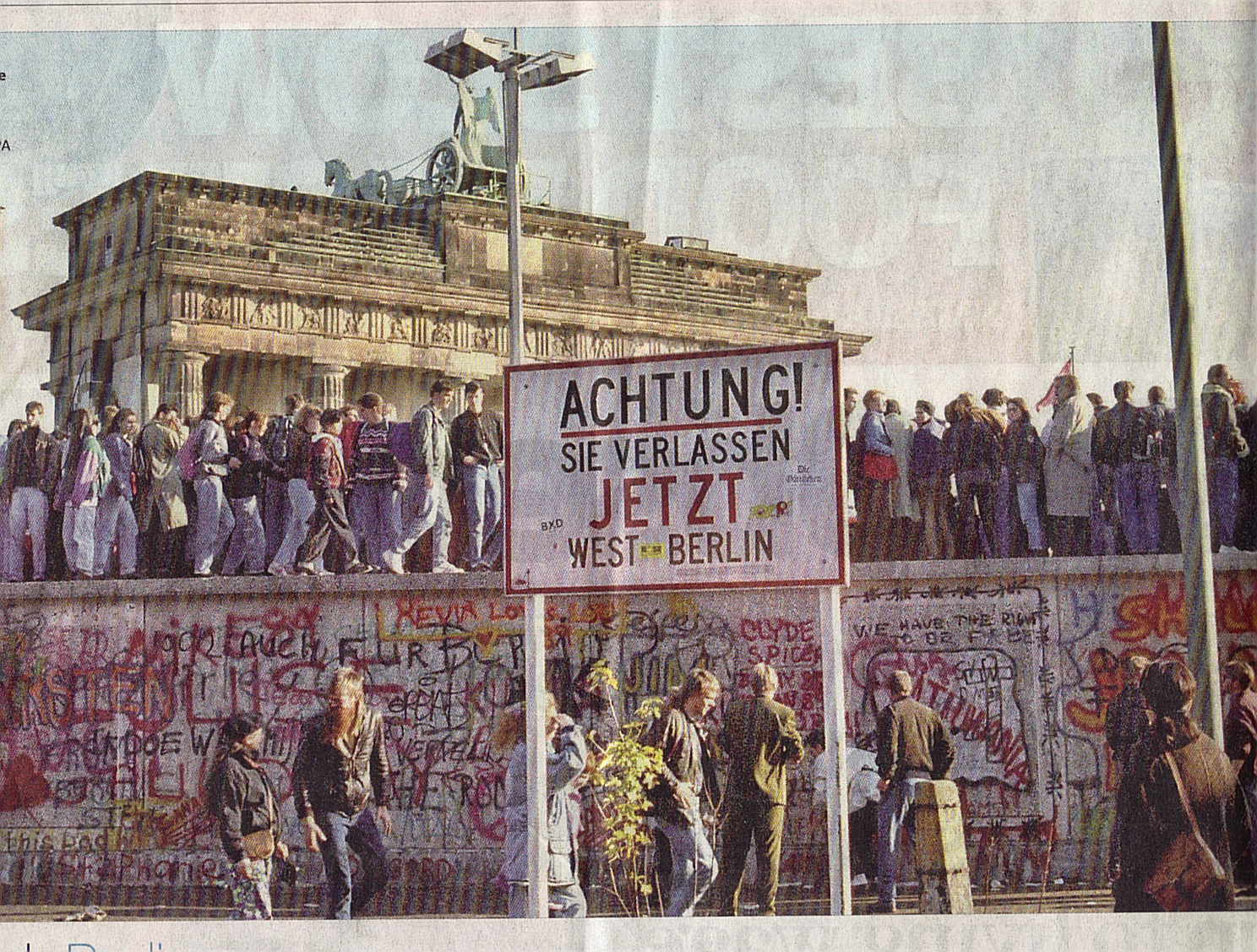
ACHTUNG BABY!

03-11-2014 15;12;10

ACHTUNG BABY!
This refreshingly quiet street
Round the corner from Checkpoint Charlie
A miasma of tourists
Taking selfies
Next to two fake American soldiers
Dressed in full cold war regalia
Beethoven’s Moonlight sonata
Keyed by unseen hands
Drifting through the lazy afternoon sunshine.
And you framed in the cafe window
Waiting for me.
.
All quiet on the western front these days
The almost musical sound of jackboots
No longer linger
No Stasi lurking
Berlin is no longer east or west
Just plain Berlin will do
.
Twenty five years ago
This was no mans land
Then the walls came tumbling down
Almost by accident
A flurry of missed communications
Garbled orders; fearful guards;
People shouting
Let us out, let us out
And we on the west side shouting back
Let them out, let them out
And you shouting
Let me out, let me out
And it happened
.
Today a row of plastic flowers
Mark the line where the wall stood
Mark the spot where we met.
Someone is watering them I see
Making it more difficult for me
To come and tell you
That the cold war has returned –
For us anyway.

THE BEAR NECESSITIES

imagesCA1FTQ38imagesCAWNASY1

THE BEAR NECESSITIES
‘What kind of animal are you then?’, she asked me.
‘Well’, I replied
‘I do not growl like a bear, I roar like a lion’.
‘Ah, one of them, are you?’
‘No actually, I’m more of a bear to be honest’.
‘Oh, they’re fearsome creatures, they are’.
‘Not really’, I said ‘once you get to know them.
For instance, take me
The other day, whilst in my bear mode –
Brown bear, I might add –
I took a notion to frighten some motorists.
I spotted a likely candidate and stepped from
Behind my tree hiding-place
And plonked myself in the middle of the road.
Then a motorist stopped and began berating me’,
You’re an ugly brown bear, you should be ashamed;
Trying to frighten people

Get out of my way. Don’t you know who I am?
I didn’t, but he told me anyway.
I am Ernest Hemingway.

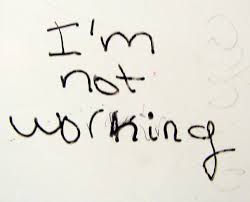
NOT WORKING

images

NOT WORKING

‘Not Working’ doesn’t sound too bad
Except on Monday morning
When the long weekend has overslept again
And you try to think of something you might do
That hasn’t already been taken care of

Like an old clock you chide me;
‘Not Working’; analogous to some
Broken-down contraption whose time is past
Well, nothing lasts forever
Tomorrow’s SUN may be the last!

‘Not Working’ means all rusted up
Out of action, unable to breathe
Useless, finished, dead
‘Not Working’ is in one’s head
Not a place in the unemployment queue
I won’t stagnate. Will you?

RUMINATIONS

6b7eb0f97d6c176ea0ab0c1b8107d9e5

RUMINATIONS

The world is full of poets
And most of them know it
Rhyming couplets with fucklets
Never thinking ‘dark chocolates’
Most of them over some visionary hill
Buying notebooks they will never fill
Looking for loves lost something-or-other
Or wondering why they never hated their mother.
Oh yes, a poet’s life is thankless
Almost as bad as a life lived wankless

SOMEWHERE BETWEEN US IS A ROOM

imagesCAWK32WV

SOMEWHERE BETWEEN US IS A ROOM
Somewhere between us is a room
It has six sides and no roof
‘Why is it open to the sky?’ you ask
I myself wonder why
But rather than show my ignorance
I say it is because it has no door
‘But I am in a wheelchair’, you say
‘I cannot be expected to pole vault myself inside’
‘I can make it four-sided’, I say
‘And we can use the two spares as ramps’
‘But it is eight foot tall’, you wail
‘Okay, forget it’, I say
‘It was only for a coffee anyway’.

SWEET TEA

imagesCAE861V9

SWEET TEA

Every month a ritual enactment
For the rent man
Mother, floury nose and doughed-up hands,
Smiling practice-perfect
Us children banished to the scullery,
A whispered ‘don’t you laugh now’
A silent prayer
And the teapot ready
Beside the rent book.

Every month ‘good morning Mrs Moran’
Lovely day to be sure’ and
YesI will have a cup of tea, thank you’
And every month a glowing red nose,
Lit up like a hot coal.

Every month silence from the scullery
Until the day little Tommy fell off his perch
And tumbled through the scullery door
To land in a heap in front
Of that illuminated face.
And then mother turning,
The sugar bowl in her hand
Saying – much too casually –
‘How many sugars would you like on your nose?’

MURMURATIONS OF LOVE

imagesCAEBMB4Nimages (2)

MURMURATIONS OF LOVE

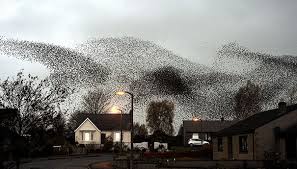
There was a starling sky
Yesterday over Rye
The arc of cloudless blue
Quite frequently changing its hue
as we watched the songbirds fly-by
You and me walking hand in hand
Along this wild and windy headland
The starlings singing high above
Sketching their murmurations of love.

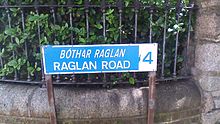
ON RAGLAN ROAD

WIN_20140609_141231Patrick_Kavanagh_by_Patrick_Swift

Patrick Kavanagh was born in the village of Enniskeen, Co Monaghan on 21st October 1904. The son of a shoemaker and small farmer, he moved to Dublin at the age of 35, where he lived in poverty for most of his life. He survived on handouts, bits of journalism, and being supported for a time by his younger brother, Peter, who was teaching in the city. On Raglan Road is a poem about his doomed love-affair with Hilda Moriarty. Hilda was middle-class, the daughter of a wealthy Kerry doctor; he was a penniless poet, uncouth and unwashed, of small-farmer stock – indeed, a small farmer himself, who had forsaken the plough for the pen. His finest poem ‘The Great Hunger’ was so controversial that he was threatened with prosecution under the obscene publications act. Always a controversial figure, he was hated as much as loved in Dublin, and his long-running feud with Brendan Behan is well-chronicled. To Behan he was’ the fucker from Mucker’, while Patrick maintained that the only journey Brendan ever made was ‘from being a national phony to becoming an international one’.

ON RAGLAN ROAD

On Raglan Road on an autumn day I met her first and knew
That her dark hair would weave a snare that I might one day rue;
I saw the danger, yet I walked along the enchanted way,
And I said, let grief be a fallen leaf at the dawning of the day.

On Grafton Street in November we tripped lightly along the ledge
Of the deep ravine where can be seen the worth of passion’s pledge,
The Queen of Hearts still making tarts and I not making hay –
O I loved too much and by such and such is happiness thrown away.

I gave her gifts of the mind I gave her the secret sign that’s known
To the artists who have known the true gods of sound and stone
And word and tint. I did not stint for I gave her poems to say.
With her own name there and her own dark hair like clouds over fields of May

On a quiet street where old ghosts meet I see her walking now
Away from me so hurriedly my reason must allow
That I had wooed not as I should a creature made of clay –
When the angel woos the clay he’d lose his wings at the dawn of day.

SAYING IT IS THE HARD PART

imagesCAKTS82L

SAYING IT IS THE HARD PART

The secret is to be casual;
Matter-of-fact words can
Sometimes inflame the senses;
Not straight away, perhaps,
But later, when the hurly-burly
Of conversation has had time to sink in

Maybe the trick is not to be seen saying it;
‘I love you’ is such a difficult phrase
To force between clenched teeth