MORE HEMINGWAY

imagesimages

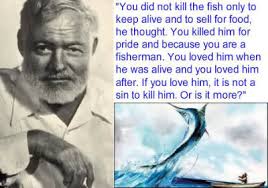
excerpt from Lorian Hemingway’s memoir on her grandfather Ernest;

I had visited my grandfather’s grave in Ketchum the summer I had caught the marlin, arriving at the small hillside cemetery on a scalding July day, a half-finished fifth of vodka in one hand, a filter-tip cigar in the other. I’d made my way to the simple marble slab marked by a white cross, and stood swaying over the marker for a long time, expecting epiphany, resolution, a crashing, blinding flash of insight…. I wanted to say something of value to the old man, perhaps that I had met a dare he had set forth by example, but nothing came. The neck of the bottle grew hot in my hand. I tipped it to my mouth, taking a long swig, then poured the rest, a stream of booze, clear as Caribbean waters, at the head of the marker. “Here,” I said, “have this,” and walked away.

ERNEST HEMINGWAY (who loved horse racing); “I never back any animal that can talk – except myself”

PAPA
The time is near
The clock is queer
I have had more than one beer.
Papa crept downstairs
In the early morning.
The keys are close to the time.
They open the locked cabinet beneath it.
The shotgun is quickly loaded
Two in the chambers just in case
Then the gun is heeled to the wall
And his forehead firmly anchors it.
Hands reach down –
And Bang!
Papa is no more.

IRON AGE

imagesCA6PSB9O

IRON AGE

Phoenix rises
Cobbled together
By a compendium of pyrites

Forged to link all destinies
Shaped to gird our worlds
And outreach Babylonia

Igneous intrusion
Metamorphic rock
Freed from your sedimentary bed

White heat in the crucible
Running now
Red ingots of desire
Ladled to all requirements

Manacled by steel
This shining age
Rusts towards a new millennium

ANTIGONISH

imagesCAA0FJK4

ANTIGONISH

Yesterday, upon the stair,
I met a man who wasn’t there.
He wasn’t there again today,
I wish, I wish he’d go away…

When I came home last night at three,
The man was waiting there for me
But when I looked around the hall,
I couldn’t see him there at all!
Go away, go away, don’t you come back any more!
Go away, go away, and please don’t slam the door…

Last night I saw upon the stair,
A little man who wasn’t there,
He wasn’t there again today
Oh, how I wish he’d go away…

“Antigonish” is an 1899 poem by American educator and poet Hughes Mearns. It is also known as “The Little Man Who Wasn’t There”, and was a hit song under that title. Inspired by reports of a ghost of a man roaming the stairs of a haunted house in Antigonish, Nova Scotia, Canada, the poem was originally part of a play called The Psyco-ed which Mearns had written for an English class at Harvard University about 1899. In 1910, Mearns put on the play with the Plays and Players, an amateur theatrical group and, on 27 March 1922, newspaper columnist FPA printed the poem in “The Conning Tower”, his column in the New York World.
A very simple poem, yet a very effective one, and a clear example of how ‘plain is sometimes better’.

Text[edit]

ALL MY BOOKS

51dZvCktoZL17-06-2014 19;58;5516-03-2014 11;15;14

MY BOOKS PAGE ON FACEBOOK;

https://www.facebook.com/#!/pages/My-books/822507557782345

ALL MY BOOKS ARE AVAILABLE ON AMAZON;

http://www.amazon.co.uk/Tom-OBrien/e/B0034OIGOQ/ref=sr_tc_2_0?qid=1388083522&sr=1-2-ent

CIVIL SERVANTS SHOULD NOT LEAK

untitledimages

CIVIL SERVANTS SHOULD NOT LEAK

He said it, my God he said it!
Brazen-faced, to the watching nation
‘They should not leak’, he said
‘After all, they are servants of the Crown’.

Leaking in public? How revolting!
And where would it begin?
A seepage from the ears perhaps?
Or a welling-up from beneath

All those virginal starched collars?
Or would it occur in the nether regions?
Visible only as a steady trickle
Down around the ankles.

A telephoned enquiry brought no joy;
‘I can assure you, Sir, we have
No leaking Civil Servants here
Why don’t you try MI 5’

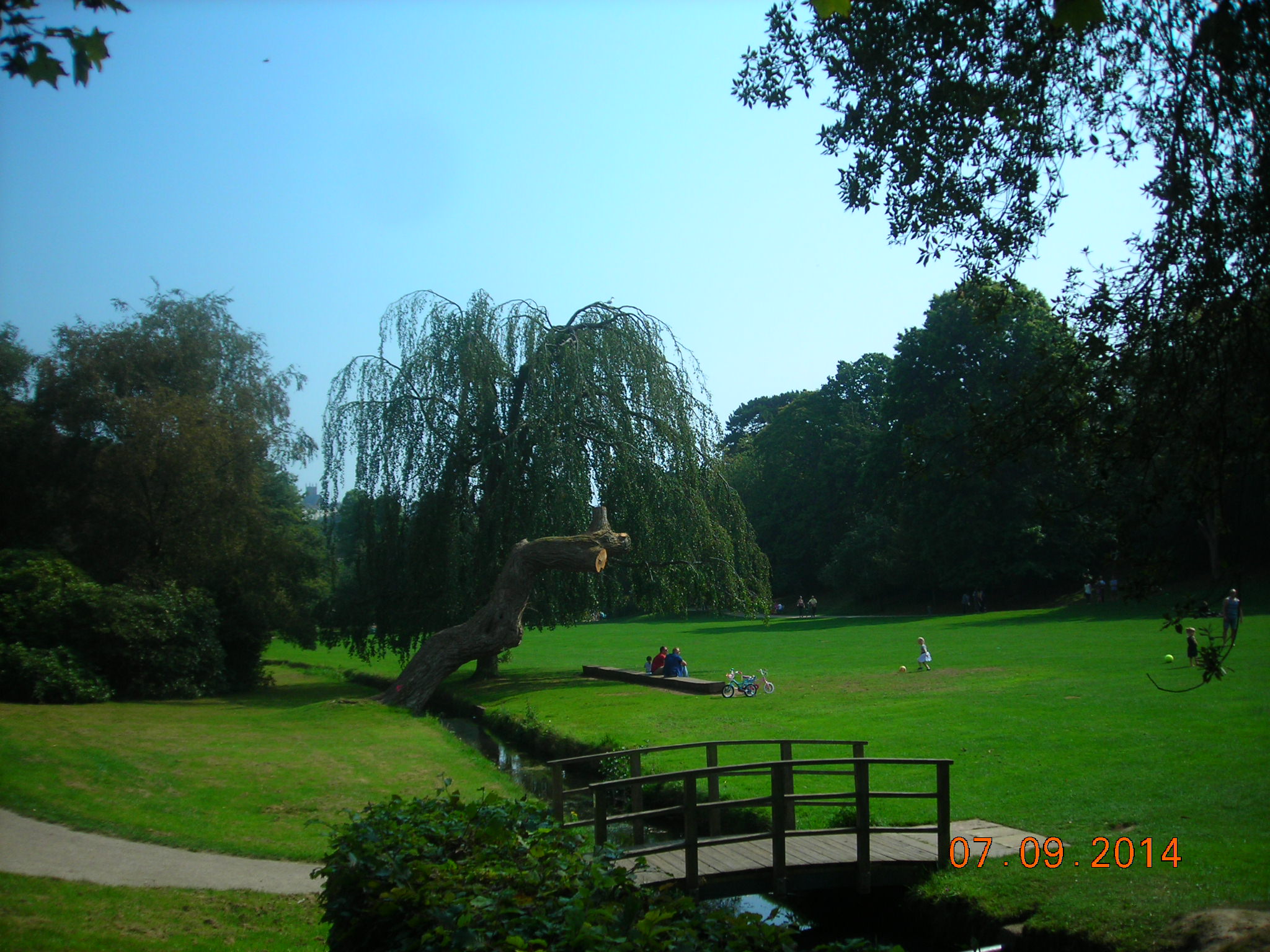
SEPTEMBER IS THE LOVELIEST MONTH

SEPTEMBER IS THE LOVELIEST MONTH
September is the loveliest month.
The sky is on permanent fire
The trees painted many colours
Burnished, it seems, with pure desire
In the park, ducks glide silently by
And the always busy seagulls
Resemble sea-planes
Coming in to land from on high
Whilst near the dozing oak tree
The squirrels nutmeg each other
Each acorn hoarded
For the soon-to-come cold weather
Your arm in mine
We stroll through the park
Heading towards the sunset
Home before dark.

006022026031

GONZO MOMMA

big-red-simpson-desert-munga-thirri-national-park2untitled

GONZO MOMMA
Too weird to live, too rare to die
I guess that’s a creed
Old Hunter would swear by
Though he would have a drink first
Or maybe three
Then try to figure out where
The action might be
Before smoking some ‘stuff’
‘Cos he knew plain whiskey and gin
Would never be enough.
Then, perhaps like you, he would
Upheave everything and pack
Screaming all the while;
You can kiss my ass
I ain’t never coming back

ANON

wave_touristsossuvlei_namibia

ANON
Clubbed by kindness
I sit here stunned
By the knowledge that
You loved me once
Possibly.
No room for any doubt on my side
But you were forbidden fruit
About to fall from the tree
Trouble was
I never tried to catch you
Not really.
And now I have fallen further
Than you ever could
And there you are
Somehow
To pick me up

I AM RED

imagesCAMBGVGDimagesCABH10K3

I AM RED
I am red like burning fire
I am covered with a glowing down
Alight with pure desire
I am glistening ochre, gleaming red
All to light a path to your chamber
And subsume myself in your head
It is time for us to forge
A loving union beyond your bed

THE BLUE REMEMBERED HILLS

untitledimagesCAZWT1X4

BLUE REMEMBERED HILLS

Into my heart an air that kills
From yon far country blows:
What are those blue remembered hills,
What spires, what farms are those?

That is the land of lost content,
I see it shining plain,
The happy highways where I went
And cannot come again.

The above poem, often called The Land Of Lost Content, was written by A E HOUSMAN, an English classical scholar and one of the great Victorian lyric poets. The poems wistfully evoke the dooms and disappointments of youth in the English countryside with their beauty, simplicity and distinctive imagery. His best known collection is called A SHROPSHIRE LAD, a cycle of 63 poems, which was published at his own expense in 1896. It rapidly became a lasting success and has been continuously in print ever since.

From Clee to heaven the beacon burns,
The shires have seen it plain,
From north and south the sign returns
And beacons burn again.

Look left, look right, the hills are bright,
The dales are light between,
Because ’tis fifty years to-night
That God has saved the Queen.

Now, when the flame they watch not towers
About the soil they trod,
Lads, we’ll remember friends of ours
Who shared the work with God.
(first 3 verses from his poem 1887)