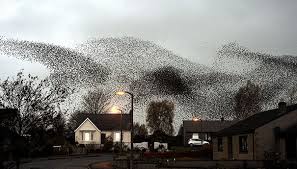
There was a starling sky
Yesterday over Rye
The arc of cloudless blue
Quite frequently changing its hue
as we watched the songbirds fly-by
You and me walking hand in hand
Along this wild and windy headland
The starlings singing high above
Sketching their murmurations of love.
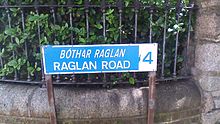
Patrick Kavanagh was born in the village of Enniskeen, Co Monaghan on 21st October 1904. The son of a shoemaker and small farmer, he moved to Dublin at the age of 35, where he lived in poverty for most of his life. He survived on handouts, bits of journalism, and being supported for a time by his younger brother, Peter, who was teaching in the city. On Raglan Road is a poem about his doomed love-affair with Hilda Moriarty. Hilda was middle-class, the daughter of a wealthy Kerry doctor; he was a penniless poet, uncouth and unwashed, of small-farmer stock – indeed, a small farmer himself, who had forsaken the plough for the pen. His finest poem ‘The Great Hunger’ was so controversial that he was threatened with prosecution under the obscene publications act. Always a controversial figure, he was hated as much as loved in Dublin, and his long-running feud with Brendan Behan is well-chronicled. To Behan he was’ the fucker from Mucker’, while Patrick maintained that the only journey Brendan ever made was ‘from being a national phony to becoming an international one’.
ON RAGLAN ROAD
On Raglan Road on an autumn day I met her first and knew
That her dark hair would weave a snare that I might one day rue;
I saw the danger, yet I walked along the enchanted way,
And I said, let grief be a fallen leaf at the dawning of the day.
On Grafton Street in November we tripped lightly along the ledge
Of the deep ravine where can be seen the worth of passion’s pledge,
The Queen of Hearts still making tarts and I not making hay –
O I loved too much and by such and such is happiness thrown away.
I gave her gifts of the mind I gave her the secret sign that’s known
To the artists who have known the true gods of sound and stone
And word and tint. I did not stint for I gave her poems to say.
With her own name there and her own dark hair like clouds over fields of May
On a quiet street where old ghosts meet I see her walking now
Away from me so hurriedly my reason must allow
That I had wooed not as I should a creature made of clay –
When the angel woos the clay he’d lose his wings at the dawn of day.
The secret is to be casual;
Matter-of-fact words can
Sometimes inflame the senses;
Not straight away, perhaps,
But later, when the hurly-burly
Of conversation has had time to sink in
Maybe the trick is not to be seen saying it;
‘I love you’ is such a difficult phrase
To force between clenched teeth
There’s a lot of controversy about cop- killer Harry Roberts being released soon. Some might remember that he shot dead 3 policemen during a robbery in Shepherds Bush in the 1960’s. Well, I was mistaken for Roberts during that time he was on the run; (he was subsequently discovered hiding out in Epping Forest). I was working in Barnet – quite close to Epping forest- in a pub and one day found myself surrounded by armed police in the public bar. Someone had reported they had seen Harry Roberts in the bar! Of course when they saw me and checked me out they realised it was a mistake. One of them said to me before they left, ‘don’t worry too much but you just saved yourself from being shot’! I needed a stiff drink after that I can tell you!
Oddly enough that wasn’t the end of the matter. In the late 1980’s, when I was living in Leytonstone in East London, I worked with a guy named John Roberts, and in the course of a conversation with him in the pub after work one evening he told me that Harry Roberts was his uncle. It’s a small world.
THE SHOOTING SEASON
“Let the slag have it Harry”, said Jack
“The bullet hit him just below the eye;
He slumped to the ground;
I could hear my heart thumping;
The air was electric”.
Those callous words are B movie speech
Yet the episode is of immense distress
A policeman – one of three-
Gunned down in broad daylight
On a street near Wormwood Scrubs
On August the twelfth
The glorious twelfth
The first day of the shooting season.
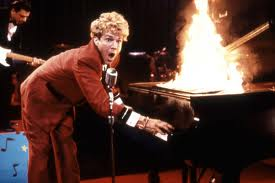
KILLER
The cigarette smoke hangs like tear gas
In the mean little honky-tonk
But nobody really gives a shit
Because Jerry is in town.
He arrives without fanfare
And seats himself down Gimme my money and show me the piano
And don’t try and act the hound
This is rockabilly, baby
Forget about Elvis and Johnny
Jerry has just kicked the door down.
Jerry can conjure a thousand songs
And play each one seven different ways
He can make your high heel sneakers
Dance the legs off every other cat in the place I aint no phoney
I ain’t no teddy bear
And I don’t talk baloney
As I say to my bass player
I ain’t no goody-goody
But I was born to be on the stage
It was all I ever dreamed of
From the very earliest age.
Jerry plays it slow and mournful or hard and fast
He once told Chuck Berry he could kiss his ass
And across the arc of bad-boy rockers
Who have come and gone
Jerry is the only one still rocking on
Sure, there were some bad times that caused his
Rocket ship to sputter
Like the year he crashed a dozen Cadillac’s
And was heard to utter You shake my nerves and you rattle my brain
Too much love drives a man insane
You broke my will, oh what a thrill
Goodness gracious great balls of fire
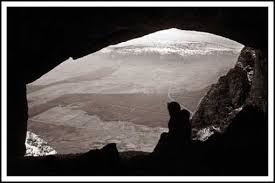
Ah Lackendara
You heard the voices too
At Paschendaele where you
Cowered as the big guns
Bombarded your world to silence
Blasted your thoughts to kingdom come
And left you forlorn
On that ragged outcrop
In the foothills of the Comeraghs
The fox and the curlew your only companions
The gurgling Mahon Falls
All there was to quench your thirst.
For thirty years you trod those hills
Taking little notice
Of ordinary life around you going on
Your presence on the mountain a constant reminder
Of mans’ inhumanity to man.
Autumn mornings are best;
The sun smiling low over the gasworks
Flighty leaves browning the common
Kites lark-high over the tree-tops
Coffee and a roll in the old rectory
And you by my side
If I left you now, what would you miss?
Grumpy mornings, silent evenings
And taken-for-granted pause between the emptiness;
And hidden behind the tall tales, adultery;
Mental maybe, but real nevertheless
You dazed me in the park one Sunday’s summer afternoon.
Your smile was electric.
Later, you hid your patience well
When freedom was dragged from under my feet.
You ticked of the (waiting) time
And I repaid you with monologues of deceit
There are those more deserving of your kindness;
Less selfish, less angry,
And less possessed of my bloody-mindedness.
You bore your cross to the edge and beyond.
Always hauling me back to the fold.
Snatches of love were your only compensation,
Were I a better man I would cloak you in gold
I love this poem; Walt Whitman’s 1865 eulogy to Abraham Lincoln. Whitman lived through the American Civil War, and being so close to the founding of the country knew many people who were part of the revolution.The main political and social issues during his time were slavery and rights for African Americans. He admired Abraham Lincoln immensely, sharing his commitment to the Union and his opposition to slavery.
Robin Williams makes repeated references to the poem in the 1989 film DEAD POETS SOCIETY
O CAPTAIN! MY CAPTAIN!
O Captain! My Captain! our fearful trip is done;
The ship has weather’d every rack, the prize we sought is won;
The port is near, the bells I hear, the people all exulting,
While follow eyes the steady keel, the vessel grim and daring:
But O heart! heart! heart!
O the bleeding drops of red,
Where on the deck my Captain lies,
Fallen cold and dead.
O Captain! My Captain! rise up and hear the bells;
Rise up—for you the flag is flung—for you the bugle trills;
For you bouquets and ribbon’d wreaths—for you the shores a-crowding;
For you they call, the swaying mass, their eager faces turning;
Here captain! dear father!
This arm beneath your head;
It is some dream that on the deck,
You’ve fallen cold and dead.
My Captain does not answer, his lips are pale and still;
My father does not feel my arm, he has no pulse nor will;
The ship is anchor’d safe and sound, its voyage closed and done;
From fearful trip, the victor ship, comes in with object won;
Exult, O shores, and ring,
O bells! But I, with mournful tread,
Walk the deck my captain lies,
Fallen cold and dead.