POEMS FROM THE BOREEN

51AvANPgKTL._SY346_

POEMS FROM THE BOREEN is available on Amazon in paperback and ebook form.

POEMS FROM THE BOREEN

A chapbook

By

Tom O’Brien

(c) 2016 Tom O’Brien

The moral right of the author has been asserted. All rights reserved. No part of this book may be reproduced, stored in a retrieval system or transmitted in any form or by any means without the written permission of the publisher, except by a reviewer who may quote brief passages in a review to be printed by a newspaper, journal or magazine.

First printing

Published by tomtom-theatre

THE GREEN FORGOTTEN VALLEYS

Those green forgotten valleys,
No longer can be seen
Lying hidden behind the tall fir and larch
That have made these brown hills green
Relentlessly marching down the hills
Burying everything in their wake
The dead are long gone from this place
The pike no longer in the lake
The houses just hollow shells now
Where the past ghosts eerily through
The vacant windows and doors
With rotted frames and jambs that once were new.
Back then there was no silence, only the sound
Of human laughter, and bird-calls to each other
The dogs growling at a wayward sheep.
And children’s scrapes kissed better by their mother
Nature is having the last laugh now
Soon there will be no trace of us at all
As the trees come marching down the hillside
No one hears the lonesome curlew’s call.

SEPTEMBER IS THE LOVELIEST MONTH

September is the loveliest month.
The sky is on permanent fire
The trees painted many colours
Burnished, it seems, with pure desire
In the park, ducks glide silently by
And the always busy seagulls
Resemble sea-planes
Coming in to land from on high
Whilst near the dozing oak tree
The squirrels nutmeg each other
Each acorn hoarded
For the soon-to-come cold weather.
Your arm in mine
We stroll down the park
Heading towards the sunset
Home before dark.

FETCHING THE WATER WITH NEDDY

Where I come from is who I am:
Tangled blackberry bushes
Smoke rising from a solitary chimney
The pine grove in the distance
And Father shouting
“More water in that barrel”
As we bucketed it from our well
To our asses cart,
Creel-less for once.
Other days Neddy would be laden down
With wood from the nearby thicket
Ash trees, young Sally’s, stumps of furze bushes.
Sometimes he hauled sand and gravel
From the quarry at Carroll’s Cross,
Part of Father’s master plan
To build us an outside toilet.
This would mean more water from the well
To feed the tank on its roof,
Unless it rained a lot
Which of course it often did
In our neck of the woods.

LACKENDARA

Ah Lackendara
You heard the voices too
At Passchendaele where you
Cowered as the big guns
Bombarded your world to silence
Blasted your thoughts to kingdom come
And left you forlorn
On that ragged outcrop
In the foothills of the Comeraghs
The fox and the curlew your only companions
The gurgling Mahon Falls
All there was to quench your thirst.
For thirty years you trod those hills
Taking little notice
Of ordinary life around you going on
Your presence on the mountain a constant reminder
Of mans’ inhumanity to man.

THE BLUE LAGOONS OF MAYO

Like oceans behind my eyes
The blue lagoons of Mayo glittered in the mist
‘Blue lagoons of Mayo? – Christ that’s rich’, remarked O’Hare
‘Unless the bogs have changed their colour since I resided there’
‘I remember ploughing through the Mayo wind and rain
Endlessly
And ne’er a pinch of blue did I ever snare
Do you remember The Playboy of the Western World?
Christy Mahon – now he could tell you a thing or three
About bogs, blue or otherwise
And windswept, storm-ridden, mackerel skies
He thought he killed his father
But no such luck
Like a faithful old dog
He followed Christy fretfully through mist and fog
Howlng into the wind
You never killed me with your loy
That time back there in the bog, boy’ ‘.

SWEET TEA

Every month a ritual enactment
For the rent man
Mother, floury nose and doughed-up hands,
Smiling practice-perfect
Us children banished to the scullery,
A whispered ‘don’t you laugh now’
A silent prayer
And the teapot ready
Beside the rent book.
Every month ‘good morning Mrs Moran’
Lovely day to be sure’ and
YesI will have a cup of tea, thank you’
And every month a glowing red nose,
Lit up like a hot coal.
Every month silence from the scullery
Until the day little Tommy fell off his perch
And tumbled through the scullery door
To land in a heap in front
Of that illuminated face.
And then mother turning,
The sugar bowl in her hand
Saying – much too casually –
‘How many sugars would you like on your nose?’

THE CROWD SHOUT OUT FOR MORE

I never thought I’d say
That Ireland is to me
Just another piece of ‘real-estate’ today;
The place where we murdered rabbits
On nights both windy and dark
Giving them that old one-two
With a rigid hand behind the neck;
The place where we captured hares
For coursing in the glen
The blood coursing wildly through our veins
As Morrisseys lurcher
Swept them up from behind – again
The place where Mass was said
And Politics pled
On Sunday mornings
Outside churches
While inside, the sermon was read;
The little man was important then
And favours done or causes won
Were little enough
To cause much concern to anyone
Not any more
Now that the greedy guts hold all the floor
And all you hear is rampant cheers
And raucous shouts for more
And more…
And more…
And more…

BLACKBERRIES

It’s that time of year again
Blackberries everywhere;
Black fingers, black lips
And nobody seems to care.
We picked them as youngsters
Way back when;
My mother making some pin money
By collecting them for the Blackberry Man
Who called round once a week
In his big truck
And shovelled our offerings
Into his steel bin
As close-packed as they would go,
Dripping black water as he worked;
Mothers little trick of making them heavier
Than they should be
Was to add water to the barrel.
I see you were out picking them in the rain again, Mrs O’Brien
Was his only comment as he handed over her payment,
Here’s an extra half crown for your trouble.

DOING THE CONGA

The cows were in the fields again today,
Lowing softly
As they grazed their lives away.
What thoughts did they possess
As they chewed their grass so sweet;
Did they think about their comrades
That they did daily meet;
Or the colour of their skin
As they passed in the noonday sun;
With their patchwork blankets skin-tight
As they congo-ed past as one.

HOW TO MEASURE RAIN

Walking through an ancient woodland
Wildflower meadows glinting through the trees
Man and nature working together
The whistle of unseen songbirds drifting on the breeze.

Watery flatlands and Roman dykes
Juxtaposed with hydro-electric pumps
Stratiform precipitation falling from nimbostratus
Condensing into water droplets that look like rainy lumps.

Grey unchanging weather that doesn’t go anywhere fast
Two woodpeckers on a grass verge looking for ants
A kingfisher unzips the air
And a shrew lies dead by the river banks.

Worms brought to the surface by tapping rain
A sparrow hawk hunched in a leafless ash tree
While above a coven of goldfinches cause a riot – again.
An April walk through the sunshine and showers
Huge, creamy candles of horse chestnuts hang down
Still locked inside ripening green flowers

This is farmed arable land
But laymen have long lost interest
Where food come from anymore
Apart from what’s written on the packet inside the supermarket door
The rain falls on everything
Both the living and the dead
Walking has deepened my feeling for outside
This is my week of getting wet.

LOVE POEM FROM BONMAHON

God in his heaven never bettered this;
Never hit perfection more square-on.
Rugged cliffs lip the strand,
Opening to fields behind,
The Atlantic, white-layered,
Sweeping into the bay,
Its hurry washed-out
By the tug of sand, gently rising,
Before it.

A tangle of marram crowns the dunes,
Tousled, like windswept hair;
Whilst, on the slopes nearby,
A line of white cottages
Vie for prominence with the old church

Yet, it is the call of the waves
That steals most of the aces;
Those riderless white horses
Sweeping relentlessly in,
With their whispering lisps;
‘I love you, please don’t go,
I love you please don’t go’

And I, watching the ebb-tide dragging them back,
Silently mouthing in their wake;
‘She loves me, she loves me not,
She loves me, she loves me not…’

UNTITLED

Nights when we were young
We raced the wind;
Banshees in our wake
Dracula lying in wait.

We had left him oozing blood
From the stake wedged in his chest
In the Rainbow Cinema.
But with vampires you could never tell

Hair slicked back, stiff with Brylcreem,
Newly perched on our Raleigh three-speeds
(with dynamo)
We explored the world,
Our winkle-pickers pointing the way.

FRIGHTENING THE CROWS

I once knew a man
Who frightened crows for a living.
In between, he brewed cheap beer
And stole old books.
He cycled the universe
Looking for answers;
All he found was a cold grave
When he was thirty nine.

SHE…

Who coaxed me screaming
Into the world in ‘46
When blizzards were raging.
(Or was it me?)
Who carried turkeys in her shopping bags
Suspended on the handlebars of her bicycle
(going to see the turkey cock)

Who picked blackberries with purple hands
And topped the full barrels with water
To increase her payment from the blackberry buyer
(her pocket money she called it)

Who ate dilisk on June Sundays in Bonmahon Strand
And washed her feet in the foamy salt water near at hand
Who grew fat when I was ten
And was bed-ridden till grandma came;
Then the doctor gave her something
That made her thin again

KEEP OFF THE GRASS

Footprints on sand are washed clean
Nature’s way.
Likewise those on grass
Never intend to stay.
The fox, the rabbit, all creatures of the wild
Over hill and dale can pass;
Only humans heed the warning signs
KEEP OFF THE GRASS

EVOLUTION
I was weaned on country music
Rock-n-roll and poverty
Irish style.
Son, the priest said,
Put that guitar away
And get that hair cut right
And don’t play
‘I Can Get No Satisfaction’
Tonight.
It’s a sin to call yourselves
The Red Devils, he said,
And in his shadows
I could see mother nodding her head.
So we became The Royal Dukes,
Zig-zagging across Munster
And played ‘Nineteenth Nervous Breakdown’
Instead.
This will not do, he roared,
Rattling his pulpit,
The youth of my parish,
Harbingers of the Devil’s music,
What is wrong with Frank Ifield?
Dead music, Father, I told him
And offered to debate it
But he wouldn’t listen.
So I emigrated.

FATHER AND SON
My mum says you’re my dad
The words ripped through me
Like a chainsaw through soft timber
Then scattered like spindrift
Along the sea wall
Lean young people glistened in the sun
While my heart pounded
And the young boy,
With shoulders rounded,
Hurried along to keep up with his mum
It was true; I was his father,
Of a sort.
Ten years ago I was for sure;
Ten lifetimes since I
Had slammed the goodbye door.

BAD DREAM

Maybe it was a dream I once had
This part of Ireland with no lights on
A place where strangers
Looked over the border
With razor-blade eyes
Where tall trees swayed South
From one vast plantation
And bowler hatted drum-bangers
Stomped the streets like toy soldiers.
A game – perhaps that was it;
Where the lowest common denominator
Was religion…or the lack of it.

THE WAY WE WERE

The picture house is full of it tonight;
‘A TEAR JERKER…THE WAY WE WERE.
See that old woman?
She has three carrier bags of it
To comfort her in her doorway.
Belfast Johnny has two bottles
Of it in his greatcoat pocket
And eight shiny photos of it
Bridging the gaps in his shoes.
The preacher ladles out doses of it
With hot soup. Georgie Best,
Rock-n-Roll, wedding vows,
They are all part of it.
The past follows you around:
Like a faithful old dog
It never leaves your side.

FALL
Autumn mornings are best;
The sun smiling low over the gasworks
Flighty leaves browning the common
Kites lark-high over the tree-tops
Coffee and a roll in the old rectory
And you by my side

MUSHROOMS
When I was knee-high to a man
And fields were free
We picked mushrooms
On mornings such as this
Barbed wire, where it existed,
Was negotiable.
Now the Stalag-masters have returned
And fenced us out

Or is it in?

GRASS

Woke up this morning
Barbered the lawn
And bathed in the scent
Of new-mown grass

There, said the Sun
Smiling on my efforts
Isn’t that better
Than sitting on your arse.

SKATING ON THIN ICE

Now there’s a pastime for you;
Young enough not to know better
We taught ourselves how to,
And sometimes paid the price

We carved figures of eight
Figures of three and five too
While Hopper McGrath kicked a hole in the shallow end
With thumps from the heel of his shoe

But nature had the last laugh
And slid him into a clump of nettles
And the breath laughed from the rest of us
Like steam from the spouts of kettles

Cracked ice, grass-crunching like apple-munching
Shiver-me-timber dancing
The old farmer prancing
And helter-skelter
For the school-yard shelter

Nowadays skating on thin ice comes easy

MILKING TIME

Father always hummed at the milking
Pausing only to say ‘easy girl, easy there’
When a troublesome horse-fly struck

Sitting on his three-legged stool
His pail clamped between his thighs,
He caressed old Daisy’s belly with his head
And sometimes sank his fist into the wrist
When she lashed out

The sound of milk hitting the pail
Was like rain dancing on corrugated steel
He could hit one of those flies
At three paces with one long squirt.

Sometimes he practiced on me.

SOLDIERS

BLOODY JOB
BLOODY SWINE
BLOODY HARD WORK
BLOODY COUNTRY
BLOODY IRISH BASTARDS
BLOODY SUNDAY
BLOODY MONDAY AGAIN

AUTHOR’S BIOGRAPHY
Tom O’Brien is a native of Kilmacthomas Co Waterford Ireland, and is a full time writer, playwright and poet.
Performed plays include Money from America, Cricklewood Cowboys, On Raglan Road. Johnjo, Gorgeous Gaels, Brendan Behan’s Women Down Bottle Alley, No Blacks, No Dogs, No Poles, etc
Books include Letters To Mother and Other Dead Relatives, Cricklewood Cowboys, The Shiny Red Honda, The Missing Postman and Other Stories, etc

His first 2 collections of poetry ‘67’ & ‘67+’ are available online

All his books are available on http://www.amazon.co.uk/Tom-OBrien/e/B0034OIGOQ/ref=sr_tc_2_0?qid=1388083522&sr=1-2-ent

Website: https://gorgeousgael.com/

https://www.facebook.com/#!/tom.obrien.5851

Tom has lived in Hastings UK since 2000.

HAROLD PINTER WAS AT THE ROYAL COURT TODAY

I wrote this piece of doggerel about Harold Pinter some time ago. Not sure how or why it came about. I always liked Pinter’s work; I saw him as the Ernest Hemingway of playwriting – never write 20 words when a pause will do. The Caretaker I particularly liked, along with No Man’s Land.

Harold-Pinter-001

HAROLD PINTER WAS AT THE ROYAL COURT TODAY

I was at the Royal Court today and saw Harold Pinter

Oh yeah?

He spoke to me.

What did he say?

Asked me where the loo was.

No, he fucking didn’t.

You’re right, he didn’t.

He asked that American shitbag Le Butt…Le Bute…Labute

How do you know?

He told me.
Who…Labute?
Yeah.
No, he didn’t.

You’re right, he didn’t. He wasn’t even there. Fuck, I wasn’t even there.

I CARRY YOUR HEART WITH ME…

hqdefault

[i carry your heart with me(i carry it in]
BY E. E. CUMMINGS
i carry your heart with me(i carry it in
my heart)i am never without it(anywhere
i go you go,my dear;and whatever is done
by only me is your doing,my darling)
i fear
no fate(for you are my fate,my sweet)i want
no world(for beautiful you are my world,my true)
and it’s you are whatever a moon has always meant
and whatever a sun will always sing is you

here is the deepest secret nobody knows
(here is the root of the root and the bud of the bud
and the sky of the sky of a tree called life;which grows
higher than soul can hope or mind can hide)
and this is the wonder that’s keeping the stars apart

i carry your heart(i carry it in my heart)

e e wrote approximately 2,900 poems, two autobiographical novels, four plays, and several essays. He is often regarded as one of the most important American poets of the 20th century. Cummings is associated with modernist free-form poetry. Much of his work has idiosyncratic syntax and uses lower case spellings for poetic expression.

STOLEN WORDS (extract)

033

extracts from my collection STOLEN WORDS

THE GREEN FORGOTTEN VALLEYS

Those green forgotten valleys,
No longer can be seen
Lying hidden behind the tall fir and larch
That have made these brown hills green
Relentlessly marching down the hills
Burying everything in their wake
The dead are long gone from this place
The pike no longer in the lake
The houses just hollow shells now
Where the past ghosts eerily through
The vacant windows and doors
With rotted frames and jambs that once were new.
Back then there was no silence, only the sound
Of human laughter, and bird-calls to each other
The dogs growling at a wayward sheep.
And children’s scrapes kissed better by their mother
Nature is having the last laugh now
Soon there will be no trace of us at all
As the trees come marching down the hillside
No one hears the lonesome curlew’s call.

LOS ANGELES

From dream factory
To nightmare landscape
Eternally self-renewing
And all but used up,
The hot LA nights
Spiked with a Santa Ana wind,
Capote, Faulkner, Mailer, Fitzgerald, et al
Haunting the many-faceted gin-mills,
Looking for characters
For the books they were soon to write,
Hockney hobbling to
The marijuana store
To smoke away his many ailments,
Drinking Chai tea with the other lunatics,
Down Venice way
The ancient muscle men on Muscle Beach
Doing press-ups
And pull-ups that demean them,
Hollywood writ large on the hills
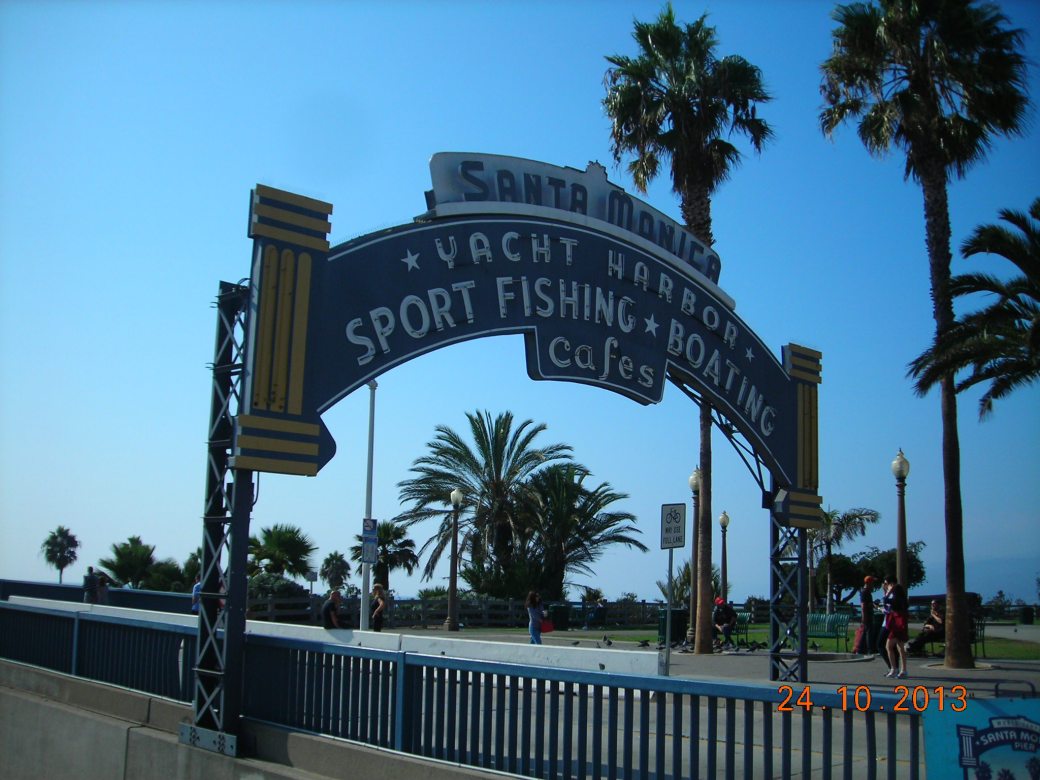
And a jaded sign on Santa Monica pier
Saying ‘Route 66 ends here’.

MY CAR NOW TALKS TO ME
Hello
Goodbye
Raising the lights like a stage curtain
Playing little movies
Serenading me with melodies
The welcome – farewell experience
They call it
“An emotionally resonant experience”
And that digital note of appreciation
“Thank you for driving a hybrid”
As if it was something…well
Unconnected with this thing on four wheels.
And those door handles
Illuminating when they sense my presence
The needles on the instruments
Snapping to attention as I open the door
There’s a welcoming theme
Part Hollywood soundtrack
Part plane swoosh
And that puddle lamp!
A welcome mat of light.
My car is a robot I think
With a personality not just in its body
But also in its behaviour.
“How can I help you?”
It asks now
As I prepare for take-off.
I really feel like telling it
To shut the fuck up
But I don’t want to hurt its feelings.

RAINY NIGHTS IN SOHO

See all the down-and-out lickers and fuckers
Down the Embankment they tumble
Unable any longer to bear much reality
Too much self-knowledge and time spent trotting
Between the Tate and the National
Or one of their endless reading groups
Believing they had a story to tell
If only things had worked out,
If only the monkey had hit the right keys.
Hush! if you listen carefully
You can hear the dead click of their keyboards
In the raucousness of the Soho night;
The minicabs, the limos, the rickshaws all screaming
Take me…take me…I’m free
And the hen nighters, the stag nighters,
The whatever-the fuck nighters,
Lingering in pools of their own vomit, waiting for the paramedics to call;
Shirts open to the navel, skirts slit from here to eternity.
Late summer, later winter, who gives a shit?
The restaurants are all full though nobody is really eating
Just being there is what matters.
Smokers stop the traffic inspecting their mobiles
What would a Martian make of that?
No one sees anything anymore
Except the lampposts they walk into;
There are no witnesses to crime;
How anybody falls in love anymore is a puzzle
Eyes no longer meet in lingering amazement
Unless they are reflected
In all those infernal hand-held screens.

THE EMUS

Fuck you
Said the Emu
Though of course
I couldn’t be sure
It was an Emu at all,
Never having seen a live one before;
Well, not crossing the road
Ahead of me anyway;
Part of a group
That resembled a hen party;
(or should that be Emu party?)
A troop of tarty Emus with cropped hair,
Johnny Rotten aficionados’, perhaps?
Teetering across the never-ending road
In the Australian outback;
Chaperoned by a wedge-tailed eagle…
Chaperoned?
Who looked just as likely
To sink its teeth
Into their browning flesh
As guide them safely to the other side.
Perhaps it was the eagle
Who said ‘fuck you’?
In the fading light
I couldn’t be certain
Of anything.

KILLER

The cigarette smoke hangs like tear gas
In the mean little honky-tonk
But nobody really gives a shit because Jerry is in town.
He arrives without fanfare and seats himself down
Gimme my money and show me the piano
And don’t try and act the hound,
Tthis is rockabilly, baby
Forget about Elvis and Johnny
Jerry has just kicked the door down.
Jerry can conjure a thousand songs
And play each one seven different ways
He can make your high heel sneakers
Dance the legs off every other cat in the place
I ain’t no phoney, I ain’t no teddy bear
And I don’t talk baloney ,as I say to my bass player
I ain’t no goody-goody, but I was born to be on the stage
It was all I ever dreamed of, from the very earliest age.
Jerry plays it slow and mournful or hard and fast
He once told Chuck Berry he could kiss his ass
And across the arc of bad-boy rockers
Who have come and gone
Jerry is the only one still rocking on
Sure, there were some bad times that caused his
Rocket ship to sputter
Like the year he crashed a dozen Cadillac’s
And was heard to utter
You shake my nerves and you rattle my brain
Too much love drives a man insane
You broke my will, oh what a thrill
Goodness gracious great balls of fire

LETTERS TO MOTHER AND OTHER DEAD RELATIVES (extract)

51fVt749XiL
available to purchase on Amazon.co.uk

LETTERS TO MY MOTHER AND OTHER DEAD RELATIVES (no 5)

Dear Father

The night you died you had been dancing with my mother – a slow waltz I expect – when your heart gave up, and you died right there on the dance floor, in full view of all your friends and neighbors.
I, who had been drinking heavily some seventy miles away, learned of it when I was awakened in the early hours of the following morning by a member of the local Gardai. I can still recall it; fuzzy-headed from the effects of the alcohol, and wondering what kind of country it was that had the police waking up people in the middle of the night to tell them their father was dead.
Later, sobered up, and in the cold reality of daylight, I realized that however little we had said to each other in the past there was no chance of expanding on it now – or ever again.
Much later, I wrote this poem about it

The Night the Music Died
He lay in the box quite comfortably
His waxen face staring into infinity
Looking much better in death than he had ever in life.
And all I could do was peer at him through slatted fingers
From the back of the room.
The ever-present smell of tanning and leather aprons was absent now
More than forty seeping years of it
Scrubbed away one last time.

The Moped, which was a natural progression
From pedal-power when his legs gave out,
Lay discarded in the coalhouse.
No driver you see; and mother still had her shopping to do.
He dug turf, cut down young Sally trees,
And turned over his bit of stony ground
Endlessly.
In summer he clipped sheep slowly
With a machine bought by post from Clery’s,
Carefully stowing it away in its box when the shearing was done.

The chalk pipes he sucked on,
Their stems held together with blood pricked from his thumb,
And his three bottles of Sunday night Guinness,
Standing corked still under the counter,
Were redundant now.
Who would dance a half-set with her now?
My mother enquired of no one in particular.
The smoky saloon bar stunned that the music had felled him,
Knocked him to the floor in the middle of the tune.
He lay there with a smile on his face,
Knowing it was over.
And I never got to know what was on his mind.

Later, we put him in the ground
And sadness trickled down me like dust through my fingers.
While afterwards, everybody stood around
Saying what a great man he was.
Slapping the back of my overcoat
Sure he gave forty years to that tannery
And what did it give him? I wanted to shout to the throng.
A gold watch and a tin tray
And both had his name spelled wrong.

Your loving son
Tom

THE BORSTAL BOY by Tom O’Brien

Brendan Behan

THE BORSTAL BOY

When Brendan Behan was asked by Canadian customs what was the purpose of his visit he replied ‘to drink Canada Dry’. And later, when a newspaperman asked him what he thought of Montreal he said ‘sure, it will be grand when it’s finished’.
On another occasion when he was visiting Spain he was asked what he would like to see most, he replied ‘Franco’s funeral’. Naturally, this didn’t go down well and he was thrown in jail and then deported. But this was the wit of the man; he was the master of the quick one-liner as well as a born storyteller – shame then that most of it was wasted in the bars of Dublin, London and New York. Not merely squandered but given away for free to strangers and freeloaders who probably didn’t even appreciate that they were in the presence of genius. And Brendan’s genius was his own life; if he could have bottled that he would have been wealthy indeed.
…………………..
Brendan was born in 1923 to Stephen and Kathleen Behan and grew up in the slums around Russell Street. His father was a house painter, a trade which Brendan himself dabbled in occasionally.. He left school at 14 and owed much of his education to his family, who were well-read, and who had strong Republican sympathies. His Uncle Peader Kearney wrote the Irish national anthem, while another uncle P J O’Rourke managed the Queens Theatre in the city.
The family on both sides was traditionally anti-British; his father was in prison when he was born because of his involvement in the 1916 rising, while his mother had been married before to another republican who had died in 1918.
When others were ‘training to be altar boys’, Brendan and his boyhood friend Cathal Goulding spent their spare time up in the hills outside Dublin drilling and marching with The Fianna, the Republican youth movement.
This resulted in him being sent to Liverpool in 1939 with orders to blow up a British battleship berthed in Liverpool docks. Unfortunately – or fortunately – for him he was arrested in his hotel room before he could carry out the deed. He was just turned 16. He was sentenced to three years in Borstal, and was deported on his release. However, in 1942 he was sentenced to 14 years for the attempted murder of to policemen in Glasnevin Cemetery during the Easter commemorations. He himself said , ‘well, jaysus they were shooting at me, what was I supposed to do?’. He went on the run for a time taking the gun with him. The gun was IRA property and they weren’t too impressed with his behaviour so they sentenced him to death in his absence. He said later; ‘I wrote them a nice letter asking could they carry out the sentence in me absence too’.
He served his time in Mountjoy and Curragh Military Camp and was released in 1946 under a general amnesty. He was in prison again in Manchester in 1947 for a short time for supposedly helping an IRA prisoner escape.
It was during his time in prison that he started to write, and this eventually led him to write for Radio Eireann and The Irish Press. He was still relatively unknown when he married Beatrice ffrench-Salkeld, daughter of the Dublin artist, Cecil Salkeld, in 1955.
As regards his drinking he said; ‘I started early in life. For a long time I thought whiskey was tea, because my granny kept whiskey in her teapot. I became a great tea-drinker. Sometimes she sent me to the pub for a jug of Guinness and I would drink half of it on the way back and top it up with water. These days I only take a drink on two occasions, when I’m thirsty and when I’m not’.
Granny was his Granny English, who owned the tenement building that they all lived in. He described her as ‘a slum landlady. The house was falling down around us and we all lived together in the pigsty’.
His big breakthrough came in 1954 with the production of The Quare Fellow, which was based on his prison experiences. The events were set during the twenty-fours hours preceding an execution and it gave Brendan a platform to attack capital punishment, which he abhorred. As to who ‘the quare fellow’ was Brendan said his name was Bernard Canavan, and that he was waiting to be ‘topped’ by Pierrepoint for chopping up his brother into pieces and feeding him to the pigs. ‘Not a very brotherly thing to do’, he observed.
He was a fluent Gaelic speaker and his next play The Hostage was originally written in Irish (An Giall) but it was taken in hand by Joan Litttlewood’s Theatre Workshop and turned into a massive success both in The West End and on Broadway.
In his plays, Brendan used song, dance and direct addresses to the audience – occasionally appearing himself in the audience, or on stage, to criticize the actors or berate the director. Audiences loved him for this, nowhere better than in New York, where he was lionized. Brendan returned this affection, saying ‘New York is my Lourdes, where I go for spiritual refreshment…a place where you’re least likely to be bitten by a wild goat’.
Borstal Boy wasn’t published until 1958, nearly twenty years after the events portrayed in it, but the intervening years had seen him enacting the story in every pub and shebeen in Dublin. Listening to Brendan in full flow was an experience; a mixture of song, dance and sceal were routinely served up as he rolled from one watering hole to the next. The only one who wasn’t impressed was the poet Patrick Kavanagh, who told him he had ‘turned from a national phony to an international one’. Brendan countered by telling Kavanagh that the best thing he ever wrote was a cheque that didn’t bounce.
The notoriety and critical acclaim that came to Brendan in the mid 1950’s contributed to his downfall. This was fuelled by his prolonged drinking bouts and his self destructive behaviour. He also suffered from seizures caused by pressure on his brain, which caused him to go into a diabetic coma, for which the only remedy was an operation. Brendan had a morbid fear of hospitals and doctors and refused to consider the operation. His health gradually deteriorated, and when the end came on March 20th 1964 he was just 41 years old.
© Tom O’Brien

A ODEST PROPOSAL by Jonathan Swift

A Modest Proposal
For preventing the children of poor people in Ireland,
from being a burden on their parents or country,
and for making them beneficial to the publick.
by Dr. Jonathan Swift
1729
It is a melancholy object to those, who walk through this great town, or travel in the country, when they see the streets, the roads, and cabbin-doors crowded with beggars of the female sex, followed by three, four, or six children, all in rags, and importuning every passenger for an alms. These mothers, instead of being able to work for their honest livelihood, are forced to employ all their time in stroling to beg sustenance for their helpless infants who, as they grow up, either turn thieves for want of work, or leave their dear native country, to fight for the Pretender in Spain, or sell themselves to the Barbadoes.

I think it is agreed by all parties, that this prodigious number of children in the arms, or on the backs, or at the heels of their mothers, and frequently of their fathers, is in the present deplorable state of the kingdom, a very great additional grievance; and therefore whoever could find out a fair, cheap and easy method of making these children sound and useful members of the commonwealth, would deserve so well of the publick, as to have his statue set up for a preserver of the nation.

But my intention is very far from being confined to provide only for the children of professed beggars: it is of a much greater extent, and shall take in the whole number of infants at a certain age, who are born of parents in effect as little able to support them, as those who demand our charity in the streets.

As to my own part, having turned my thoughts for many years upon this important subject, and maturely weighed the several schemes of our projectors, I have always found them grossly mistaken in their computation. It is true, a child just dropt from its dam, may be supported by her milk, for a solar year, with little other nourishment: at most not above the value of two shillings, which the mother may certainly get, or the value in scraps, by her lawful occupation of begging; and it is exactly at one year old that I propose to provide for them in such a manner, as, instead of being a charge upon their parents, or the parish, or wanting food and raiment for the rest of their lives, they shall, on the contrary, contribute to the feeding, and partly to the clothing of many thousands.

There is likewise another great advantage in my scheme, that it will prevent those voluntary abortions, and that horrid practice of women murdering their bastard children, alas! too frequent among us, sacrificing the poor innocent babes, I doubt, more to avoid the expence than the shame, which would move tears and pity in the most savage and inhuman breast.

The number of souls in this kingdom being usually reckoned one million and a half, of these I calculate there may be about two hundred thousand couple, whose wives are breeders; from which number I subtract thirty thousand couple, who are able to maintain their own children, (although I apprehend there cannot be so many under the present distresses of the kingdom) but this being granted, there will remain a hundred and seventy thousand breeders. I again subtract fifty thousand, for those women who miscarry, or whose children die by accident or disease within the year. There only remain a hundred and twenty thousand children of poor parents annually born. The question therefore is, How this number shall be reared and provided for? which, as I have already said, under the present situation of affairs, is utterly impossible by all the methods hitherto proposed. For we can neither employ them in handicraft or agriculture; they neither build houses, (I mean in the country) nor cultivate land: they can very seldom pick up a livelihood by stealing till they arrive at six years old; except where they are of towardly parts, although I confess they learn the rudiments much earlier; during which time they can however be properly looked upon only as probationers; as I have been informed by a principal gentleman in the county of Cavan, who protested to me, that he never knew above one or two instances under the age of six, even in a part of the kingdom so renowned for the quickest proficiency in that art.

I am assured by our merchants, that a boy or a girl, before twelve years old, is no saleable commodity, and even when they come to this age, they will not yield above three pounds, or three pounds and half a crown at most, on the exchange; which cannot turn to account either to the parents or kingdom, the charge of nutriments and rags having been at least four times that value.

I shall now therefore humbly propose my own thoughts, which I hope will not be liable to the least objection.

I have been assured by a very knowing American of my acquaintance in London, that a young healthy child well nursed, is, at a year old, a most delicious nourishing and wholesome food, whether stewed, roasted, baked, or boiled; and I make no doubt that it will equally serve in a fricasee, or a ragoust.

I do therefore humbly offer it to publick consideration, that of the hundred and twenty thousand children, already computed, twenty thousand may be reserved for breed, whereof only one fourth part to be males; which is more than we allow to sheep, black cattle, or swine, and my reason is, that these children are seldom the fruits of marriage, a circumstance not much regarded by our savages, therefore, one male will be sufficient to serve four females. That the remaining hundred thousand may, at a year old, be offered in sale to the persons of quality and fortune, through the kingdom, always advising the mother to let them suck plentifully in the last month, so as to render them plump, and fat for a good table. A child will make two dishes at an entertainment for friends, and when the family dines alone, the fore or hind quarter will make a reasonable dish, and seasoned with a little pepper or salt, will be very good boiled on the fourth day, especially in winter.

I have reckoned upon a medium, that a child just born will weigh 12 pounds, and in a solar year, if tolerably nursed, encreaseth to 28 pounds.

I grant this food will be somewhat dear, and therefore very proper for landlords, who, as they have already devoured most of the parents, seem to have the best title to the children.

Infant’s flesh will be in season throughout the year, but more plentiful in March, and a little before and after; for we are told by a grave author, an eminent French physician, that fish being a prolifick dyet, there are more children born in Roman Catholick countries about nine months after Lent, than at any other season; therefore, reckoning a year after Lent, the markets will be more glutted than usual, because the number of Popish infants, is at least three to one in this kingdom, and therefore it will have one other collateral advantage, by lessening the number of Papists among us.

I have already computed the charge of nursing a beggar’s child (in which list I reckon all cottagers, labourers, and four-fifths of the farmers) to be about two shillings per annum, rags included; and I believe no gentleman would repine to give ten shillings for the carcass of a good fat child, which, as I have said, will make four dishes of excellent nutritive meat, when he hath only some particular friend, or his own family to dine with him. Thus the squire will learn to be a good landlord, and grow popular among his tenants, the mother will have eight shillings neat profit, and be fit for work till she produces another child.

Those who are more thrifty (as I must confess the times require) may flay the carcass; the skin of which, artificially dressed, will make admirable gloves for ladies, and summer boots for fine gentlemen.

As to our City of Dublin, shambles may be appointed for this purpose, in the most convenient parts of it, and butchers we may be assured will not be wanting; although I rather recommend buying the children alive, and dressing them hot from the knife, as we do roasting pigs.

A very worthy person, a true lover of his country, and whose virtues I highly esteem, was lately pleased in discoursing on this matter, to offer a refinement upon my scheme. He said, that many gentlemen of this kingdom, having of late destroyed their deer, he conceived that the want of venison might be well supplied by the bodies of young lads and maidens, not exceeding fourteen years of age, nor under twelve; so great a number of both sexes in every county being now ready to starve for want of work and service: and these to be disposed of by their parents if alive, or otherwise by their nearest relations. But with due deference to so excellent a friend, and so deserving a patriot, I cannot be altogether in his sentiments; for as to the males, my American acquaintance assured me from frequent experience, that their flesh was generally tough and lean, like that of our schoolboys, by continual exercise, and their taste disagreeable, and to fatten them would not answer the charge. Then as to the females, it would, I think, with humble submission, be a loss to the publick, because they soon would become breeders themselves: and besides, it is not improbable that some scrupulous people might be apt to censure such a practice, (although indeed very unjustly) as a little bordering upon cruelty, which, I confess, hath always been with me the strongest objection against any project, how well soever intended.

But in order to justify my friend, he confessed, that this expedient was put into his head by the famous Psalmanaazor, a native of the island Formosa, who came from thence to London, above twenty years ago, and in conversation told my friend, that in his country, when any young person happened to be put to death, the executioner sold the carcass to persons of quality, as a prime dainty; and that, in his time, the body of a plump girl of fifteen, who was crucified for an attempt to poison the Emperor, was sold to his imperial majesty’s prime minister of state, and other great mandarins of the court in joints from the gibbet, at four hundred crowns. Neither indeed can I deny, that if the same use were made of several plump young girls in this town, who without one single groat to their fortunes, cannot stir abroad without a chair, and appear at a playhouse and assemblies in foreign fineries which they never will pay for, the kingdom would not be the worse.

Some persons of a desponding spirit are in great concern about that vast number of poor people, who are aged, diseased, or maimed; and I have been desired to employ my thoughts what course may be taken, to ease the nation of so grievous an incumbrance. But I am not in the least pain upon that matter, because it is very well known, that they are every day dying, and rotting, by cold and famine, and filth, and vermin, as fast as can be reasonably expected. And as to the young labourers, they are now in almost as hopeful a condition. They cannot get work, and consequently pine away from want of nourishment, to a degree, that if at any time they are accidentally hired to common labour, they have not strength to perform it, and thus the country and themselves are happily delivered from the evils to come.

I have too long digressed, and therefore shall return to my subject. I think the advantages by the proposal which I have made are obvious and many, as well as of the highest importance.

For first, as I have already observed, it would greatly lessen the number of Papists, with whom we are yearly overrun, being the principal breeders of the nation, as well as our most dangerous enemies, and who stay at home on purpose with a design to deliver the kingdom to the Pretender, hoping to take their advantage by the absence of so many good Protestants, who have chosen rather to leave their country, than stay at home and pay tithes against their conscience to an episcopal curate.

Secondly, The poorer tenants will have something valuable of their own, which by law may be made liable to a distress, and help to pay their landlord’s rent, their corn and cattle being already seized, and money a thing unknown.

Thirdly, Whereas the maintainance of a hundred thousand children, from two years old, and upwards, cannot be computed at less than ten shillings a piece per annum, the nation’s stock will be thereby encreased fifty thousand pounds per annum, besides the profit of a new dish, introduced to the tables of all gentlemen of fortune in the kingdom, who have any refinement in taste. And the money will circulate among our selves, the goods being entirely of our own growth and manufacture.

Fourthly, The constant breeders, besides the gain of eight shillings sterling per annum by the sale of their children, will be rid of the charge of maintaining them after the first year.

Fifthly, This food would likewise bring great custom to taverns, where the vintners will certainly be so prudent as to procure the best receipts for dressing it to perfection; and consequently have their houses frequented by all the fine gentlemen, who justly value themselves upon their knowledge in good eating; and a skilful cook, who understands how to oblige his guests, will contrive to make it as expensive as they please.

Sixthly, This would be a great inducement to marriage, which all wise nations have either encouraged by rewards, or enforced by laws and penalties. It would encrease the care and tenderness of mothers towards their children, when they were sure of a settlement for life to the poor babes, provided in some sort by the publick, to their annual profit instead of expence. We should soon see an honest emulation among the married women, which of them could bring the fattest child to the market. Men would become as fond of their wives, during the time of their pregnancy, as they are now of their mares in foal, their cows in calf, or sows when they are ready to farrow; nor offer to beat or kick them (as is too frequent a practice) for fear of a miscarriage.

Many other advantages might be enumerated. For instance, the addition of some thousand carcasses in our exportation of barrel’d beef: the propagation of swine’s flesh, and improvement in the art of making good bacon, so much wanted among us by the great destruction of pigs, too frequent at our tables; which are no way comparable in taste or magnificence to a well grown, fat yearling child, which roasted whole will make a considerable figure at a Lord Mayor’s feast, or any other publick entertainment. But this, and many others, I omit, being studious of brevity.

Supposing that one thousand families in this city, would be constant customers for infants flesh, besides others who might have it at merry meetings, particularly at weddings and christenings, I compute that Dublin would take off annually about twenty thousand carcasses; and the rest of the kingdom (where probably they will be sold somewhat cheaper) the remaining eighty thousand.

I can think of no one objection, that will possibly be raised against this proposal, unless it should be urged, that the number of people will be thereby much lessened in the kingdom. This I freely own, and was indeed one principal design in offering it to the world. I desire the reader will observe, that I calculate my remedy for this one individual Kingdom of Ireland, and for no other that ever was, is, or, I think, ever can be upon Earth. Therefore let no man talk to me of other expedients: Of taxing our absentees at five shillings a pound: Of using neither clothes, nor houshold furniture, except what is of our own growth and manufacture: Of utterly rejecting the materials and instruments that promote foreign luxury: Of curing the expensiveness of pride, vanity, idleness, and gaming in our women: Of introducing a vein of parsimony, prudence and temperance: Of learning to love our country, wherein we differ even from Laplanders, and the inhabitants of Topinamboo: Of quitting our animosities and factions, nor acting any longer like the Jews, who were murdering one another at the very moment their city was taken: Of being a little cautious not to sell our country and consciences for nothing: Of teaching landlords to have at least one degree of mercy towards their tenants. Lastly, of putting a spirit of honesty, industry, and skill into our shopkeepers, who, if a resolution could now be taken to buy only our native goods, would immediately unite to cheat and exact upon us in the price, the measure, and the goodness, nor could ever yet be brought to make one fair proposal of just dealing, though often and earnestly invited to it.

Therefore I repeat, let no man talk to me of these and the like expedients, till he hath at least some glympse of hope, that there will ever be some hearty and sincere attempt to put them into practice.

But, as to myself, having been wearied out for many years with offering vain, idle, visionary thoughts, and at length utterly despairing of success, I fortunately fell upon this proposal, which, as it is wholly new, so it hath something solid and real, of no expence and little trouble, full in our own power, and whereby we can incur no danger in disobliging England. For this kind of commodity will not bear exportation, and flesh being of too tender a consistence, to admit a long continuance in salt, although perhaps I could name a country, which would be glad to eat up our whole nation without it.

After all, I am not so violently bent upon my own opinion, as to reject any offer, proposed by wise men, which shall be found equally innocent, cheap, easy, and effectual. But before something of that kind shall be advanced in contradiction to my scheme, and offering a better, I desire the author or authors will be pleased maturely to consider two points. First, As things now stand, how they will be able to find food and raiment for a hundred thousand useless mouths and backs. And secondly, There being a round million of creatures in humane figure throughout this kingdom, whose whole subsistence put into a common stock, would leave them in debt two million of pounds sterling, adding those who are beggars by profession, to the bulk of farmers, cottagers and labourers, with their wives and children, who are beggars in effect; I desire those politicians who dislike my overture, and may perhaps be so bold to attempt an answer, that they will first ask the parents of these mortals, whether they would not at this day think it a great happiness to have been sold for food at a year old, in the manner I prescribe, and thereby have avoided such a perpetual scene of misfortunes, as they have since gone through, by the oppression of landlords, the impossibility of paying rent without money or trade, the want of common sustenance, with neither house nor clothes to cover them from the inclemencies of the weather, and the most inevitable prospect of intailing the like, or greater miseries, upon their breed for ever.

I profess in the sincerity of my heart, that I have not the least personal interest in endeavouring to promote this necessary work, having no other motive than the publick good of my country, by advancing our trade, providing for infants, relieving the poor, and giving some pleasure to the rich. I have no children, by which I can propose to get a single penny; the youngest being nine years old, and my wife past child-bearing.

Bm54nBCCYAACwBi

PLANET OF THE APPS

imagesCA7UWUJH

PLANET OF THE APPS by Tom O’Brien

Your smartphone speaks to you;
‘Hey, why not download our cool new App?’
Then up pops a dialogue box
With text that looks like an escapee from MySpace
Welcome to Appworld.
Steve Jobs is to blame really;
He was the first to realise
That since smartphones
Were actually small computers
They could also run App programs
And so the Apple App store was born
Now there are fucking Apps everywhere
For every fucking thing
A world awash with the
Smartphone and Tablet App
A couple of million at the last count
And most of them are fucking crap.
If there is an App graveyard
Somewhere out there in the digital sky
The majority of those Apps will be deader than the dodo
Long before you and I.

MY CAR NOW TALKS TO ME

016

MY CAR NOW TALKS TO ME by Tom O’Brien
Hello
Goodbye
Raising the lights like a stage curtain
Playing little movies
Serenading me with melodies
The welcome – farewell experience
They call it
“An emotionally resonant experience”
And that digital note of appreciation
“Thank you for driving a hybrid”
As if it was something…well
Unconnected with this thing on four wheels.
And those door handles
Illuminating when they sense my presence
The needles on the instruments
Snapping to attention as I open the door
There’s a welcoming theme
Part Hollywood soundtrack
Part plane swoosh
And that puddle lamp!
A welcome mat of light.
My car is a robot I think
With a personality not just in its body
But also in its behaviour.
“How can I help you?”
It asks now
As I prepare for take-off.
I really feel like telling it
To shut the fuck up
But I don’t want to hurt its feelings.

OH FOR THE DAYS OF WINE AND ROSES

13_04_2009_0103455001239641944_arthur-elgort

OH, FOR THE DAYS OF WINE AND ROSES, by Tom O’Brien

Falling in love with a poet
May be the closest you will come to living forever
Be the wild card in his pack
In a world where lonely queens never say never
Go live in the desert rather than a fancy hotel
Eat with rusty cutlery, drink cider instead of Muscatel
Visit no man’s land, but once only
Then come back and you will never feel lonely
Remember that underground city that once glowed
Red in the dark
Go limber up in hilly Montmartre
Then go barefoot in Gaudi Park
Dance with demons and devils on some remote island
Then go toss some cabers in the godless Scottish Highlands
All this you must do, while your poet’s mouth opens and closes
As you dance along some cobbled street singing
Oh, for the days of wine and roses.